2025 Japanese-Language Program for Specialists in Cultural and Academic Fields <Programs open to applications from overseas>
- Growing as a Professional Through Six Months of Japanese Language Study
Nadia KhalafAllah (Egypt) - Reflecting on Six Months of Specialized Activities
Vinicius Borges de Almeida (Brazil) - Exploring the surroundings of Japan Foundation’s Japanese-Language Institute, Kansai
Ghada Belhadj (Canada)
Growing as a Professional Through Six Months of Japanese Language Study
Nadia KhalafAllah (Egypt)
I participated in this training program and was able to significantly improve my Japanese language proficiency. In particular, this experience was extremely meaningful for me, and I feel that it will be useful for my future studies and research.
First, this program was a great help in enabling me to pass the Japanese-Language Proficiency Test N2. I had failed the N2 exam multiple times before, but by participating in this training, I was able to understand my weaknesses and study more effectively. As a result, I was finally able to pass the exam successfully.
Next, my academic writing skills also improved. In class, I wrote my ideas in my own words, and the instructor carefully corrected them and provided feedback. By repeating this process, I became aware of the mistakes I frequently made and was able to gradually improve.
In addition, I had many opportunities to speak in Japanese with my teachers and classmates during class, which greatly improved my conversational skills. Furthermore, I became able to use polite language and honorific expressions more appropriately than before. As a result, when consulting with professors about my research plan, I was able to begin speaking in a more polite and appropriate manner.
Moreover, having many opportunities to give presentations was also a major achievement. I originally found it difficult to speak in front of others, but through repeated presentations, I gradually became accustomed to it and gained the confidence to speak.
In addition, studying kanji was extremely beneficial. By reviewing the kanji I had learned previously and learning many new ones, my vocabulary increased, and I feel that both my reading comprehension and writing skills improved.
Furthermore, activities outside the classroom were also very meaningful. For example, I participated in a homestay visit program, where I learned practical expressions and cultural aspects necessary for daily life, such as visit etiquette and telephone communication. Through these experiences, I was also able to make Japanese friends.
In addition, I actively engaged in research activities. I had opportunities to work on research assignments in both the first and second semesters, during which I learned how to develop research plans and collect materials. Moreover, through meetings with my tutor and classes, I was able to further develop my research plan in a more concrete way.
In this way, through this training program, I was able to grow not only in my Japanese language ability but also in my research skills and cross-cultural understanding. In particular, my growth over these six months has been remarkable, and I strongly feel this change within myself. Moving forward, I would like to make use of this experience to further develop my expertise.
Reflecting on Six Months of Specialized Activities
Vinicius Borges de Almeida (Brazil)
During the Japanese-Language Program for Specialists in Cultural and Academic Fields, we had the opportunity to take part in specialized activities in addition to the general Japanese classes. At the beginning of the course, the librarians at the Japan Foundation Japanese-Language Institute, Kansai Library kindly helped us search for books, materials and academic papers, and also introduced websites related to academic research in Japan. With their support, we were able to plan our activities according on the focus of each researcher’s study, such as visiting museums and libraries, collecting materials and meeting Japanese researchers. We could carry out these activities on Fridays, weekends, and holidays, as well as on Monday afternoons. In particular, there were two intensive periods for specialized activities, one in December and one in February. Thanks to financial support from the Japanese-Language Institute, Kansai, we could travel to other cities and use the funds for accommodation, exhibition fees and other expenses
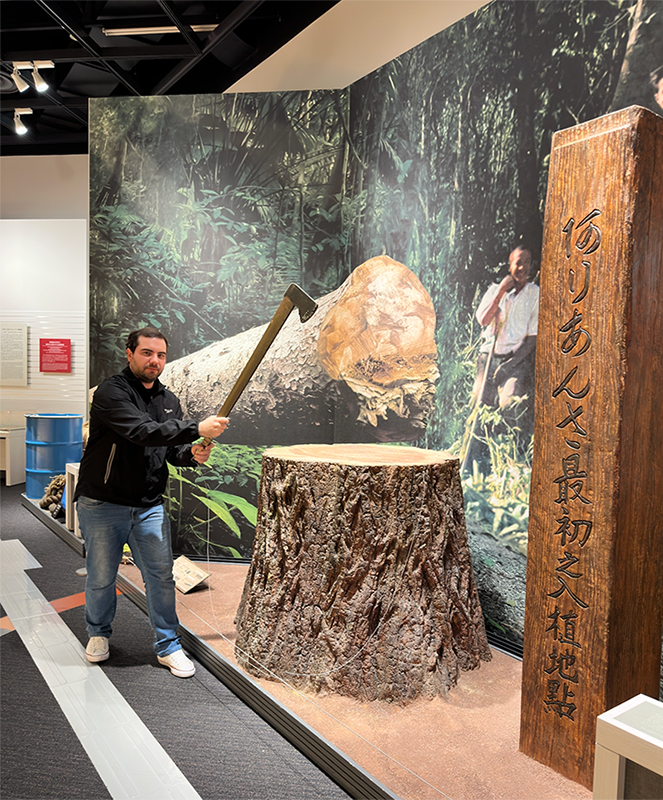
My research in Brazil focuses on Japanese as a heritage language in the Japanese-Brazilian community of Ivoti, a small town in Rio Grande do Sul state. For this reason, while I was in Japan, my main goal was to gather information on Japanese immigration to Brazil. During the intensive activity periods, I first traveled to Tokyo to meet Professor Nilta Dias of Sophia University, whose article on Portuguese as a heritage language in Ōta and Ōizumi (Gunma Prefecture) I had read, so being able to meet her in person was a valuable experience. Being a participant in this program, I could also stay for free at the Japan Foundation Japanese-Language institute, Urawa in Saitama City. While I was there, I read books about immigration in the institute’s library and visited the JICA Yokohama Overseas Migration Museum. The materials I collected will be extremely useful for my research. I also visited Wakayama Civic Library, where I found a book that is especially relevant to my study.
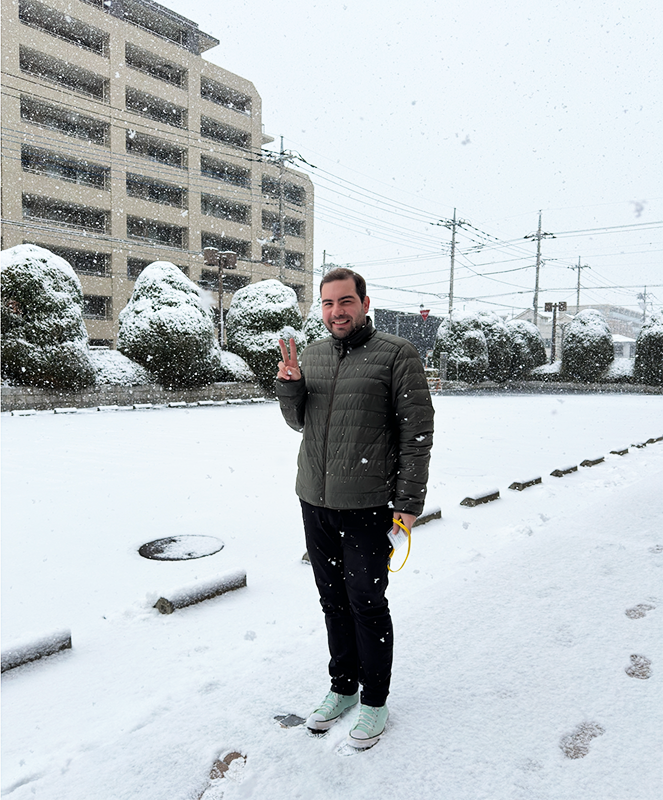
During the second intensive period, I was invited by Professor Nilta to return to Saitama City and visit the Brazilian communities in Ōta and Ōizumi. Unfortunately, there was heavy snowfall that weekend, so we were unable to go there. Even so, I had the unforgettable experience of seeing snow for the first time in my life.
Finally, I also visited the Kobe Center for Overseas Migration and Cultural Interaction, where I saw exhibits about the lives of Japanese emigrants before they left for Brazil, as well as models of ships used in the 20th century. I also learned more about the Kansai Brazilian community. I attended Portuguese classes for children and was shown the teaching materials used in those lessons. In addition, I learned that they also organize events featuring Brazilian food and music, which made a strong impression on me.
I would like to express my gratitude to the course and to the Japanese-Language Institute, Kansai for offering these opportunities for specialized activities. Through them, I was able not only to put what I learned in class into practice, but also to deepen my research in a meaningful way.
Exploring the surroundings of Japan Foundation’s Japanese-Language Institute, Kansai
Ghada Belhadj (Canada)
I still remember the day I received the news that I had been admitted to the Japanese-Language Program for Specialists in Cultural and Academic Fields at the Japan Foundation’s Japanese-Language Institute, Kansai. After reading the email thrice to make sure I had read it correctly, I searched online for the location of the Japanese-Language Institute, Kansai. I was eager to know what kind of place I would soon be studying and living in for half a year.
Now that I have completed the program, I reminisce in wonder at the variety of places I got to discover and enjoy while studying at the Japanese-Language Institute, Kansai. Let me share some highlights with you.
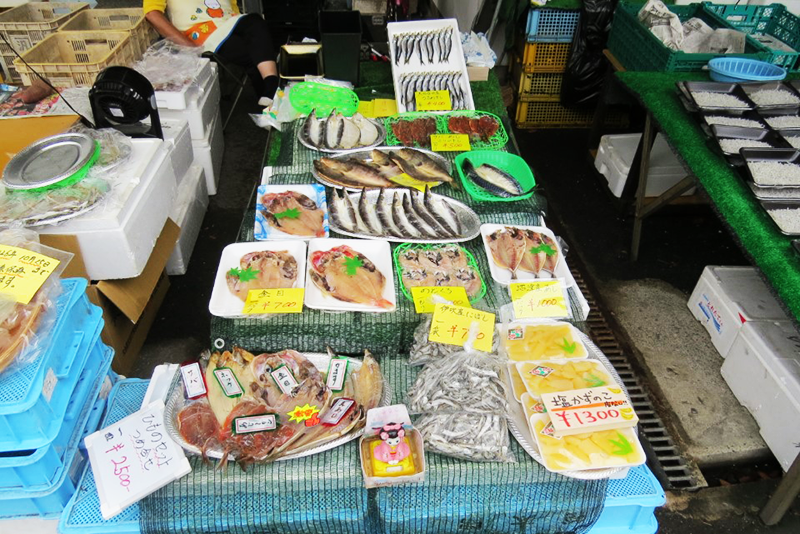
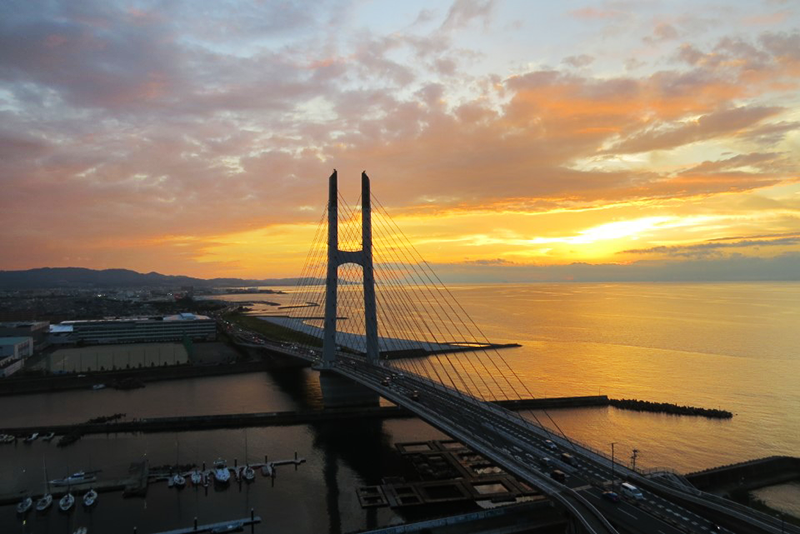
Let’s start with Tajiri, the town where the institute is located. Tajiri used to be the smallest town in Japan before the Kansai International Airport was built in 1994. Still, it has kept all its small-town charm. Its air is constantly saturated with the smell of the sea and the chiming sound of the boat masts clashing against one another while moored in the harbour. A fish market takes place every Sunday morning at the small port near the institute. If you enjoy cooking, you can buy some unique ingredients, most famously the delicious onions produced locally. There are a few other places where you can buy food around Tajiri, such as produce markets (I recommend Iba Seika near Yoshiminosato Station), supermarkets (MaxValu is merely a 15-minute walk from the institute), patisseries (patisserie HOUX arbre and Cheesecake lab Seed Yoshimi have some of the most delicious cakes I’ve ever had), and restaurants for all tastes (don’t hesitate to try Cafe Ku-on near the institute). Besides, Tajiri is full of little hidden gems, such as the scenic Tajiri House Museum, the beautiful Kasuga Shrine, and the Kashoji water canal, where you can witness the slumber of the turtles that inhabit its waters, a fascinating and amusing spectacle. But of course, one place you’ll certainly enjoy during your stay is Marble Beach, the pebble-covered beach that runs along the institute and the nearby road. I can’t recall how many walks I took and how many photos I took of the awe-inspiring sunset beyond the Tajiri Sky Bridge.
By taking the institute shuttle bus, by walking, or by bike, you can easily access the two neighbouring cities of Izumisano and Sennan. The centre of Izumisano can be easily identified by the Ferris wheel that is illuminated in colours every night. It stands at the centre of Rinku Seacle, a mall adjacent to Rinku Town station. You can find a variety of shops and restaurants at Rinku Seacle as well as the Rinku Outlet Park nearby. Being from Montreal, I was delighted to find a bagel shop there. If you are into cycling, as I am, I would definitely recommend borrowing a bike from the institute and taking a ride to Munday Suehiro Park, where locals often enjoy baseball games and walks. While you’re there, don’t hesitate to try one of the conveyor belt sushi restaurants that are situated nearby.
As for Sennan, it is the city that flanks Tajiri from the south. During weekends and on holidays, the institute shuttle bus can get you to and from the Aeon Mall, a big shopping mall where you can buy food (Kaldi Coffee Farm is THE place to find imported food), clothes (Japanese brands such as Uniqlo, Wego, or American Holic can be found here), and most importantly in my opinion, a bookstore and a movie theatre. Often, after enjoying a movie, I was able to go back to the institute by riding the city bus when the shuttle bus was no longer running, so there are different transport options. However, I recommend walking at least once to the Aeon Mall. Even though it takes around 40 minutes to get there, you’ll be able to enjoy wonderful marine scenery and access Sennan Long Park, where you can take some truly unique photos.
I hope you’ll be able to enjoy these places and more during your stay at the Japan Foundation’s Japanese-Language Institute, Kansai. My experience has been truly life-changing. Now, as I am about to return to my country, I know that the institution as well as the locations I have described will always have their special place in my heart.