2025-2026 Japanese-Language Program for Foreign-Service Officers and Public Officials
Introduction
The 2025–2026 Japanese-Language Program for Foreign-Service Officers and Public Officials was conducted at the Japan Foundation Japanese Language Institute, Kansai, from September 2025 to May 2026. The program brought together a diverse cohort of participants from across multiple regions, comprising of diplomats and public officials from the following territories:
Argentina, Bhutan, Chile, Colombia, Cuba, Ghana, Guyana, Haiti, Kenya, Lao PDR, Lesotho, Liberia, Libya, Malaysia, Maldives, Mexico, Mongolia, Namibia, Palestine, Republic of Congo, South Sudan, Sri Lanka, Togo, Tunisia, Uzbekistan, Yemen, Cambodia, Georgia, Indonesia, Kyrgyz Republic, Nicaragua and Thailand.
The program organized by the Ministry of Foreign Affairs of Japan and the Japan Foundation provided participants with intensive Japanese-language training aimed at developing practical communication skills for use in both daily life and professional settings. Particular emphasis was placed on equipping young diplomats and public officials who could possibly be assigned to Japan or manage Japan related portfolios, with the linguistic competence necessary to perform their duties effectively. In addition to language acquisition, the program offered a comprehensive range of cultural, institutional, and experiential learning opportunities designed to deepen participants’ understanding of Japanese life, culture and society. Through lectures, field visits, interactive engagements and curated cultural experiences, participants were able to build meaningful connections and foster networks with Japanese institutions and stakeholders across various sectors.
Overall, the program served not only as a platform for language development but also as a critical avenue for strengthening international collaboration, mutual understanding, and long-term professional relationships with Japan.
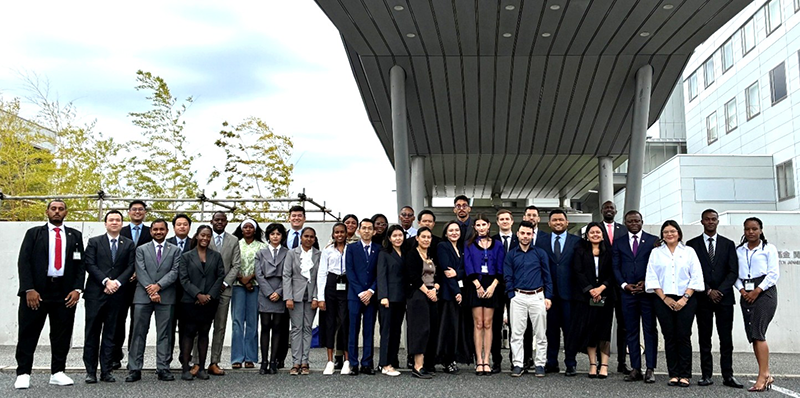
Group Photo in front of Japanese-Language Institute, Kansai
The Learning Program
The learning program consisted of three main components that are outlined below:
1. Japanese Language Lessons
The 8 months were separated into three terms, each covering a different level of Japanese language proficiency. Each week was marked by intensive classroom style learning focused on Katsudoo (communicative activity), Rikai (grammar), Vocabulary, Kanji with daily assignments and regular quizzes and tests. To supplement academic learning, weekly sessions of Nihongo Variety (including Kansai dialect and Japanese songs not covered in the textbook) and Japanese Life and Culture classes were also provided. As the program progressed participants were exposed to electives such as News in Japan, Yom Yom (extensive reading) and Political Vocabulary which further helped to enrich the learning experience. Numerous printed and digital tools were provided in order to support the learning process. Coupled with the patience, expertise and methodical approach of the teachers, participants have reached a level at which they can communicate in simple and routine tasks requiring basic and direct exchange of information on familiar topics and activities, and handle short social exchanges.
-
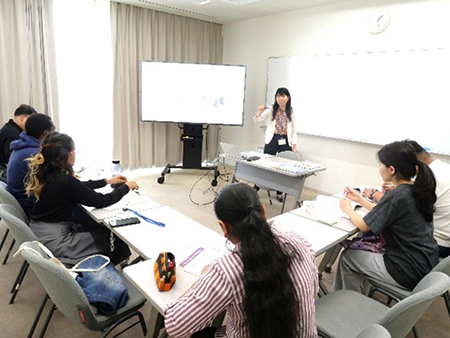
Japanese Language Class -
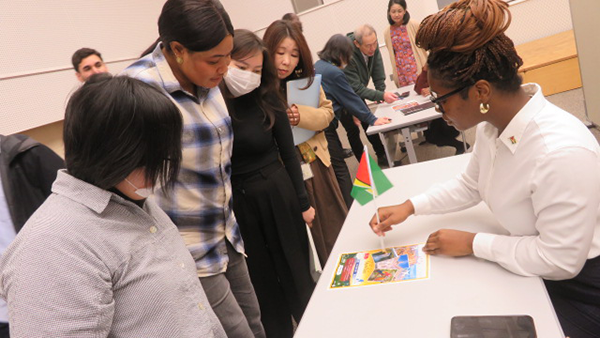
Tourism Expo, Katsudoo Challenge Class
Mrs. Tevianne La Torie Griffith
Ministry of Foreign Affairs and International Cooperation, Co-operative Republic of Guyana
2. Understanding Japanese culture and society
Way before becoming a diplomat, I always had a deep interest in Japan. In my country, we describe Japan with the slang expression “The Planet of Japan” to emphasize how gorgeous and unique the country is. After becoming a diplomat, I wanted to contribute, even in a small way, to deepening the friendship between Japan and Tunisia.
Thanks to several activities, the participants managed to achieve the goal throughout the program. These activities include various lessons on Japanese life and culture, university lecture series, a home visit with a local family, having a conversation partner, visit to elementary school, sharing fun cultural activities with other participants, and introducing our countries to elementary school and high school students. We also visited a women’s university, participated in a sake tour and lecture, met with business partners, and experienced calligraphy, flower arrangement, tea ceremony (sado), yukata, Japanese drum, and martial arts.
The program also included study trips to other prefectures, such as Tokyo, Kyoto, Nara, Hiroshima, and Miyajima Island, allowing us to gain an overview of some of the most historically significant places in Japan.
We also had the opportunity to go on a self-study trip to a place of our own choice and interest. The mission was to interact briefly with locals, of course in Japanese, and to discover Japan independently with a clear plan in mind. Unlike the previous study trips, this trip was more individual experience rather than group activities involving all participants.
We should also not forget to mention the efforts of the residents of Rinku Town, particularly the Tajiri International Club and the Izumisano Cross-Cultural Association, who not only helped us integrate into Japanese society and became part of the community in Tajiri-cho, but also greatly supported us in practicing the Japanese we studied every day through real-life conversations. Everyone also showed genuine interest in our countries’ cultures, history, and sightseeing spots. Some of us who were running enthusiasts also joined the Tajiri running club.
-
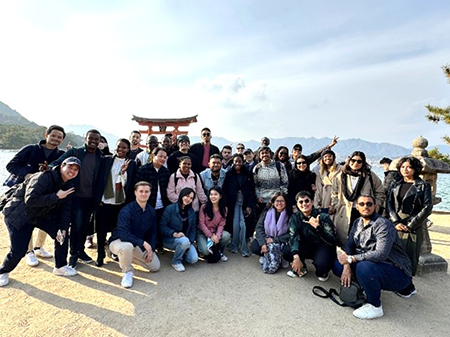
Miyajima, Hirosima -
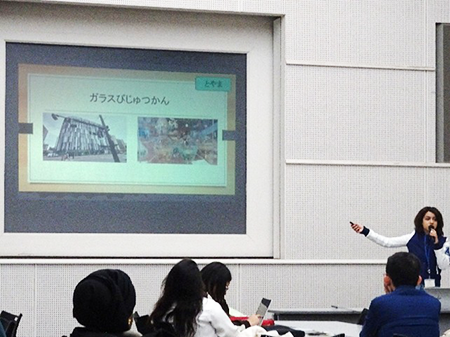
Presentation of Self-Study Trip
Mrs. Wifek Ben Ammar
Ministry of Foreign Affairs, Migration and Tunisians Abroad, Republic of Tunisia
3. Networking
Networking constituted one of the core pillars of the program, providing participants with valuable opportunities to establish meaningful connections with a wide range of stakeholders in Japan, including diplomats, public officials, business professionals, academics, and local communities. These interactions have become an important foundation for future cooperation and mutual understanding.
As a participant representing the Kingdom of Cambodia, I had the distinct honor of engaging with several prominent institutions. At the Ministry of Foreign Affairs of Japan, exchanges with officials and participation in social activities offered practical insights into Japan’s diplomatic practices. Visits to the Japan International Cooperation Agency (JICA) and the Japan External Trade Organization (JETRO) provided a deeper understanding of Japan’s approaches to international development and trade promotion. Engagement with the ASEAN-Japan Centre further enriched perspectives on regional partnership and collaboration.
In addition, interactions with the Royal Embassy of Cambodia in Japan contributed to strengthening diplomatic ties and reaffirming national representation. Visits to private sector institutions, including SATAKE Head Office, Hakutsuru Sake Brewery, and Kubota, offered valuable exposure to Japanese corporate culture, innovation, and industrial practices.
Academic exchange was also an integral component of the networking experience. At Mukogawa Women’s University, interactions with faculty members and students promoted mutual learning and cultural understanding. Participation in events organized by the Izumisano Cross-Cultural Association (ICA) and networking activities with members of the International Science Club of Osaka further broadened professional and interpersonal connections.
Equally meaningful were the opportunities to engage with local communities. Through the Conversation Partner Program (かいわパートナー) and host family visits, I was able to experience Japanese daily life firsthand and develop genuine connections with local residents. Furthermore, lectures delivered by distinguished experts, including professors from Osaka University, government officials, and diplomatic representatives, provided valuable insights into contemporary global and regional issues. Interaction with staff members of the Kansai Center also contributed to a deeper understanding of the program and strengthened professional relationships.
Moreover, the program fostered a strong network among participants from 32 countries. Through shared experiences such as cultural activities, study visits, and group events, lasting friendships and a spirit of international cooperation were cultivated.
In conclusion, the networking opportunities provided by this program have been highly meaningful and impactful. They have not only expanded professional networks but also deepened cultural understanding and mutual respect. I am sincerely grateful for the opportunity to participate in this program as a representative of Cambodia. The experiences and connections gained will remain a valuable asset, and they have further strengthened my appreciation for Japan and its people.
-
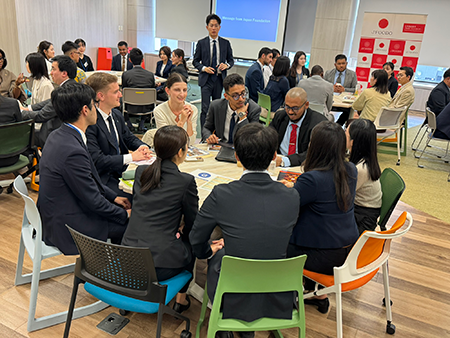
Meeting with JETRO members -
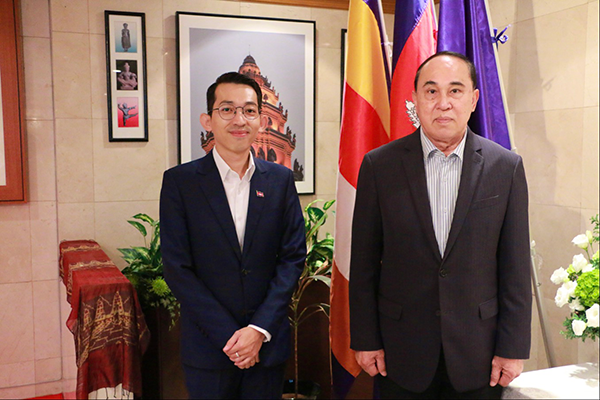
Meeting with Ambassodor,Royal Embassy of Cambodia in Japan
Mr. SROEUNG Chorvorn
Ministry of Commerce, Kingdom of Cambodia
More Than a Language Program
Growing up surrounded by older male cousins, I was introduced to Japanese anime from an early age. For many years, Japan existed in my imagination as a distant yet vibrant place associated with adventure, curiosity, and discovery. It was the country that inspired childhood excitement. Because of this, coming to Japan after so many years felt both surreal and deeply meaningful.
Before arriving, one of my biggest concerns was whether I would struggle with homesickness or remain within my naturally introverted tendencies. However, from the very beginning, those fears quickly disappeared thanks to the kindness and openness of the people around me. One of my earliest memories in Japan was arriving at Rinku-town Station and being unable to find Exit 2. Although they did not speak English, two elderly women patiently tried to help me find my way. It was a small interaction, but it immediately made me feel welcomed and reassured that I would not be alone during my time here.
As the months passed, Japan gradually became part of my everyday life rather than simply a destination I had admired from afar. I still vividly remember sitting by Marble Beach eating hanami dango that I had just bought from a grocery store, a simple moment that suddenly made me realize that I was truly living in Japan, experiencing things I had previously only seen on television.
Beyond improving my Japanese language ability, this program at The Japan Foundation Japanese-Language Institute, Kansai gave me something even more valuable: confidence in my ability to adapt to unfamiliar environments and overcome challenges independently. When I first arrived in Japan, I could only communicate using basic expressions such as “Konnichiwa” and “Arigatou.” Eight months later, I leave with not only improved language skills, but also a much deeper understanding of Japanese culture, communication, and daily life.
While the academic schedule was rigorous and often demanding, the experience as a whole was incredibly rewarding. The friendships formed throughout the program, the everyday routines that became meaningful, and the experiences shared with people from different backgrounds all contributed to making these eight months unforgettable. Watching sunsets from my bedroom window, becoming a regular customer at local cafe, and seeing the autumn leaves in Kyoto are memories that I will continue to cherish long after returning home.
Looking back, I believe this program should not be viewed simply as a language course, but as an experience that encourages both personal and professional growth. It provides participants with the opportunity to better understand Japan through direct experience while also building connections that may continue far into the future.
Finally, I would like to express my sincere gratitude to The Japan Foundation and all those involved in organizing and supporting the program. Their dedication created an experience that was both meaningful and transformative.
皆さん、本当にありがとうございました。
Mrs. Tatia Markelia
Georgian National Tourism Administration