
Group Invitation Program for Next Generation Experts in ASEAN (Cohort2: Interfaith Dialogue) Antonio Quenser do Balino do Carmo
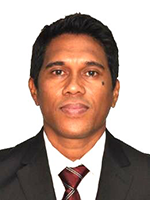
Antonio Quenser do Balino do Carmo (Timor-Leste)
Catholic Diocesan Priest of Archdiocese of Dili
Final Report
The invitation program was an enriching experience that provided deep insights into religious and social issues, how Japan’s religious tradition and practice reflect about human beings and humankind. How religion in Japan, which has close ties to culture and nature, helps raise awareness among people to help and protect one another. Protecting poor children, children who want to commit suicide and homeless people. Religion creates safe places for crying people. Don’t let people die alone, be isolated and die by him-self with spiritual care. Respect the life and death people. In this way, it is not only about helping and feeding people but give them courage to raise and get up again.
It is coming from deepest and goodness teaching of religion. It also shows that religion is very close to human reality life. Very interesting that religion teaches about purity and harmony, two of the most values and principles of humankind. Purification helps restore balance. Harmony is the dream of every single human being. There are even many crises and problems of religion and community in terms of spirituality. Especially in reality of young generation life. With the question: do you believe in religion? More than 70% Japanese young people answers that they don’t believe in religion (no religion). It means that paradigm of religion changes across ages. How can religion build bridges so that young people can regain awareness of the importance of humanity? The importance of solidarity and importance of mutual respect and understanding?
The number of children in the village has decreased. Technology, particularly social media and artificial intelligence, is changing the way young people think, ultimately leading them to adopt a different lifestyle. Many young people choose to seek better education in the city and look for work there, leaving their villages, their culture, their parents and families behind to settle in the city. In one aspect, it has resulted in the loss of cultural heritage.
Actually, every single passing day in Japan, is always left memorable stories. How religion takes important roles in supporting people and more special supporting young generation. Especially in terms of education. Education is very important. The basic education principle in the inter-religious context is to teach students/young people to unite in the name of peace and to acknowledge Muslim, Hindu, Buddhist, Shinto, Christian of other religious groups and congregations, as well as non-believers, as part of their educational environment and together shared public space.
From Timor-Leste’s perspective, more than 50% of the population are young people. The use of SNS and AI help young people but also affect them. Specially, just like what happened in Japan, many young people are moving to the city. But family role is still important. The family plays a role in instilling culture and religion. In the religious aspect, the question is how to teach young people to be truly open to others? How to motivate them in interpersonal connections between people of different faiths. Because catholic religion and tradition is more powerful, 97% of people are Christian Catholic. It caused that young people don’t have interest and direct experience with other religions, to learn about other religion and establish friendship with them. Christian religion also still plays important role in society. More than 300 Christian schools around Timor. Instilling values of solidarity and fraternity, especially for young generation. Helping families in character building and social interactions. Helping youth in competences and behaviors. So, we can say that our young people have future.
First of all, my experience in Japan was a valuable lesson and experience for me and what I should do next in Timor-Leste as a religious practitioner. Secondly, the lessons I learned from highly experienced and intelligent lecturers, as well as religious leaders in Japan, motivated me to further explore interfaith relations and pursue a career as a lecturer researching and writing articles on interfaith relations in ASEAN and Timor Leste.
Thank you so much for inviting me to join the program, and I look forward to future discussions and collaborations.
- What We Do Top
- Arts and Cultural Exchange [Culture]
- Japanese-Language Education Overseas [Language]
- Japanese-Language Education Overseas [Language] Top
- Learn Japanese-language
- Teach Japanese-language
- Take Japanese-Language Test
- Know about Japanese-language education abroad
- The Japanese-Language Institute, Urawa
- The Japanese-Language Institute, Kansai
- Japanese-Language Programs for Foreign Specified Skilled Worker Candidates
- Japanese Language Education for Japanese Children Resident Overseas and for the Descendants of Migrants
- Archives
- Japanese Studies and Global Partnerships [Dialogue]
- JF digital collection
- Other Programs / Programs to Commemorate Exchange Year
- Awards and Prizes
- Publications