
Group Invitation Program for Next Generation Experts in ASEAN (Cohort2: Interfaith Dialogue) Arief Subhan B. Arman Asyraf Baldev
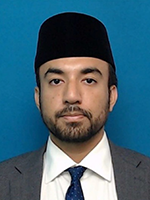
Arief Subhan B. Arman Asyraf Baldev (Malaysia)
Research Fellow, Peace, Dialogue and Xenophobia Studies (PEDIXS) Centre, International Islamic University Malaysia
Final Report
Alhamdulillah. When I was selected to be the Malaysian representative for the Japan Foundation Southeast Asian Partnership Program 2026, I was indeed surprised. Being the youngest within the cohort, it was a great opportunity for me to learn from the experiences of interfaith experts from Southeast Asia, as well as academics within Japan. With the theme ‘Japan-ASEAN Interfaith Dialogue: Overcoming Social Division through Religion’, we embarked on a journey of peace through dialogue.
The first couple of days were filled with lectures and visits, whereby the participants were able to interact with each other – asking pertinent questions about the role of religion in society today. I made several observations. The Japanese experience of faith is quite different to the experience of religionists in Southeast Asia. One striking difference is that there are Japanese who believe in two different faith systems simultaneously (i.e. Shinto and Buddhism), which is an uncommon practice in SA. Next, the practice of religion in Japan ‘need not be loud’ (paraphrasing Dr Buddhapiya from Myanmar) What is meant is that one can hold a specific belief without having to say that his/her actions stem from that belief. It is pure consciousness manifested into action. In Malaysia, one’s religious affiliation needs to be expressed; it is compulsory to state one’s belief on their identification card. This is of course, more to do with managing the census – more political than anything else.
There were many highlights from this trip. One such highlight is the visit to the Sanya area where we met with representatives from the Hitosaji no Kai (The Spoonful Club); an organisation founded by Buddhist monks who are dedicated to assist those struggling with hunger. At the Kosho-in Temple, we met with the warm smiles of Chief Priest Gakugen Yoshimizu and Rev. Drm Akinori Takase, a priest of the Jodo Pure Land denomination and Associate Professor at Taisho University. After a scrumptious dinner, the participants helped in preparing bento boxes and daily goods to be distributed to the homeless. Both Imran-san of Singapore and myself were surprised that there are many displaced people in Tokyo. As such, I am grateful to the Japan Foundation for including the food distribution as part of the program. It is easier to overlook such matters to paint a ‘more beautiful picture’ of the city, but this was not on the agenda. We were humbled by the work of the Hitosaji no Kai and wish them all the best in their endeavours.
On the 4th day, we visited the Meiji Jingu, a Shinto shrine located in the heart of Tokyo. There was an immediate sense of peace that descended upon me, as I was greeted by the ‘kami’ in abundance there. As a tradition unique to Japan, I was curious to know more about Shintoism. My questions were answered with clarity by Moriyasu Ito, a Shinto Priest based at the Meiji Jingu Intercultural Research Institute. From here, I learned that doing good is not for the sake of reaping some reward in life to come – it is for the sake of the now. Ito-san mentioned that the intention of doing good work is so that future generations can also enjoy the fruits of one’s labour, i.e. maintaining the sacred elements within nature.
On the 5th day, we visited Sendai by way of the Shinkansen. Once we arrived, we took a bus to Tohoku University where we met with Chief Priest Taio Kaneta, a member of the Japan Society for Spiritual Care and organiser of Café de Monk, as well as his son, Vice Priest Taiko Kaneta. I learned a lot, especially on the intricacies of palliative care. Kaneta-san’s (Taiko) work at the Tohoku University Hospital is indeed inspiring. To merge aspects of religion with elements of science (within medicine), in caring for the elderly is not an easy task. I was truly inspired by his work, which is reflected by the radiance on his face – to which I was in awe. It was palpable, which I believe comes from a sincere heart devoted to helping others in need.
On the final day, we were able to share our views and reflect on the events prior. I am grateful for the chance to engage with the public, and to share my thoughts on religious life in Japan (with the title ‘From Division to Connection: Views from Southeast Asian Religious Specialists). The venue, The International House of Japan, was for me, the perfect setting for such an engagement. On the point of ‘religion need not be loud’, it is a lesson that I hope to bring back to Kuala Lumpur, and to share such views with those who are in positions of authority.
There are many other significant moments from this program that I’d like to share, but for the sake of brevity, I’ve only listed the above as some lessons I’ve gained throughout the memorable week. I am honoured to forge new friendships along the way, especially with my colleagues from Southeast Asia and personnel from the Japan Foundation. I would like to extend my gratitude to the Foundation for the meticulous planning of the entire trip. Thank you to the Program Advisor, Dr. Toshiaki Kimura for the lessons imparted and the camaraderie built. My gratitude is also extended to Ayana-san, Misako-san, and other team-members of the Japan Foundation who helped answer our many questions and guided us along the way. To add, I’d like to take this opportunity to acknowledge Dina Zaman of IMAN Research, Malaysia for recommending my name to be part of the program. For those who would like to take part in future programs, I highly recommend sending an application in.
My takeaway point is that peace can only be attained by focusing on similarities that unite, as opposed to the differences which have divided us for far too long. I sincerely hope that our friendship will last a lifetime.
- What We Do Top
- Arts and Cultural Exchange [Culture]
- Japanese-Language Education Overseas [Language]
- Japanese-Language Education Overseas [Language] Top
- Learn Japanese-language
- Teach Japanese-language
- Take Japanese-Language Test
- Know about Japanese-language education abroad
- The Japanese-Language Institute, Urawa
- The Japanese-Language Institute, Kansai
- Japanese-Language Programs for Foreign Specified Skilled Worker Candidates
- Japanese Language Education for Japanese Children Resident Overseas and for the Descendants of Migrants
- Archives
- Japanese Studies and Global Partnerships [Dialogue]
- JF digital collection
- Other Programs / Programs to Commemorate Exchange Year
- Awards and Prizes
- Publications