
The Japan Foundation Awards (2026)
The Japan Foundation (JF) is proud to announce the recipients of the Japan Foundation Awards 2026.
This year marks the 53rd anniversary of the Japan Foundation Awards, which were launched in 1973, the year after the establishment of the Japan Foundation. For the past 50 years, the Foundation has presented the Japan Foundation Awards to individuals and organizations that have made significant contributions to promoting international mutual understanding and friendship between Japan and other countries through academic, artistic, and other cultural pursuits.
For 2026, we received 86 nominations from experts in various fields both domestically and internationally, as well as from the general public. After screening by an expert committee, the following three recipients were selected.
The Japan Foundation Awards 2026 Commemorative Lectures and Interviews
FUKUTAKE Soichiro (Honorary Chairman, Fukutake Foundation) [Japan]
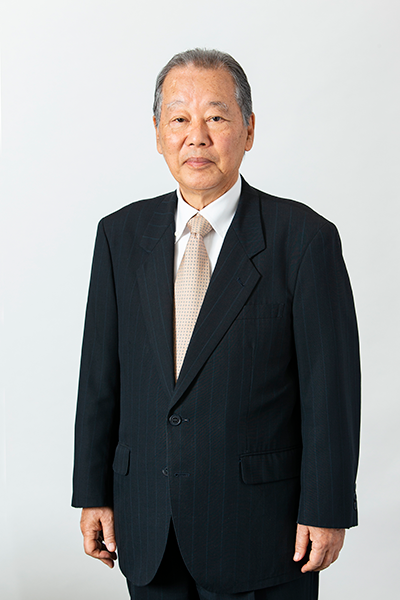
As Representative Director of Benesse Corporation (now Honorary Advisor of Benesse Group), Mr. FUKUTAKE Soichiro has led the development of Benesse Art Site Naoshima since the opening of Benesse House Museum on the island in 1992. Through the establishment of museums and the development of art projects across the islands of the Seto Inland Sea, including Teshima and Inujima, he has transformed the region into a globally renowned center for contemporary art.
As General Producer of the Setouchi Triennale, he expanded these initiatives to seven islands and the Takamatsu Port area with the inaugural festival in 2010 and has guided all six editions held through 2025. Naoshima, the focal point of these efforts, has gained international recognition as an unparalleled "art island." Through the transformative power of art, the project has revitalized island communities facing rapid depopulation and demographic ageing, earning widespread acclaim both in Japan and overseas.
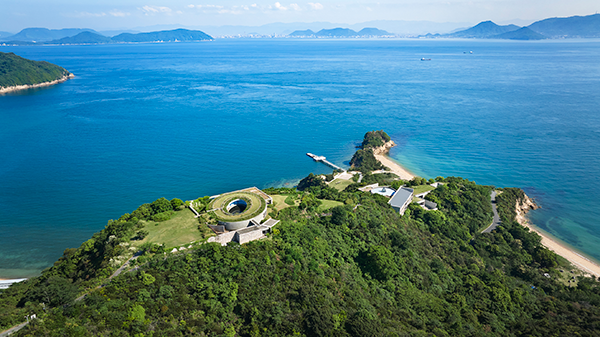
Aerial view of Benesse House
Mr. Fukutake's commitment to international cultural exchange dates back to the Benesse Prize, first established at the Venice Biennale in 1995. Since 2016, the prize has also been presented at the Singapore Biennale, supporting outstanding artists from around the world. Since 2009, he has also served as General Producer of the Echigo-Tsumari Art Triennale, creating opportunities throughout Japan for local and international artists, particularly in the field of contemporary art, to produce new works and engage with local communities. These achievements have made a significant contribution to advancing mutual understanding and fostering international friendship and goodwill through the arts.
Moreover, the art projects he has spearheaded in response to challenges such as depopulation and demographic ageing have attracted growing international attention from regions facing similar issues. In recent years, volunteers from across Asia, including Taiwan, have participated in the operation of these projects, further expanding opportunities for cross-cultural exchange.
In 2004, Mr. Fukutake established the Naoshima Fukutake Art Museum Foundation, the predecessor of today's Fukutake Foundation, through a personal endowment. Guided by the principle of "contributing to the development of vibrant and distinctive local communities through culture and the arts," the Foundation provides a lasting framework for the operation of museums and artistic initiatives on Naoshima, support for community revitalization through culture and the arts, and the promotion of international art festivals.
Over many years, Mr. Fukutake has made an outstanding contribution to promoting mutual understanding through contemporary art and international art festivals. His achievements make him a most deserving recipient of the Japan Foundation Award.
SANAA Sejima and Nishizawa and Associates [Japan]
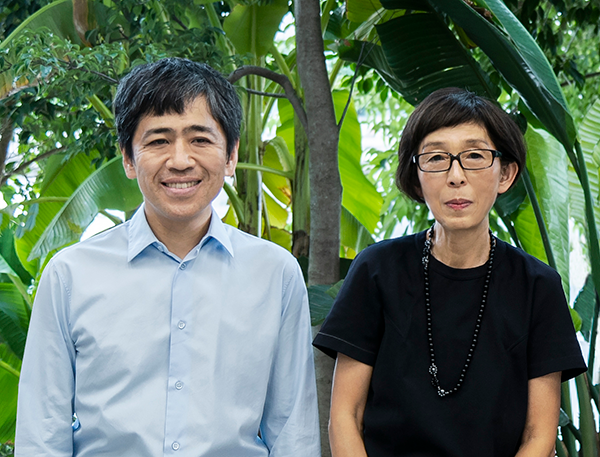
NISHIZAWA Ryue and SEJIMA Kazuyo (c) SANAA
SANAA is an architectural practice established in 1995 under the joint direction of architects Kazuyo Sejima and Ryue Nishizawa. At the heart of SANAA’s architectural philosophy is an emphasis on lightness and transparency, dissolving and seamlessly reimagining boundaries—between interior and exterior, as well as between architecture and its environment. Their spaces encourage an interplay between embodied experience and individual reflection, representing an exploration of new architectural typologies for spaces where people come together. At the same time, by bringing the context of each site into vivid dialogue with global culture, they have opened up new and diverse ways for people to engage with the spaces around them.
The 21st Century Museum of Contemporary Art, Kanazawa (2004), one of SANAA’s most celebrated works, transformed conventional ideas of what a public cultural institution could be through its circular form, open and accessible from every direction. Other projects realized in diverse settings around the world—including the Louvre-Lens (2012), the New Museum (2007), and the Rolex Learning Center EPFL (2009)—go beyond conventional notions of function to create spaces that embrace the fluidity of human circulation and interaction, revealing new possibilities for architecture. Each is also the product of international dialogue and collaboration.
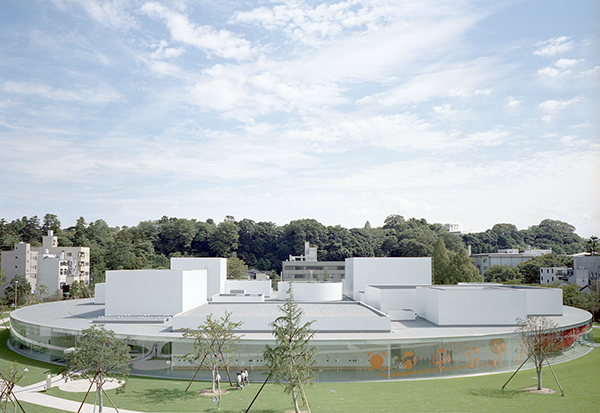
21st Century Museum of Contemporary Art, Kanazawa (c) SANAA
Their recent projects include the Art Gallery of New South Wales’ Naala Badu building (2022) and the Taichung Green Museumbrary (2025), which dynamically integrates an art museum and a public library into a single continuous space. Rooted in the history of their respective sites, both projects look towards the future of culture. In doing so, they demonstrate the further evolution of SANAA’s ongoing exploration of architecture as a “park” or “plaza.”
SANAA’s accomplishments have made an outstanding contribution to international cultural exchange, creating spaces that foster mutual respect and understanding across borders while contributing significantly to greater mutual understanding between Japan and the world. The universal significance of their work has earned widespread recognition, making SANAA a most deserving recipient of the Japan Foundation Award. We look forward to their continued contributions and achievements in the years ahead.
Iudicium Publishing GmbH (Iudicium Verlag GmbH)[Germany]
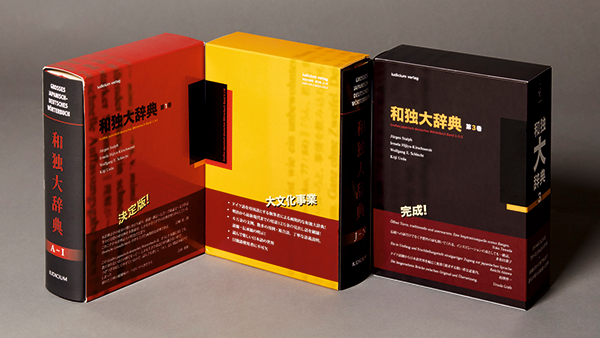
Wa–Doku Daijiten (Japanese–German Dictionary)
(c) Iudicium Verlag
Iudicium Publishing GmbH is a specialist publisher in the humanities and social sciences based in Munich, Germany. Since its establishment in 1983, it has dedicated more than four decades to fostering scholarly exchange between East Asia and the German-speaking world, particularly between Japan and Germany, through publications in Japanese studies, East Asian studies, German literature, and German language education.
Over the years, Iudicium Publishing has produced an extensive body of works, including translated literature, scholarly monographs, dictionaries, and academic journals. As a leading platform for East Asian studies in the German-speaking world, it has made a sustained contribution to the advancement of academic research and mutual cultural understanding.
Its scholarly publications span a wide range of fields, including comparative studies of Japanese and German literature, history, linguistics, religion, philosophy, and the arts. The publisher has earned an outstanding reputation for the academic rigor and originality of its monographs and edited volumes, as well as for its exceptionally high editorial and production standards, including its expertise in Japanese-language publications. Many Japanese scholars of German studies have benefited from the opportunity to disseminate their research through the publisher’s scholarly monographs, academic journals, and symposium proceedings.
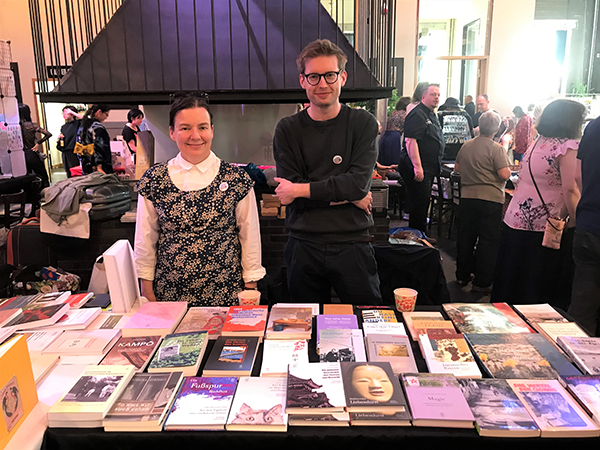
Book presentation at the Japan Market Berlin
“Festsaal Kreuzberg”
(c) Sabine Sommerkamp
Among its most distinguished achievements is the compilation and publication of the monumental Wa–Doku Daijiten (Japanese–German Dictionary), a project involving around 80 contributors that began in 1997, and which culminated in the completion of its three-volume edition in 2022. Each volume exceeds 2,500 pages, and the dictionary features an extraordinary wealth of example sentences for each headword, covering language from Meiji-period (1868-1889) literature and historical texts to contemporary colloquial Japanese. The result is an outstanding foreign-language dictionary of exceptional breadth and scholarly value. The publisher’s dedication to supporting this landmark project throughout its quarter-century journey—from compilation to publication, despite considerable fundraising challenges—represents an achievement of immense significance.
Iudicium Publishing has also maintained a long-standing commitment to ensuring continued access to its publications by preserving out-of-print titles in digital form for on-demand reproduction, while progressively making previously published works available through open access. This consistent dedication to serving the needs of scholars is particularly noteworthy in academic publishing, where commercial viability is often difficult to achieve. At a time when the global print publishing industry faces unprecedented challenges, the contribution made by a small independent publisher to international scholarly exchange is truly remarkable and worthy of the highest commendation.
Through its sustained commitment to publishing works of exceptional scholarly quality, Iudicium Publishing has, over many years, enriched academic and cultural exchange between Japan and the German-speaking world. Its outstanding contribution to international mutual understanding makes it a most deserving recipient of the Japan Foundation Award.
- The Japan Foundation Awards
- The Japan Foundation Awards Recipients, Presentation Ceremony and Commemorative Events in Previous Years
[Contact Us]
The Japan Foundation Branding and Communication Dept.
Tel. +81-(0)3-5369-6075
Fax: +81-(0)3-5369-6044
Email: kikinsho@jpf.go.jp
(When sending an e-mail, please replace the full-width "@" character with a half-width character.)
- What We Do Top
- Arts and Cultural Exchange [Culture]
- Japanese-Language Education Overseas [Language]
- Japanese-Language Education Overseas [Language] Top
- Learn Japanese-language
- Teach Japanese-language
- Take Japanese-Language Test
- Know about Japanese-language education abroad
- The Japanese-Language Institute, Urawa
- The Japanese-Language Institute, Kansai
- Japanese-Language Programs for Foreign Specified Skilled Worker Candidates
- Japanese Language Education for Japanese Children Resident Overseas and for the Descendants of Migrants
- Archives
- Japanese Studies and Global Partnerships [Dialogue]
- JF digital collection
- Other Programs / Programs to Commemorate Exchange Year
- Awards and Prizes
- Publications