
Report on the 130th Anniversary of Japan-Brazil Diplomatic Relations Event, Part 2: Yoichi Ochiai and the Curator of the Exhibition In Conversation on the Wochikochi Philosophy
Excerpt: The Japan Foundation recently spearheaded two major cultural initiatives in Brazil. We report here on the subsequent briefing on those initiatives. The briefing, in two sessions, featured appearances by the artists Saeborg and Yoichi Ochiai.
- *The following text is reproduced from an article originally published by Tokyo Art Beat.
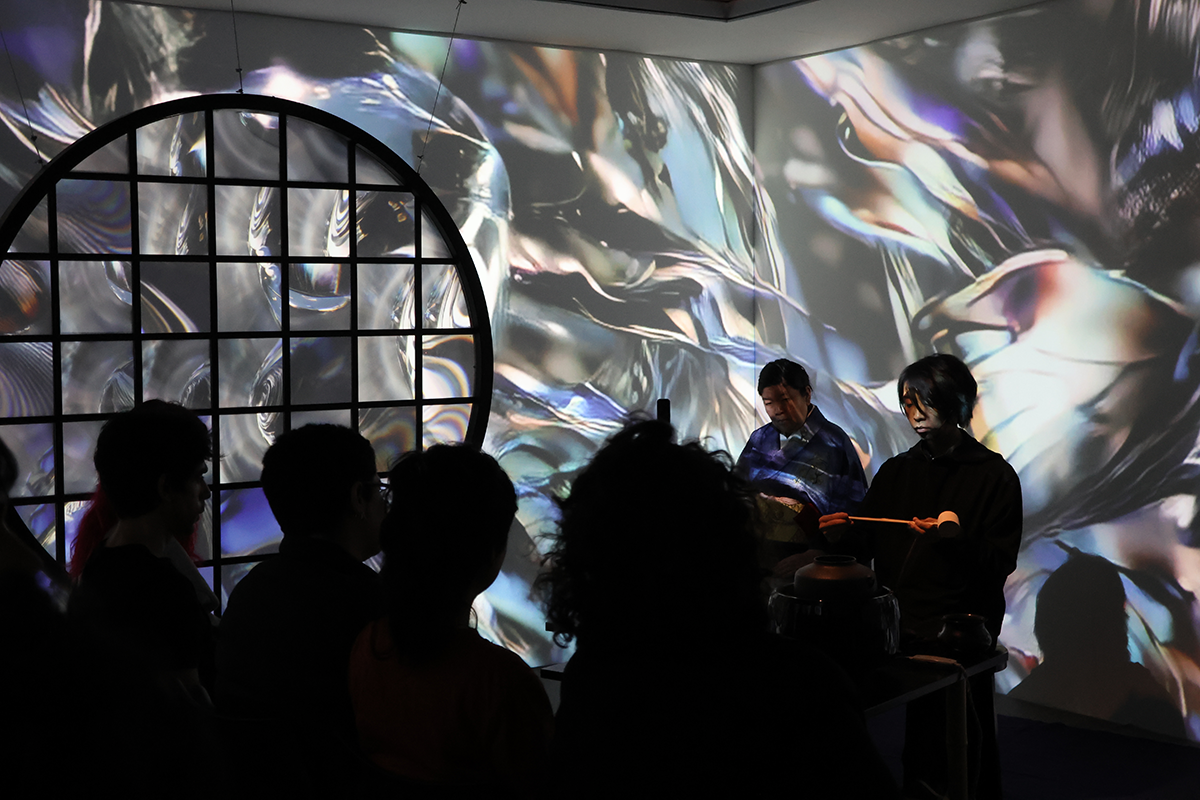
Tea ceremony, from the exhibition Antípodas: tão distantes, tão próximos (Photo: The Japan Foundation)
To mark the 130th anniversary of diplomatic relations between Japan and Brazil, the Japan Foundation launched in FY2025-26 two major cultural initiatives in São Paulo, Brazil’s largest city. A briefing on these initiatives was subsequently held at the Foundation’s headquarters in Shinjuku, Tokyo, where performance artist Saeborg and media artist Yoichi Ochiai each took to the stage in separate sessions. Much to the fascination of the audience, these artists described in detail the introduction of their work in Brazil, their project outcomes, and the responses of local audiences.
The 130th-anniversary project was co-organized by the Japan Foundation and SESC (Serviço Social do Comércio / Social Service of Commerce), a Brazilian nonprofit organization. The commemorative project comprised Saeborg’s Super Farm (staged over four days in November 2025) and the media-art exhibition Antípodas: tão distantes, tão próximos (October 8, 2025–January 25, 2026), the latter featuring 13 artist collectives, including Yoichi Ochiai, and curated by Tomoe Moriyama, a curator at the Museum of Contemporary Art Tokyo. Held severally in cultural complexes operated by SESC, the events attracted approximately 90,000 visitors, offering audiences in Brazil the opportunity to experience some of the latest works of Japanese art.
The briefing was held in two sessions: The first featured a conversation between artist Saeborg and art critic Atsushi Sugita; the second, presentations by curator Tomoe Moriyama and artist Yoichi Ochiai. This article highlights key remarks from the latter session.
*Click here for Part 1: Saeborg and Atsushi Sugita in conversation.
Questions Raised by Japanese Media Art in Brazil
Moriyama has worked as a curator since 1989, taking part in the foundation of the Tokyo Metropolitan Museum of Photography. She has held her current position at the Museum of Contemporary Art Tokyo since 2007 and curated solo exhibitions by Dumb Type and Rhizomatiks. Her current exhibition, mission∞infinity | space + quantum + art, runs through May 6. She also has taught at the University of Tokyo and Waseda University, and she produced a government-sponsored art and science exhibition for Expo 2025 Osaka, Kansai, Japan.
- Participating artists in the Antípodas exhibition are listed below.
[In Japanese alphabetical order] - Minami Arai; Kohei Ishida and Yuji Hatada; Yoichi Ochiai; So Kanno, Akihiro Kato, and Takemi Watanuki; GRINDER-MAN; Akinori Goto; Optical Illusion Block Project (Tomoko Ohtani, Kazushi Maruya, Yuko Higaki, Mieko Nakamura, Sayumi Higo, and Yuko Isogaya); Heartbeat Picnic (Junji Watanabe, Yui Kawaguchi, Kyosuke Sakakura, and Hideyuki Ando); Zombie Zoo Keeper; NORAMOJI Project (Rintaro Shimohama, Masaki Nishimura, and Shinya Wakaoka); Panasonic Design, FUTURE LIFE FACTORY; Jun Fujiki; Nahoko Yamamura, Daisuke Uriu, Mitsuru Muramatsu, Yusuke Kamiyama, Shin Sakamoto, Shunji Yamanaka, and Masahiko Inami.
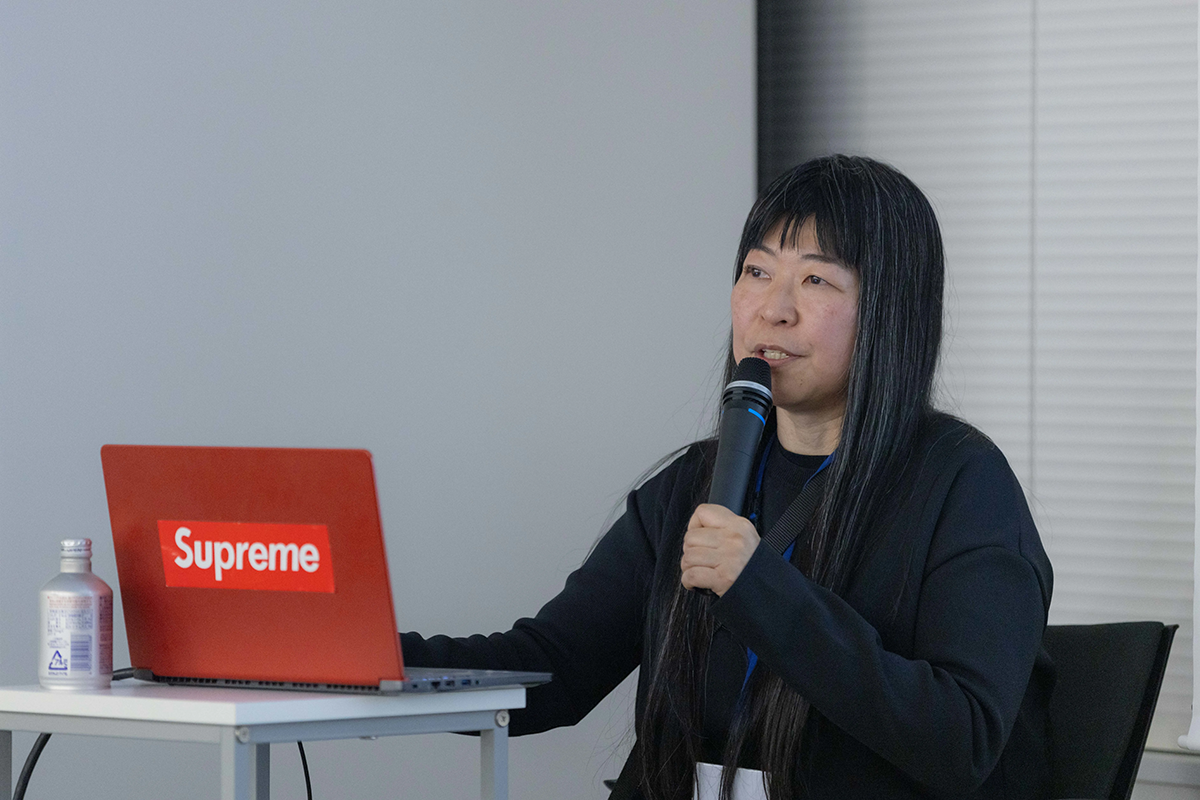
Tomoe Moriyama (Photo: Tatsuya Hirota)
At the briefing, Moriyama presented an overview of Antípodas and her curatorial vision for the exhibition. The word antípodas (antipodes) in the exhibition title means two places that are on opposite sides of the globe, referring specifically to Japan and Brazil. She also highlighted the existence of a Japanese Brazilian community spanning roughly seven generations, as well as the deep historical ties that connect the two countries.
Moriyama: This exhibition began with the idea that people who live on the opposite side of the world from us may be very like us—or very unlike us. Japan has a word that dates back to the age of the Man’yōshū [ancient anthology of Japanese poetry]—wochikochi. More than meaning simply ‘there and here,’ it carries a deep sense of temporal expanse—past and present, present and future—held simultaneously. That was the idea I wanted to share with people in Brazil: a way of understanding time and distance that quietly defies our assumptions about the relationship between the two.
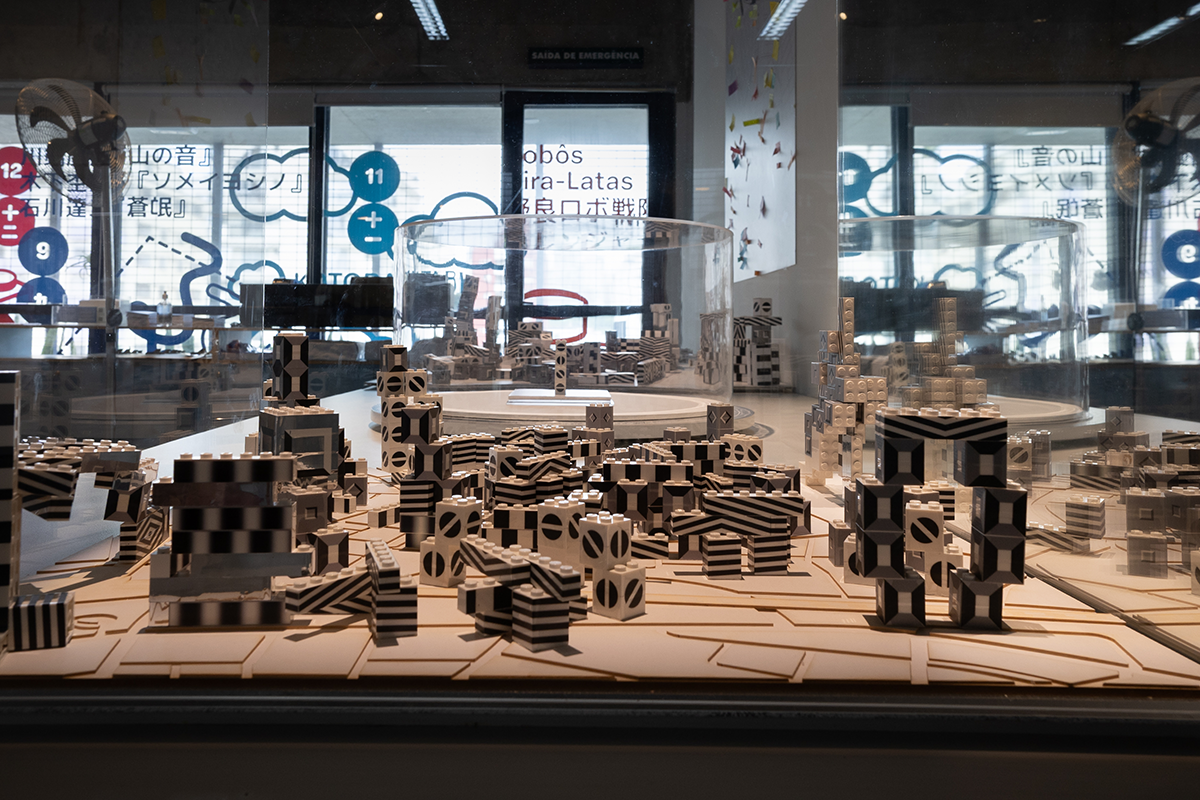
From the exhibition Antípodas: tão distantes, tão próximos: an installation by Optical Illusion Block Project (Tomoko Ohtani, Kazushi Maruya, Yuko Higaki, Mieko Nakamura, Sayumi Higo, and Yuko Isogaya) (Photo: Marina Melchers)
The exhibition’s concept was to present interactive and shareable works that connect “here” and “there,” inviting movement and exchange between the two—works that anyone could enjoy. Many of the participating artists had exhibited in two media-art exhibitions Moriyama had previously curated at the Museum of Contemporary Art Tokyo (Cherish, your imagination and MOT Annual 2023: Synergies, or between creation and generation). The artists are primarily in their 20s to 40s—the generation expected to shape the future—with some as young as teenagers. In selecting them, Moriyama looked beyond the traditional aesthetic of wabi-sabi to embrace moe (adoring affection) into her oeuvre of kenage (earnestness) and okashimi (gentle humor), qualities she considers characteristic of Japanese media art.
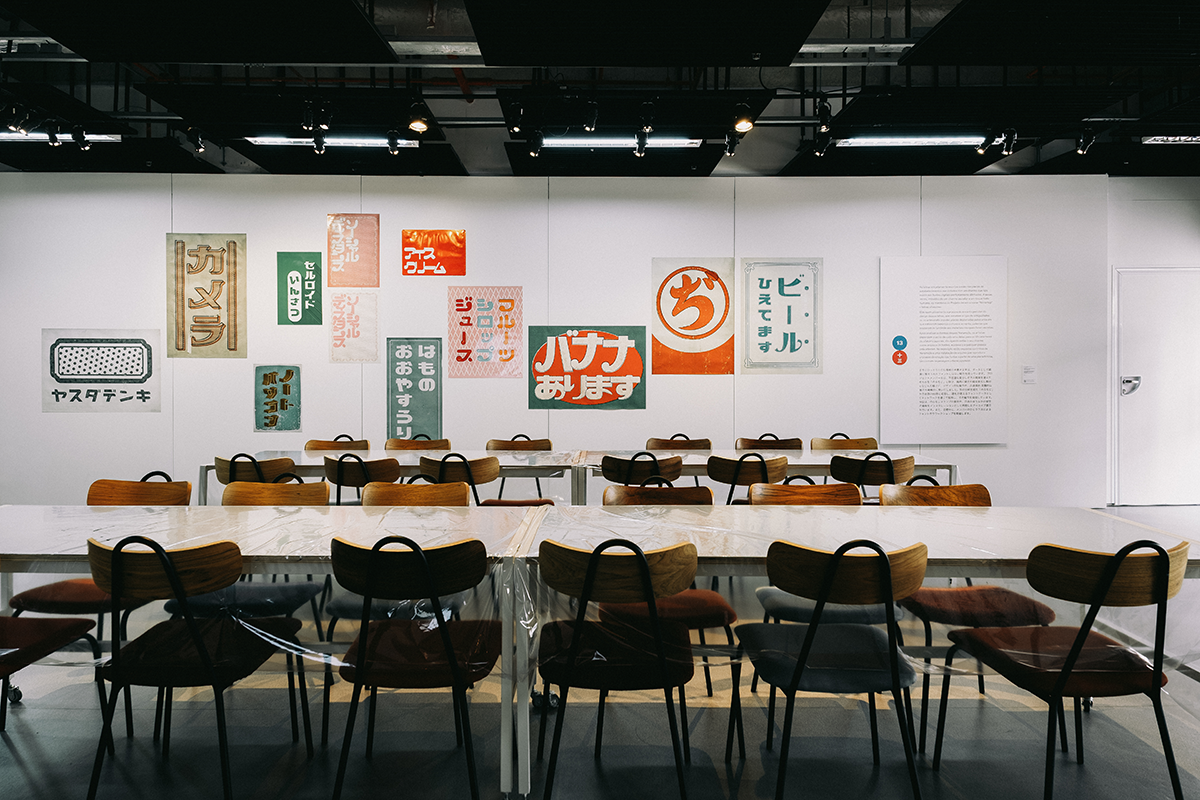
From the exhibition Antípodas: tão distantes, tão próximos: an installation by Optical Illusion Block Project (Tomoko Ohtani, Kazushi Maruya, Yuko Higaki, Mieko Nakamura, Sayumi Higo, and Yuko Isogaya) (Photo: Marina Melchers)
The Antípodas exhibition opened in October 2025 at SESC Vila Mariana, a large complex in São Paulo that includes a swimming pool and a theater. There were exhibition spaces on each floor—on outdoor ramps, in lobbies, in a reading room with a large atrium, and in creative studios—drawing more than 80,000 visitors over a four-month run.
Moriyama: During the installation, I was deeply moved by how carefully the local staff handled the works and how thoroughly they checked the condition of each piece. That said, when something like a Roomba came out of a box, everyone looked a bit unsure how to react [laughs]. We also organized a stamp rally with visitors collecting stamps as they moved through the exhibition—though I was surprised to learn that this isn’t really a custom in Brazil. A designer who had researched Ochiai’s pavilion at the Expo [Expo 2025 Osaka, Kansai, Japan] created a space with mirrors, including mirrored stamp kiosks, and many visitors enjoyed collecting the charming stamps custom-made for each artist.
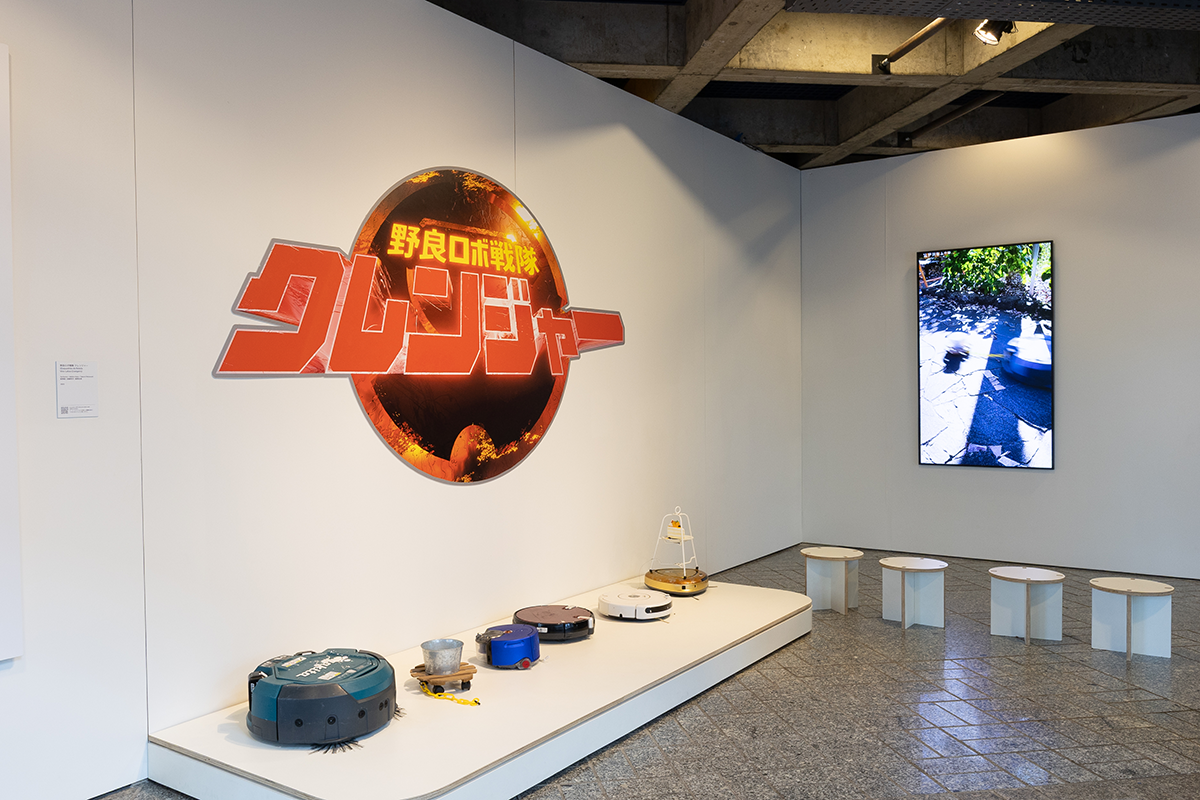
From the exhibition Antípodas: tão distantes, tão próximos: NORAMOJI Project (Rintaro Shimohama, Masaki Nishimura, and Shinya Wakaoka) (Photo: Marina Melchers)
Moriyama was also struck by the high level of local interest, not only from Japanese Brazilians but also from the Brazilian audience at large, in the artistic qualities of hiragana and katakana in works by Minami Arai and the NORAMOJI Project. She was equally impressed by the excellent accessibility arranged for visitors with disabilities at the SESC facilities. She concluded, “I came away feeling that the hardships of an ‘away game’—holding an exhibition overseas—are worth taking on, even if it comes at a cost.”
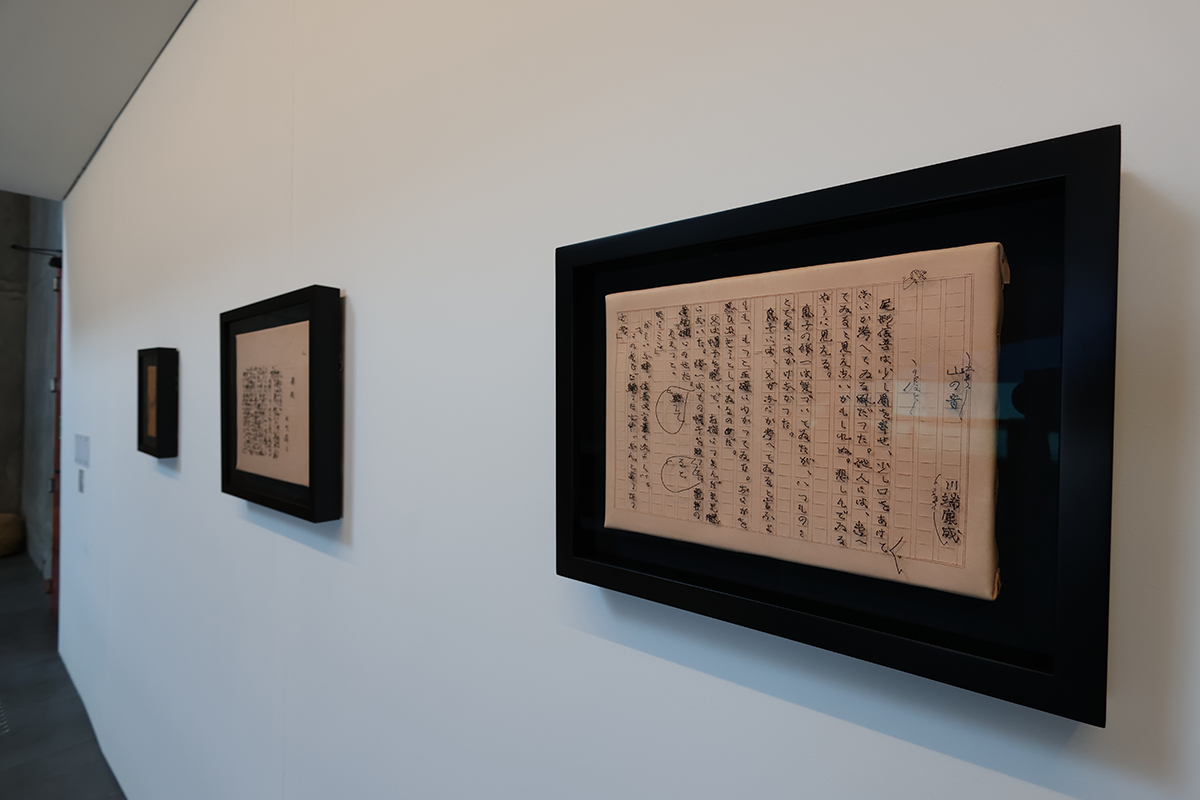
From the exhibition Antípodas: tão distantes, tão próximos: work by So Kanno, Akihiro Kato, and Takemi Watanuki. (Photo: Marina Melchers)
Discovering Another Japan in São Paulo
Next to speak was Yoichi Ochiai, born in 1987. He began his artistic practice around 2010, developing works based on his original concept of Digital Nature. At Expo 2025 Osaka, Kansai, Japan, he served as a thematic-project producer, and the signature pavilion null², which he planned and supervised, drew a significant public response. Alongside his artistic practice, he pursues research and education spanning art and technology as an associate professor at the University of Tsukuba and the University of Tokyo.
At the Antípodas exhibition, Ochiai presented two large-scale works. Both incorporated the worldview of Digital Nature, in which the boundary between matter and information disappears, and the theme of bukka—the idea that all things transform into one another.
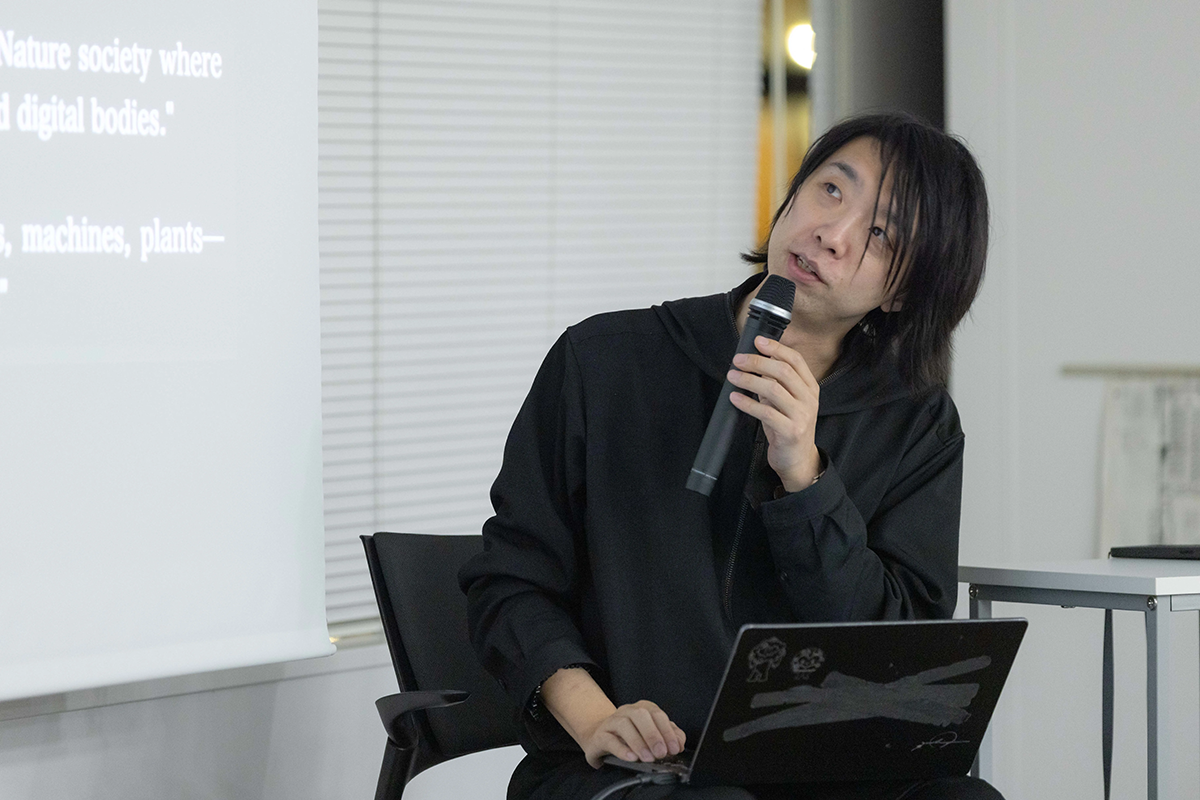
Yoichi Ochiai (Photo: Tatsuya Hirota)
Installed outdoors, the work Liquid Universe: When Computation Unravels into a Butterfly and Gains Mass is a banner measuring 70 meters in length. Spanning the wall, its overwhelming scale caught the eye from a distance, drawing visitors into the exhibition. The AI-generated fluid imagery transforms like a metamorphosing butterfly; the moment of transformation—when the image takes on a sense of life and tangibility—is captured and fixed as a single image.
Ochiai: I wanted to express the concept of bukka (物化 / End to end transformation of material things), as proposed by the Chinese philosopher Zhuangzi, as a single image. Producing such a large, high-resolution image using generative AI was quite a challenge. We had the work printed by a company in Brazil, and the colors turned out beautifully.
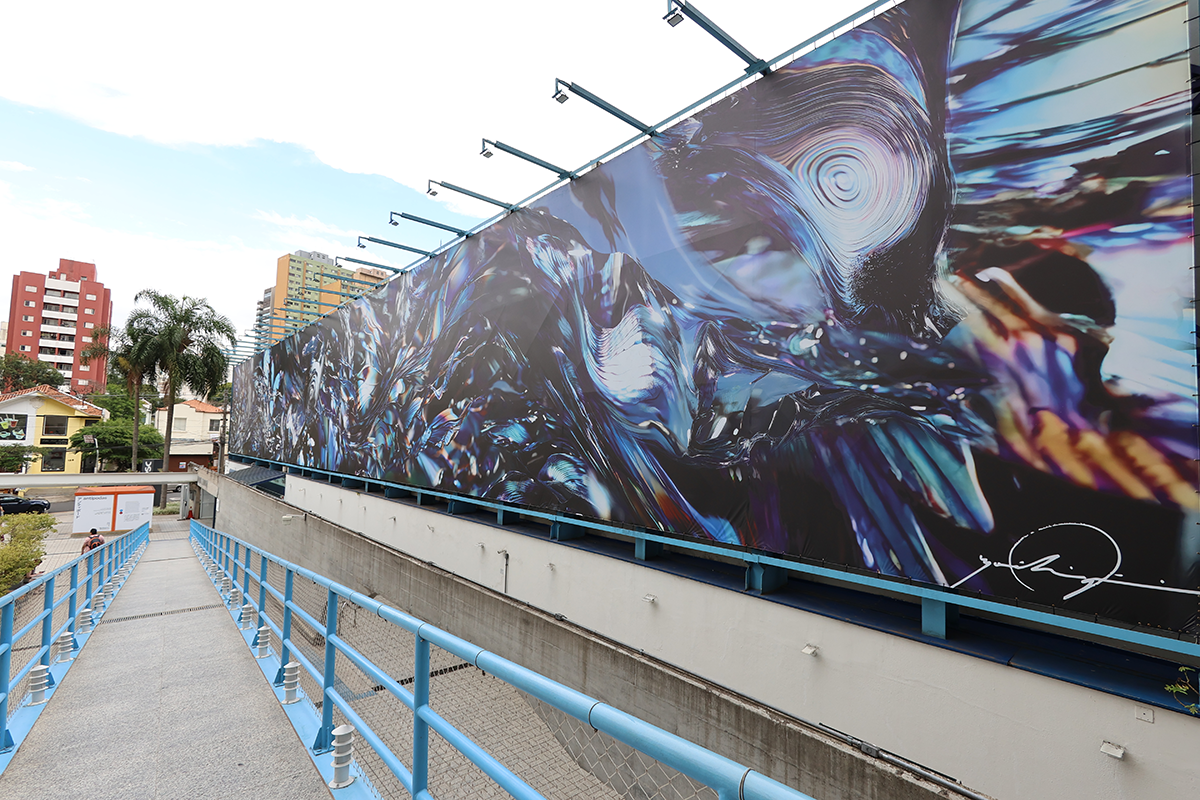
From the exhibition Antípodas: tão distantes, tão próximos: work by Yoichi Ochiai (Photo: The Japan Foundation)
Also presented at the venue was Jiji-Muge Hermitage: The Tetralemma of Image and Mass, another large-scale work. The installation was essentially a space inspired by a tea house—a small universe in which moving images, light, and sound overlapped and responded to one another. The word “tetralemma” refers to a Buddhist logical framework in which existence has four positions—being, non-being, both being and non-being, and neither being nor non-being—here used as a lens for interpreting the relationship between image and mass.
Ochiai: In place of a tea master, we installed in the tokonoma a CRT monitor equipped with AI that conversed with visitors, and we designed the fluid imagery to shift continuously. The result was a space where visitors could experience the worldview of Digital Nature, in which all forms of existence relate to one another as equals.
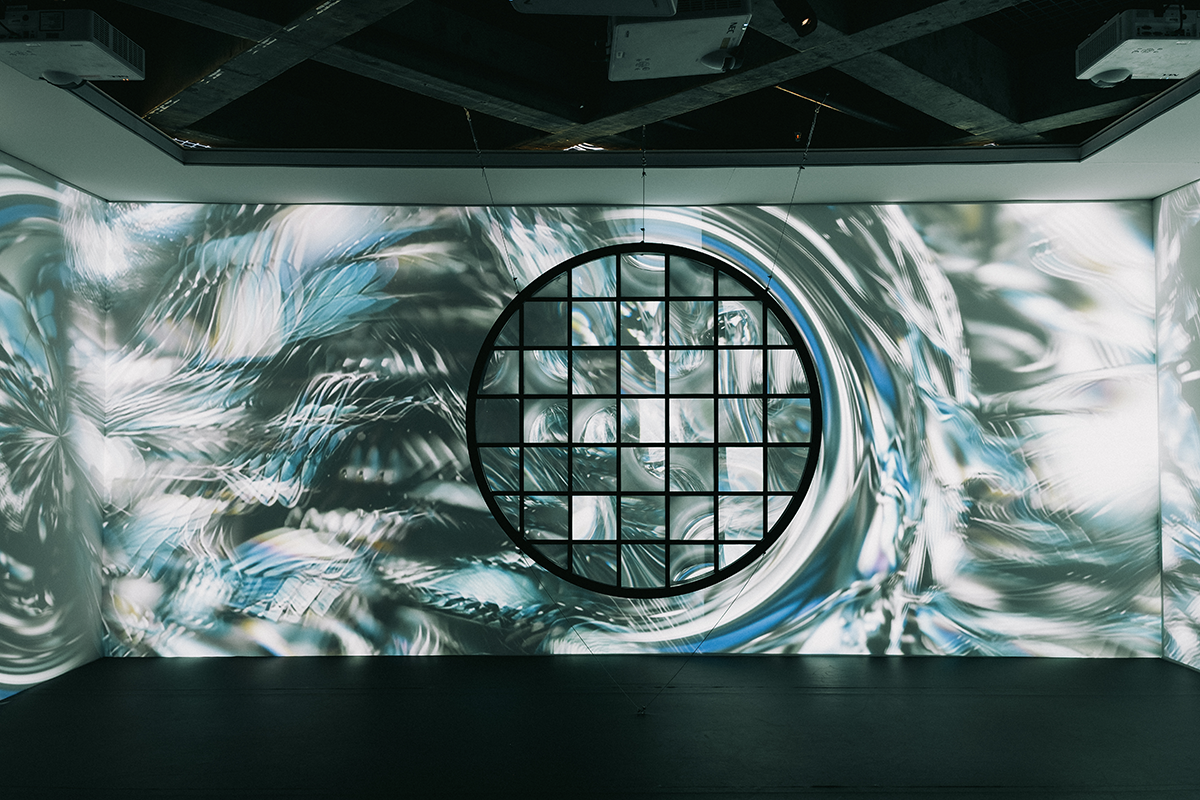
From the exhibition Antípodas: tão distantes, tão próximos: work by Yoichi Ochiai (Photo: The Japan Foundation)
During the exhibition, tea ceremonies were also held in this space. With the cooperation of local members of the Urasenke school, tea-ceremony utensils were borrowed, and Ochiai—who has been studying tea ceremony for the past six years—prepared the matcha and served it to guests.
Ochiai: The tea room I visited in São Paulo felt steeped in the culture of Meiji-era Japan. I had the sense that I was visiting another Japan—one that might have actually existed. I learned that within Brazil’s Japanese diaspora of more than two million people, traditional customs, such as cherishing objects, have taken root, and that there is a strong awareness of and connection to cultural roots. It made me feel that there is a solid cultural foundation there.
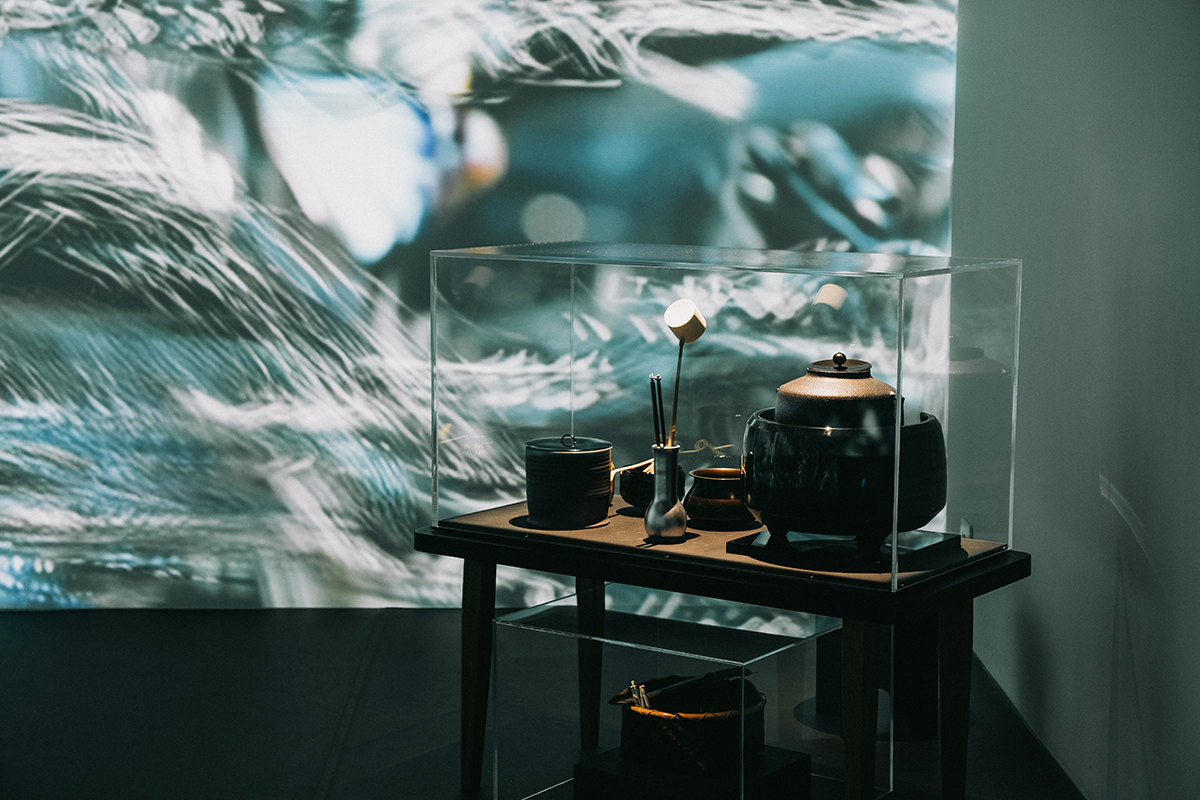
From the exhibition Antípodas: tão distantes, tão próximos: work by Yoichi Ochiai (Photo: Marina Melchers)
The two parts of this work share a common formal element: fluid forms that the artist himself describes as nuru-nuru, (slippery).
Ochiai: As suggested by the word wochikochi that Moriyama mentioned, I think there is an inherent ambiguity in Japanese culture that does not favor fixed boundaries or clear outlines. The expression nuru-nuru can even be found in poems of the Man’yōshū, which suggests that this sensibility has existed since ancient times.
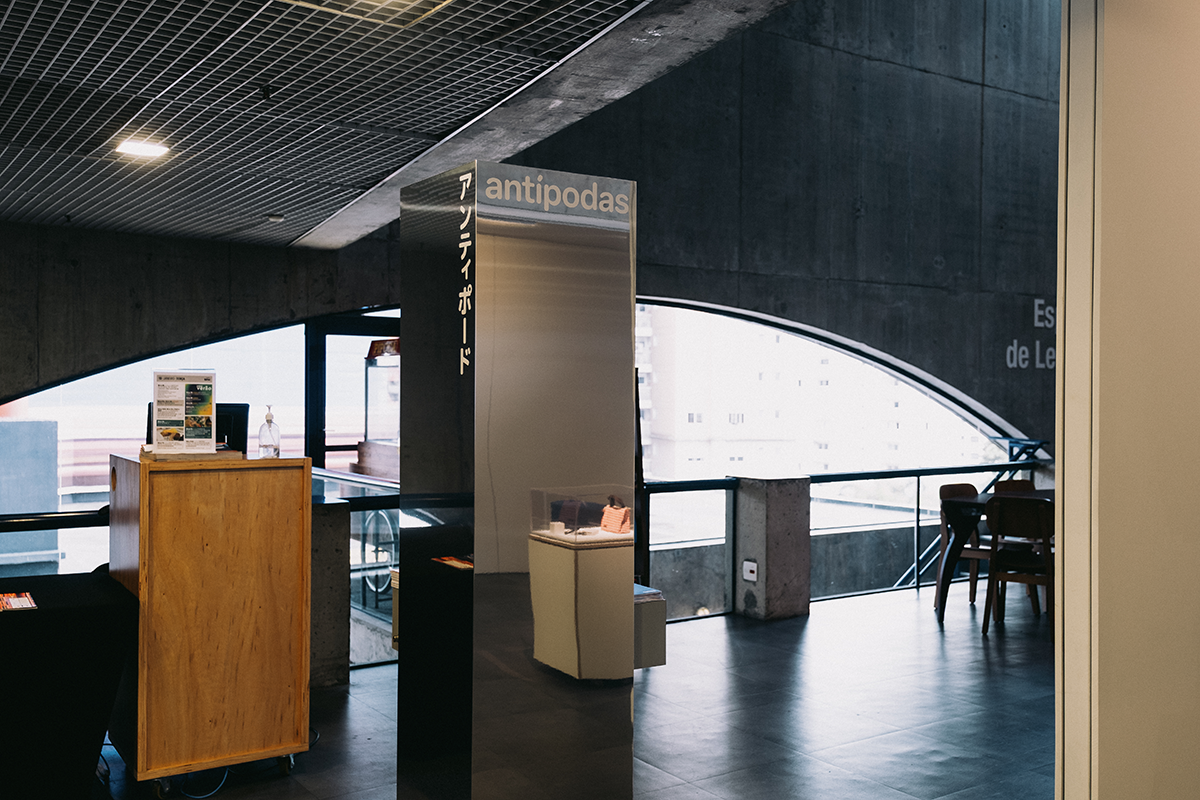
From the exhibition Antípodas: tão distantes, tão próximos: mirrored stamp kiosks installed throughout the venue (Photo: Marina Melchers)
To close the briefing, Moriyama asked Ochiai about his future as an artist over the next ten years. Ochiai, who turns 38 this year, explained that throughout his thirties he had consciously focused on exploring his cultural roots—working with subjects like Shinto shrines, Buddhist statues, tea rooms, and sushi restaurants. He traced this back to an experience in his late twenties, when he began exhibiting frequently overseas and came to feel like “a Nukazuke(*) Peter Pan”—someone dependent on imported culture.
*rice bran pickles / the traditional Japanese fermentation method
Ochiai: I want to spend my 40s sharing the Japanese culture I have been exploring more deeply with a global audience and increasing its value on that stage. By bringing the concept of Digital Nature to countries with different views of nature, I hope to open up new forms of expression.
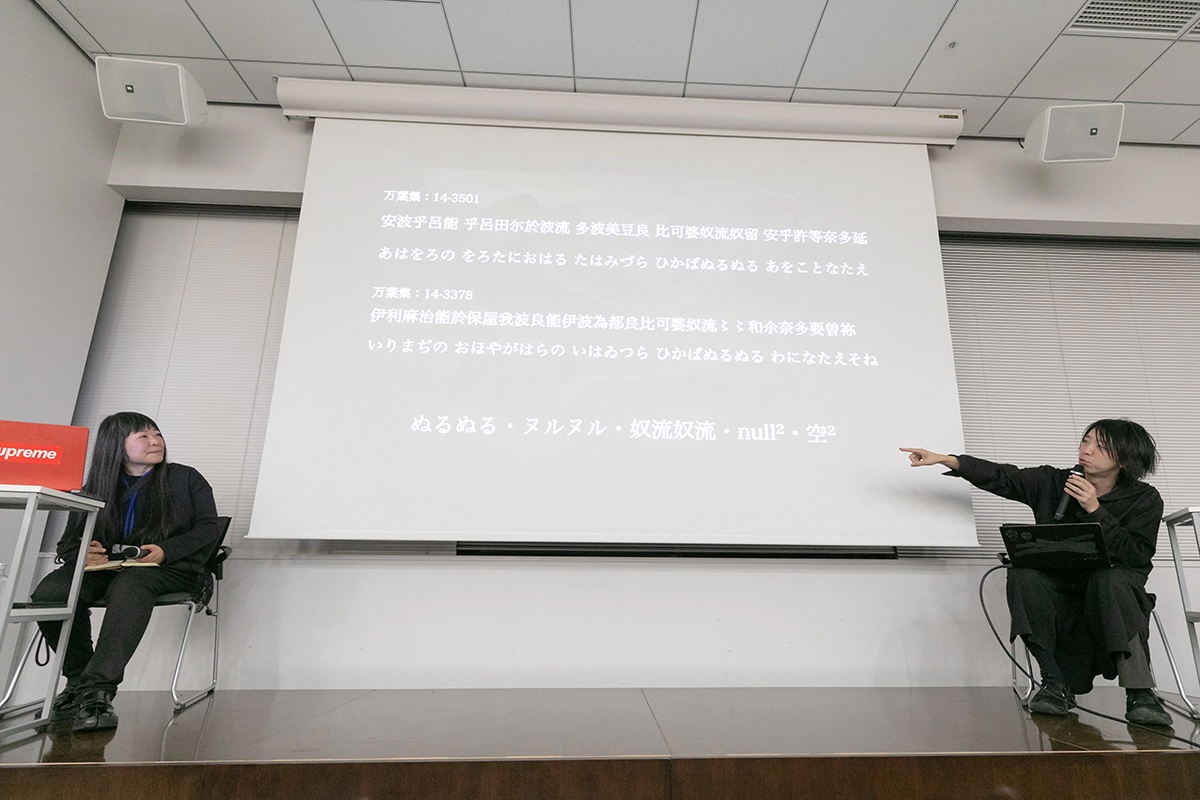
Ochiai and Moriyama in conversation at the briefing (Photo: Tatsuya Hirota)
- What We Do Top
- Arts and Cultural Exchange [Culture]
- Japanese-Language Education Overseas [Language]
- Japanese-Language Education Overseas [Language] Top
- Learn Japanese-language
- Teach Japanese-language
- Take Japanese-Language Test
- Know about Japanese-language education abroad
- The Japanese-Language Institute, Urawa
- The Japanese-Language Institute, Kansai
- Japanese-Language Programs for Foreign Specified Skilled Worker Candidates
- Japanese Language Education for Japanese Children Resident Overseas and for the Descendants of Migrants
- Archives
- Japanese Studies and Global Partnerships [Dialogue]
- JF digital collection
- Other Programs / Programs to Commemorate Exchange Year
- Awards and Prizes
- Publications