
Report on Japan-Brazil 130th Anniversary Diplomatic Relations Event, Part 1: Saeborg and Art Critic Atsushi Sugita in Conversation—Reflections on Saeborg’s First South American Performance
The Japan Foundation recently spearheaded two major cultural initiatives in Brazil. We report here on the subsequent briefing on those initiatives. The briefing in two sessions featured appearances by Saeborg and Yoichi Ochiai.
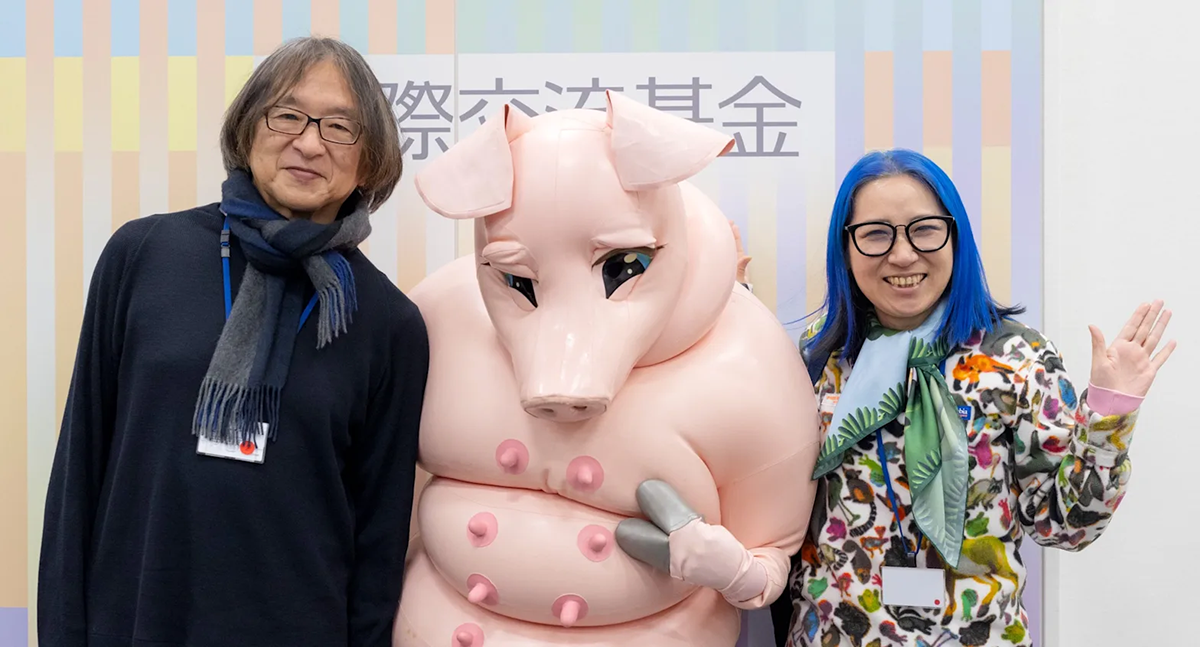
Left to right: Atsushi Sugita, Saepork, and Saeborg (Photo: Tatsuya Hirota)
Saeborg and Yoichi Ochiai Head to Brazil
To mark the 130th anniversary of diplomatic relations between Japan and Brazil, the Japan Foundation launched in FY2025–26 two major cultural initiatives in São Paulo, Brazil’s largest city. A briefing on these initiatives was subsequently held at the Foundation’s headquarters in Shinjuku, Tokyo, where performance artist Saeborg and media artist Yoichi Ochiai each took to the stage in two separate sessions. Much to the fascination of the audience, these artists described in detail the introduction of their work in Brazil, their project outcomes, and the response of local audiences.
Brazil is home to the world’s largest Japanese diaspora—over two million people—while Japan has more than 200,000 Brazilian residents, the highest number of non-Asian foreign residents in Japan. Though the two countries sit on nearly opposite sides of the globe and differ greatly in natural environment and historical background, they have built a close and enduring relationship sustained by their continuous exchange of people. The 130th anniversary initiatives were conceived between the Japan Foundation and co-organizer SESC (Serviço Social do Comércio) and highlighted works that are immersive and participatory, accessible to all, and distinctly Japanese in character.
The two initiatives were Saeborg’s South American debut performance called Super Farm (held over four days in November 2025) and a media-art exhibition titled Antípodas: tão distantes, tão próximos, featuring works by 13 emerging artists including Yoichi Ochiai (October 8, 2025–January 25, 2026). Both were held in multiple SESC cultural complexes in São Paulo and drew a combined audience of approximately 90,000 visitors, most discovering contemporary Japanese art for the first time.
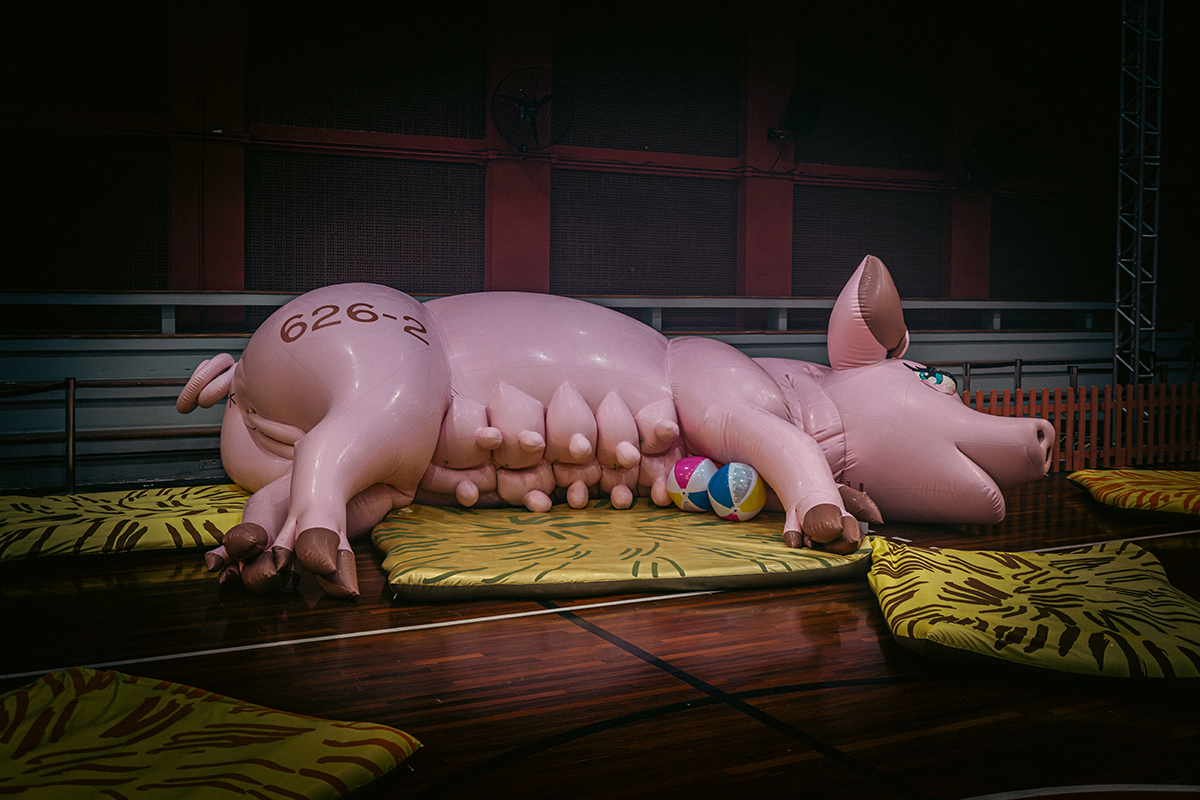
Saeborg Super Farm (Photo: (c) Matheus José Maria)
The briefing was held in two sessions in February 2026—the first, a conversation between Saeborg and art critic Atsushi Sugita; the second, presentations by Antípodas exhibition curator Tomoe Moriyama (curator of the Museum of Contemporary Art Tokyo) and Yoichi Ochiai. This article covers the highlights of the first session, which sparked a rich and thought-provoking exchange.
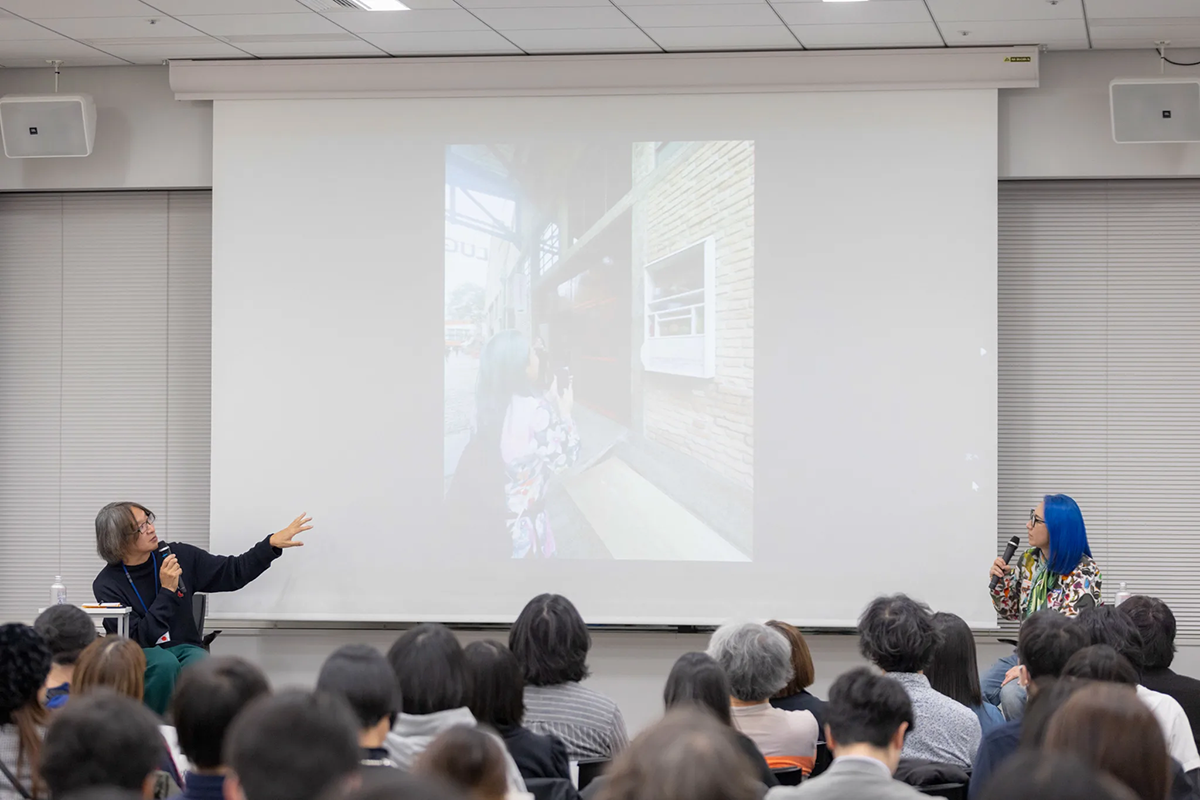
Saeborg and Sugita in conversation at the briefing (Photo: Tatsuya Hirota)
Perspectives on Food and Life in Multicultural Brazil
Saeborg was born in Toyama Prefecture in 1981 and graduated from Joshibi University of Art and Design. Using themes of livestock and insects, she creates latex bodysuits, which she wears in performances and installations at exhibitions and art festivals in Japan and abroad. Her work has been widely recognized for its critical depth, earning prizes that include the Tokyo Contemporary Art Award 2022–2024, which honors mid-career contemporary artists.
Sugita is both an art critic and a researcher in art theory and is known for his wide-ranging discussions that traverse art, science, and philosophy, as well as his collaborative projects with artists. He served as a professor at Joshibi University of Art and Design until 2023, and Saeborg was one of his former students. For this initiative, he traveled to Brazil to give a talk and lecture in conjunction with Saeborg’s performance.
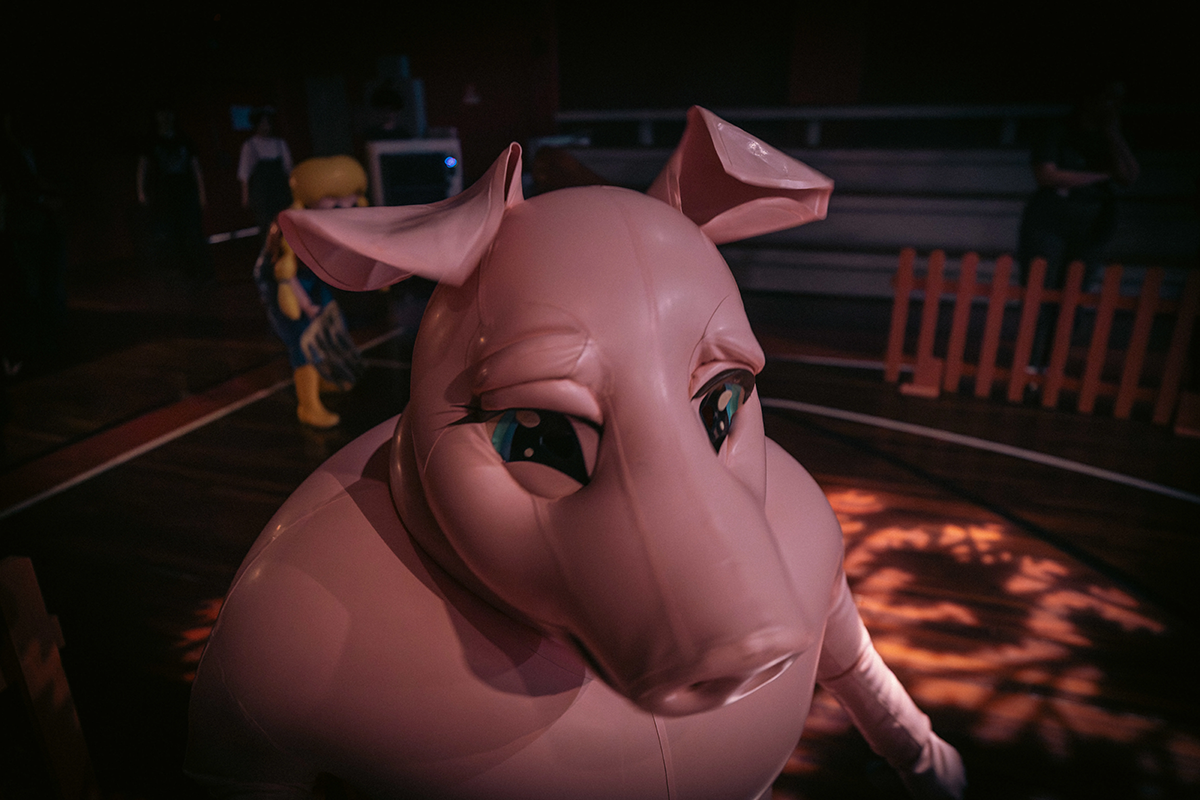
Saeborg Super Farm (Photo: (c) Matheus José Maria)
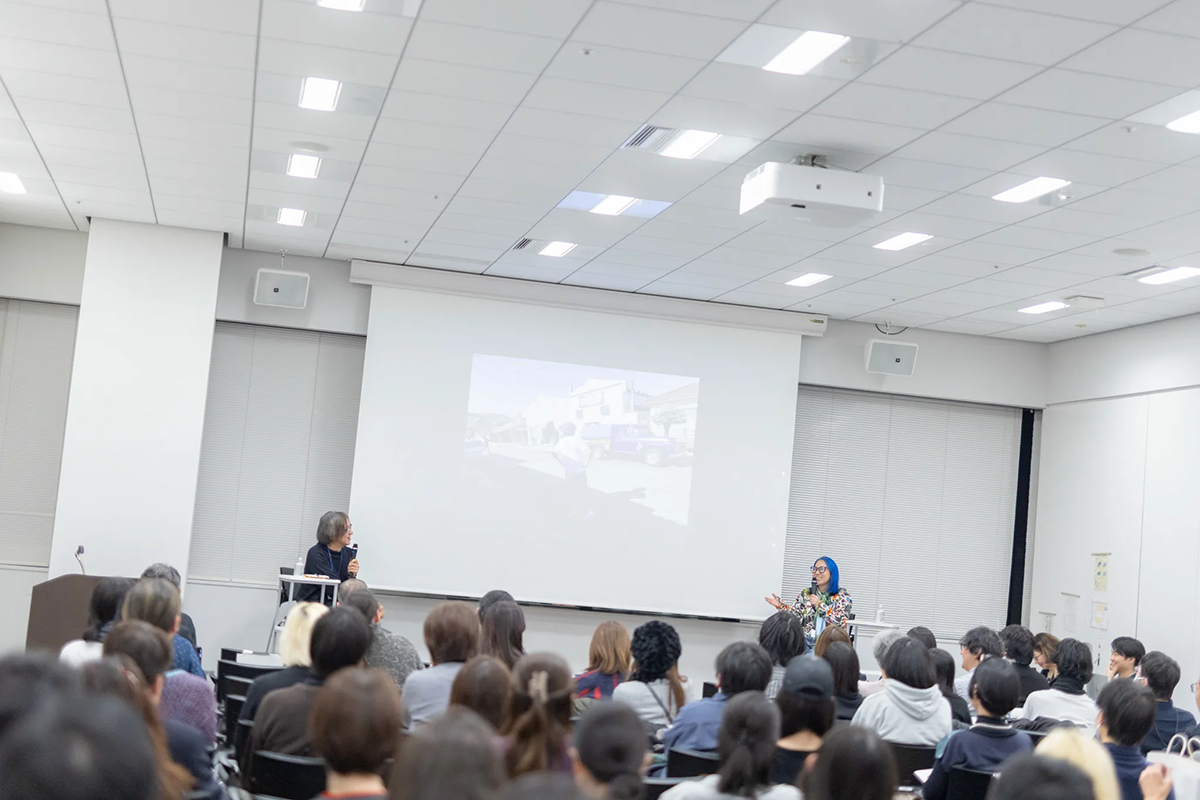
At the first briefing session, Saeborg opened the conversation by explaining why she had invited Sugita to give the lecture.
Saeborg: Mr. Sugita is deeply familiar with my work and practice, and he also has a profound understanding of the philosophy of care. Since Super Farm also touches on themes of care, I wanted him to speak to that from his own perspective.
Sugita: I have been loosely involved in care settings for over a decade and have continued to speak and write on the subject. In recent years, there has been a growing interest in care within the art world, and I think it is partly in that context that Saeborg asked me to be involved.
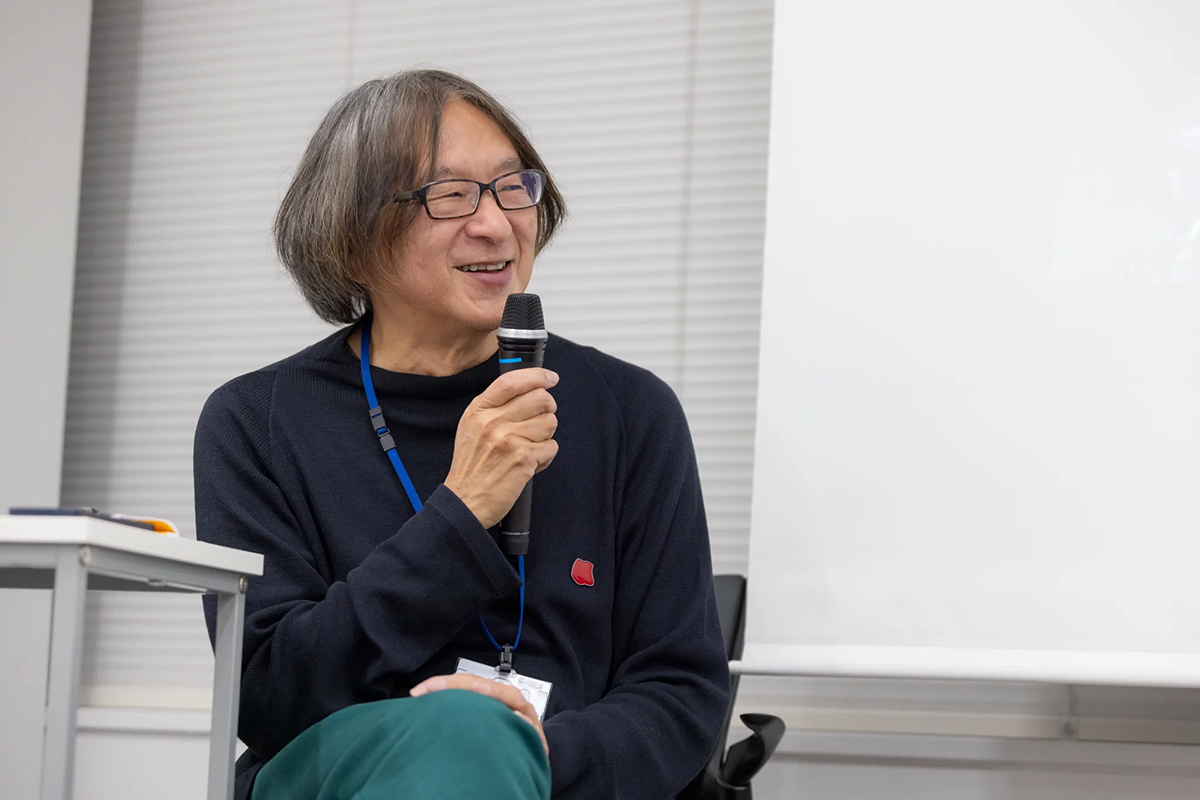
Atsushi Sugita (Photo: Tatsuya Hirota)
Last August, ahead of the performance, the two traveled to São Paulo for research and talks. Sugita lectured in two sessions on the theme “Art and Care,” exploring where Saeborg’s work fits within global contemporary art trends and discussing Japanese physical expression with local specialists. The venues were filled with a lively crowd of theater and butoh researchers and students, and both sessions drew enthusiastic audiences whose questions and opinions filled the air with energy.
According to Sugita, butoh—an avant-garde dance form in Japan—enjoys considerable popularity in São Paulo. He attributes this in part to the legacy of butoh dancer Kazuo Ohno (1906–2010), who performed in the city on multiple occasions. Ohno is believed to have been first invited to Brazil by Antunes Filho (1929–2019), one of the defining figures of contemporary Brazilian theater. Sugita’s first talk was held at an SESC facility housing the theater research center that Filho had founded, driven by his deep interest in Japanese performing arts. Reflecting on her own performances in Brazil, Saeborg noted that she felt a sense of continuity with the foundations Filho had laid.
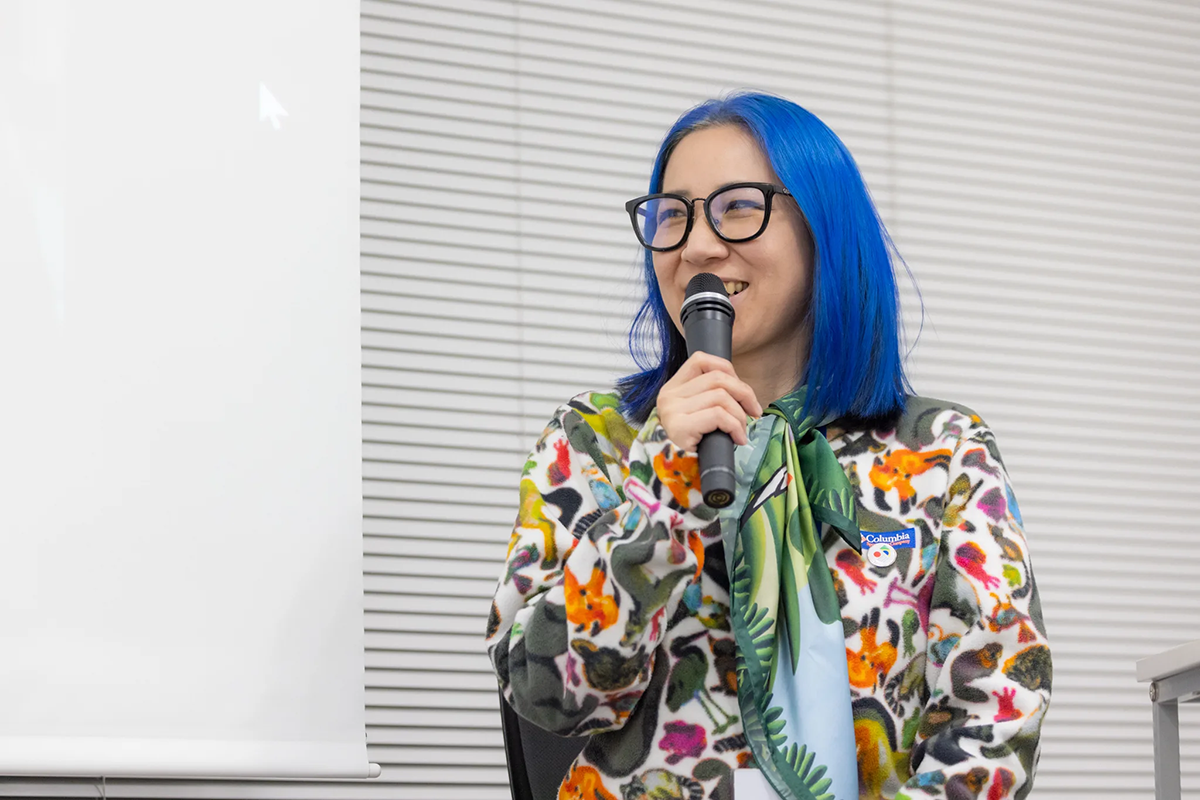
Saeborg (Photo: Tatsuya Hirota)
Saeborg and Sugita’s research took them to museums—one dedicated to the country’s more than 200 indigenous peoples and another focused on Japanese immigration—and to buildings designed by modernist architect Lina Bo Bardi (1914–92), who sought to connect architecture with society. This research deepened their understanding of Brazil’s rich multicultural history. Relevant to her work, Saeborg also visited a poultry farm. The chickens had already been shipped out, but a conversation with the farm’s owner offered her a window into Brazilian attitudes toward livestock, food, and life itself.Saeborg: When I asked about lab-grown meat, the owner said something that has really stayed with me—that eating meat is an act of becoming one with the life of the animal, and that artificial meat, having no “life” of its own, holds no such meaning. I found that way of thinking deeply compelling—the idea that eating meat is taking another life into yourself.
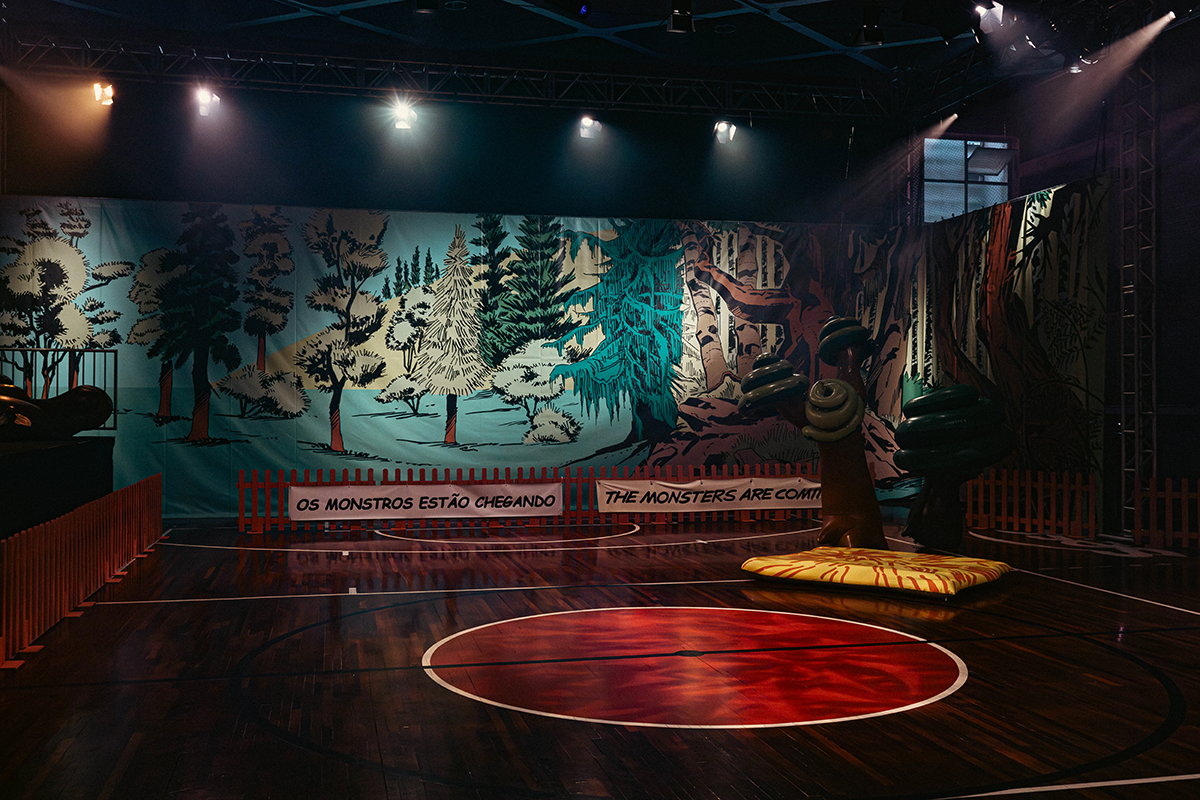
Saeborg Super Farm (Photo: (c) Matheus José Maria)
Contemporary Brazilian society is shaped by a rich intermingling of faiths—Christianity brought by the Portuguese, animist beliefs and spirit worship among indigenous peoples, and Candomblé, which is an Afro-Brazilian religion rooted in the traditions of those brought to Brazil as slaves. Sugita suggests that this layering of religious traditions may have given rise to attitudes toward slaughter and animals that diverge from conventional Western thinking.Sugita: Saeborg’s work has generally been perceived as a critique of the way animals are incorporated into the controlled food systems of industrialized societies. But in Brazil, where the premise itself is different, I found myself wondering whether that critical dimension would still stand. In fact, the two of us talked about exactly that concern during our research trip.

Saeborg Super Farm (Photo: (c) Matheus José Maria)
Sold Out: How Super Farm Brought in Audiences
So how did local audiences respond to the performance?
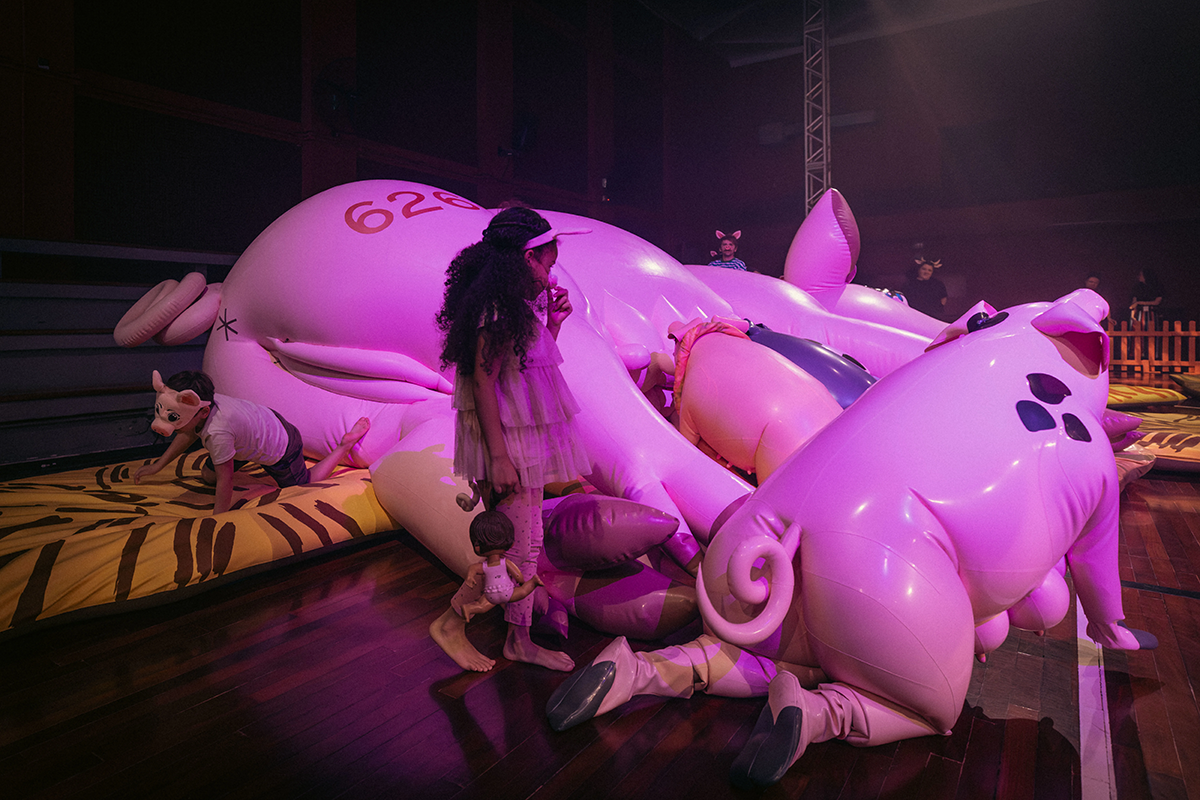
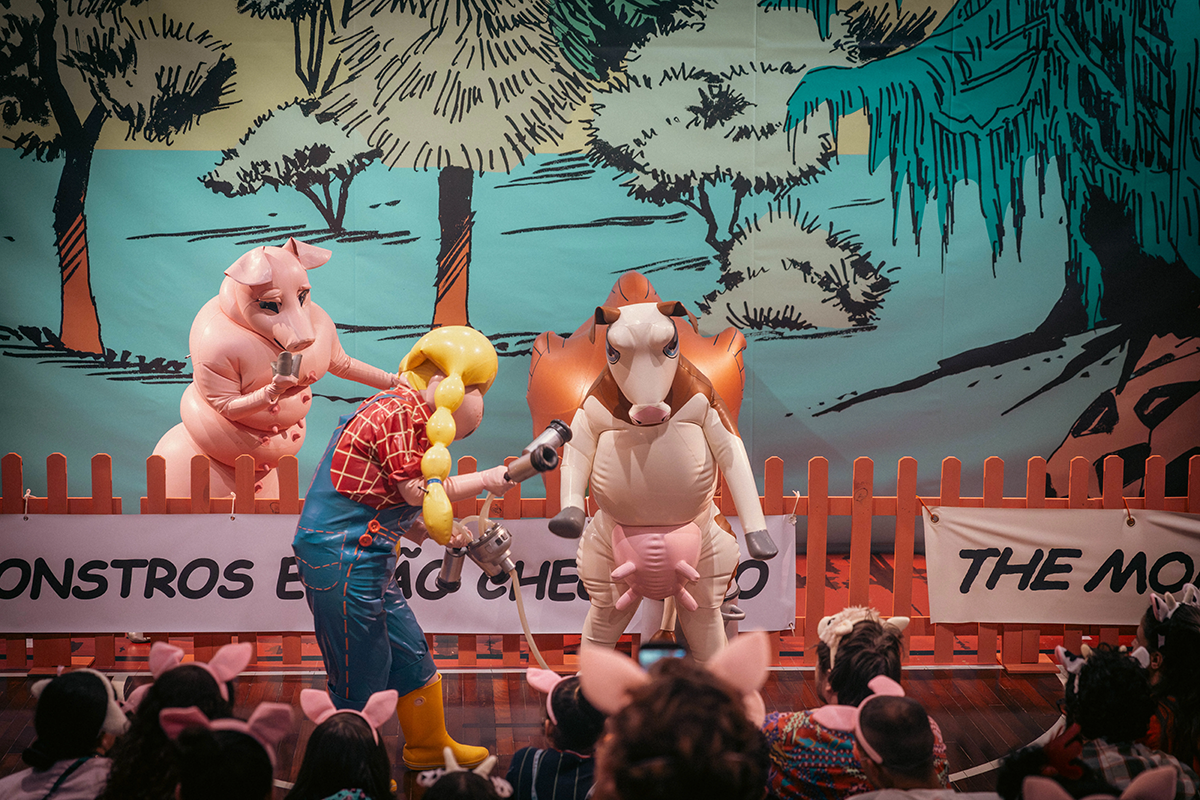
The set of the São Paulo Super Farm production was a colorful, toy-like farm, where performers in exaggerated livestock costumes enacted the full cycle of animal life—birth, nursing, and slaughter. First performed at the Theatertreffen festival in Germany in 2023, the piece has a distinctive participatory structure in which audience members are given ears, tails, and other accessories and invited on stage to take part as animals themselves. Despite its experimental nature, all six performances sold out, and post-show surveys were overwhelmingly filled with responses of “Ottimo!” (the best).
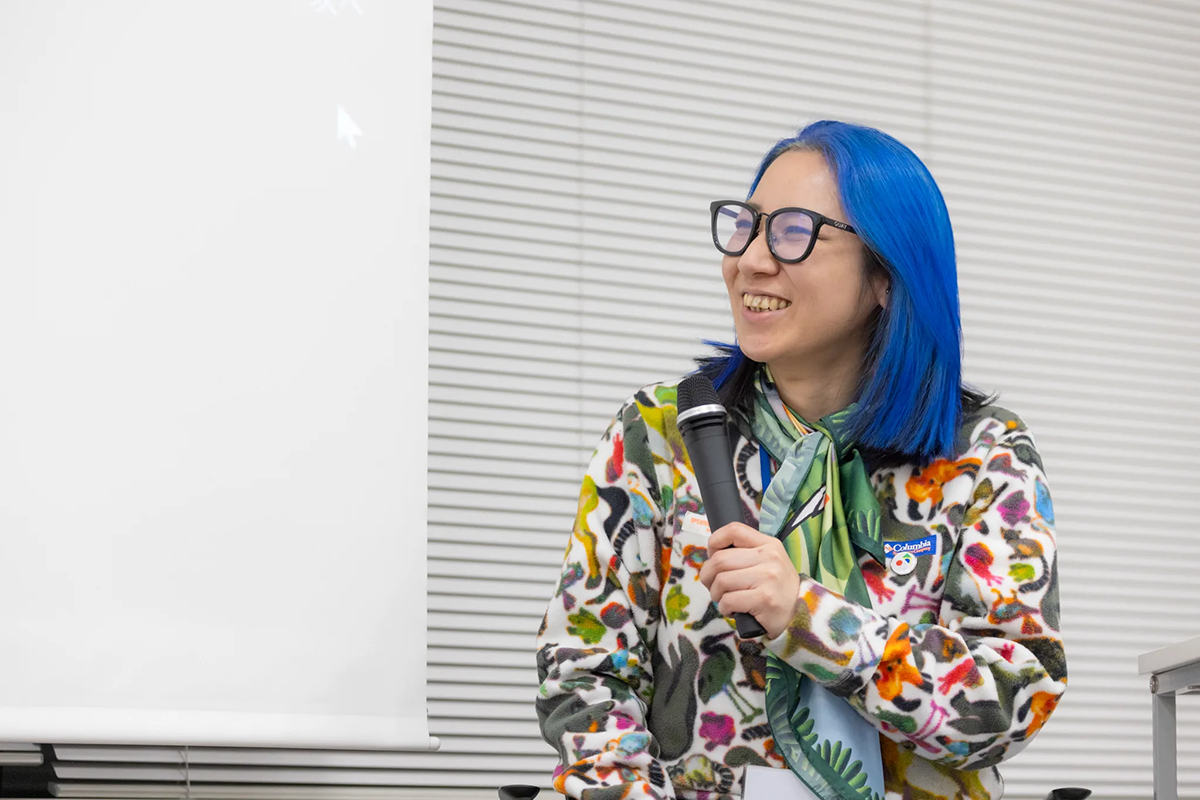
Saeborg (Photo: Tatsuya Hirota)
The chosen music proved crucial in shaping the atmosphere of the performance’s latter half, when performers and audience members merged together in a festive, celebratory scene. The initial English-language soundtracks had failed to ignite the crowd, but on the advice of local staff, the music was switched to songs by beloved Brazilian musician Gilberto Gil—and the venue instantly erupted into a mass singalong. In another memorable moment, when a farmhand character appeared wielding a kitchen knife, a group of children in the audience banded together and physically blocked her path—having been so caught up in the story that they felt compelled to intervene.
Saeborg Super Farm (Photo: (c) Matheus José Maria)
Saeborg: The work isn’t only a critique of industrialized slaughter—it also carries themes of interaction with animals and care. I had the impression that it was this gentler, less confrontational side of the piece that resonated most strongly with Brazilian audiences. I once asked the Japan Foundation why the work had been selected, and I was told that there is a growing social awareness in Brazil of livestock and environmental issues, and that the way my work deals with the animalization of humans was seen as having a natural affinity with Brazilian culture. It made me think of something I was told—that while Western expressions, such as Disney animation, tend toward anthropomorphism, the reverse idea of humans becoming more like animals, as found in the cosmologies of Brazil’s indigenous peoples, is more in tune with a distinctly Brazilian sensibility.
Saeborg Super Farm (Photo: (c) Matheus José Maria)
Alongside the performances, Saeborg also ran a workshop in which she dressed in a dog costume to become Saedog, while participants were asked to interact with one another as animals—using gestures and sounds, but no human language. The exercise draws on the vulnerability and endearing qualities of pets kept by humans, exploring the potential for care and healing through physical, nonverbal communication.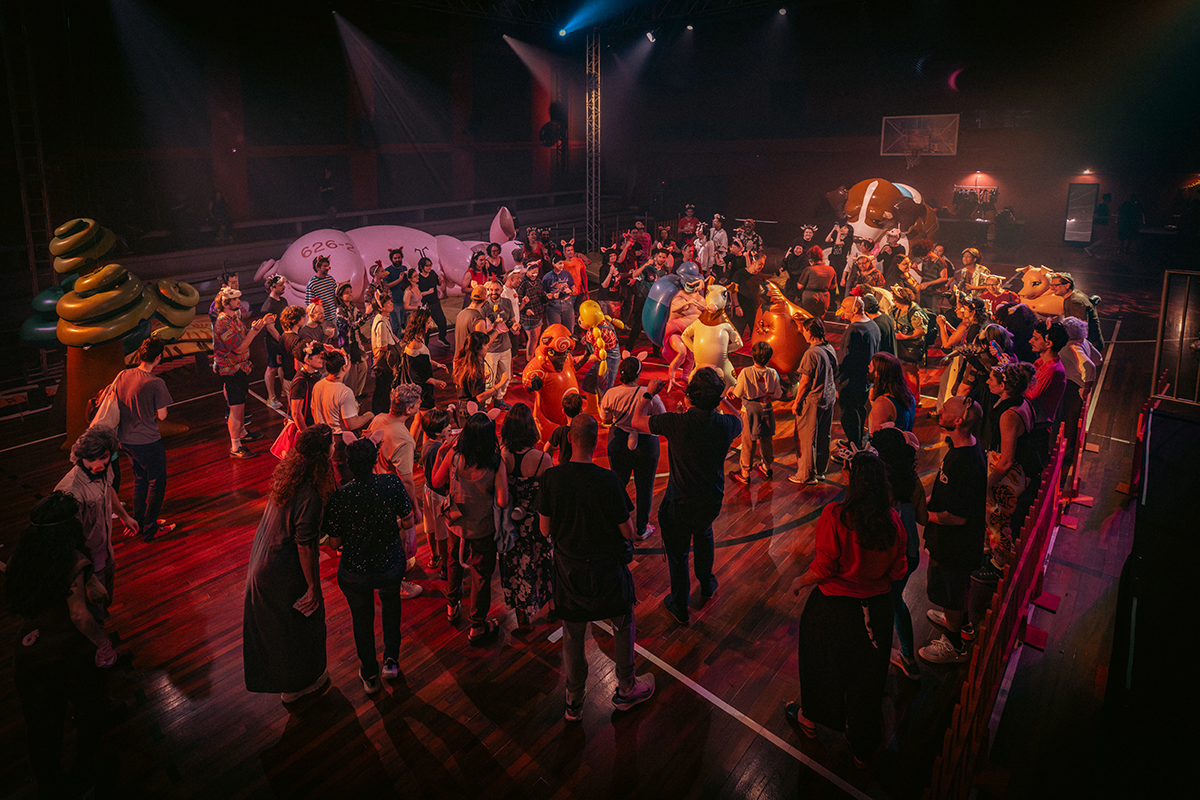
Saeborg Super Farm (Photo: (c) Matheus José Maria)
The workshops, held multiple times, drew a diverse range of participants, including educators and psychology students, and generated an overwhelmingly warm response. “People were embracing one another and releasing their emotions through tears,” Saeborg recalled. Much like the enthusiastic reception to Super Farm, the experience gave her a tangible sense of how performance art can transcend language and national boundaries to reach deep within people.
Saeborg and Sugita in conversation at the briefing (Photo: Tatsuya Hirota)
- Click here for the report on Part 2.
- Report on Japan-Brazil 130th Anniversary Diplomatic Relations Event, Part 2:
* The following text is reproduced from an article originally published by Tokyo Art Beat.
- What We Do Top
- Arts and Cultural Exchange [Culture]
- Japanese-Language Education Overseas [Language]
- Japanese-Language Education Overseas [Language] Top
- Learn Japanese-language
- Teach Japanese-language
- Take Japanese-Language Test
- Know about Japanese-language education abroad
- The Japanese-Language Institute, Urawa
- The Japanese-Language Institute, Kansai
- Japanese-Language Programs for Foreign Specified Skilled Worker Candidates
- Japanese Language Education for Japanese Children Resident Overseas and for the Descendants of Migrants
- Archives
- Japanese Studies and Global Partnerships [Dialogue]
- JF digital collection
- Other Programs / Programs to Commemorate Exchange Year
- Awards and Prizes
- Publications