
Kurokawa Noh Performances in Singapore: Commemorating the 60th Anniversary of the Establishment of Diplomatic Relations between Japan and Singapore
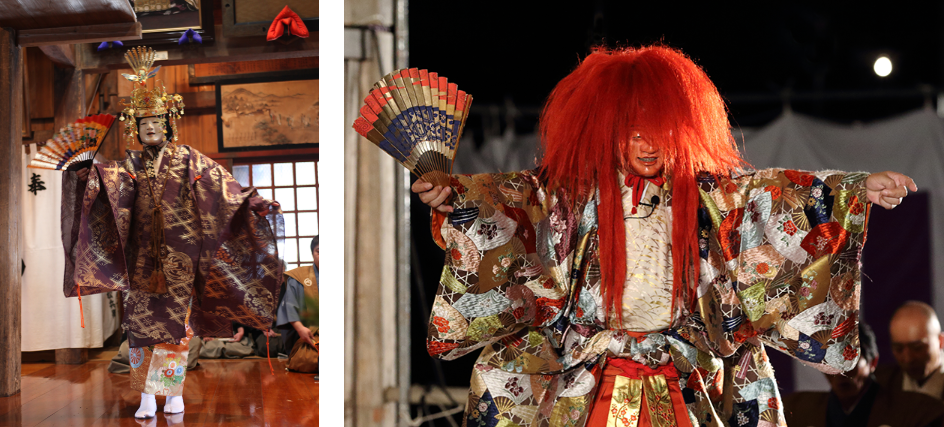
Commemorating the 60th anniversary of the establishment of diplomatic relations between Japan and Singapore (SJ60), the Japan Foundation (JF) will organize performances of Kurokawa Noh, originating from Tsuruoka City, Yamagata Prefecture and designated as an Important Intangible Folk Cultural Property of Japan. The performances will be featured at A Tapestry of Sacred Music 2026, a festival presented by Esplanade – Theatres on the Bay, Singapore’s national performing arts center. This will be a rare opportunity for Kurokawa Noh to be presented as one of the featured performances in the festival that showcase sacred performing arts and religious music from around the world.
In addition to the performances, a lecture-demonstration will also be held at the Japan Creative Centre (JCC). The session will feature Prof. Lim Beng Choo, Head of the Japanese Studies Department at the National University of Singapore (NUS), renowned for her extensive knowledge of Japanese performing arts, including Noh. Through live demonstrations of the Noh performers, the lecture will explore the spiritual foundations and aesthetic qualities of Kurokawa Noh as a form of “shinji noh,” a sacred ritual performance rooted in local community traditions.
We expect that these projects will further deepen cultural exchange between Japan and Singapore through the enduring appeal of Kurokawa Noh—preserved and passed down for over 500 years through the profound faith of local communities and their devotion to the Noh theatre.
This event will be carried out as part of “Partnership to Co-create a Future with the Next Generation: WA Project 2.0,” a comprehensive people-to-people exchange program aimed at promoting exchange and fostering members of the next generation in Japan and ASEAN.
【Kurokawa Noh Performance at Esplanade】
| Schedule | April 30, 2026 (Thu), 10:15 P.M. – Esplanade Concourse Program: Shōjō May 1, 2026 (Fri), 8:45 P.M. – Esplanade Concert Hall Program: Hagoromo (All times are local time. A pre-performance talk event is scheduled for 4:00 P.M. on May 1, 2026, at the Black Room.) |
|---|---|
| Performer | Kurokawa Noh, Kamiza |
| Tickets | Free admission (Details will be announced on the official “A Tapestry of Sacred Music” website) |
| Presented by | Esplanade - Theatres on the Bay |
| Organized by | The Japan Foundation |
| In cooperation with | Kurokawa Noh Preservation Society |
| Supported by | Embassy of Japan in Singapore |
【Lecture-Demonstration at JCC】
| Date | Wednesday, April 29, 2026 (Wed) , 6:30 P.M |
|---|---|
| Venue | Japan Creative Center (JCC) |
| Performer | Kurokawa Noh, Kamiza |
| Program | Shimai “Naniwa” |
| Guest Speaker | Prof. Lim Beng Choo (Head of Japanese Studies, National University of Singapore) |
| Presented by | Japan Creative Center |
| Organized by | The Japan Foundation |
| In cooperation with | Kurokawa Noh Preservation Society |
Further details will be released shortly on JCC’s website and social media.
Kurokawa Noh
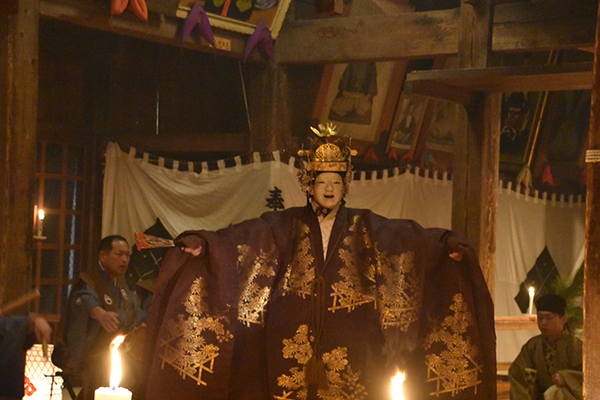
Kurokawa Noh has been preserved and passed down by the ujiko (shrine parishioners) of Kasuga Shrine in Kurokawa, Tsuruoka City, Yamagata Prefecture, as a form of Shinji Noh—a sacred ritual performance dedicated to the deities.
While this lineage of Noh shares the same roots as the five main contemporary schools (Kanze, Hōshō, Komparu, Kongō, and Kita), following the Sarugaku Noh traditions perfected by Zeami, it does not belong to any specific school. Instead, it has maintained its own unique oral traditions, preserving ancient styles of performance and repertoire that are said to predate the modernization of the art form.
Although the exact origins of how Noh was introduced to the Kurokawa region remain a mystery, historical records from the early Edo period (1603-1868) already mention the presence of Noh-dayu (head masters) and the challenges of maintaining the tradition. Furthermore, the survival of Noh costumes woven during the Muromachi period (1336-1573) suggests that Kurokawa Noh was firmly established by at least the late 1500s.
The tradition is sustained by approximately 240 households of Kasuga Shrine parishioners, divided into two distinct troupes: the Kami-za and the Shimo-za. Each guild is led by a Zachō (guild head), who also serves as the head master. The scale of this folk performing art is extraordinary: there are approximately 150 performers—ranging from children to elders—including actors, musicians, and Kyōgen (comic theater) performers. Their collection includes 250 Noh masks, over 500 costumes, and a repertoire of more than 500 Noh plays and 50 Kyōgen plays.
For over 500 years, Kurokawa Noh has been protected and handed down through generations, overcoming numerous hardships thanks to the deep faith and devotion of the local people. On May 4, 1976, it was designated as a National Important Intangible Folk Cultural Property of Japan.
Today, in addition to performing ritual services and dedicatory performances at local festivals, the troupes also perform across Japan and internationally upon request through the Association for the Preservation of Kurokawa Noh.
- What We Do Top
- Arts and Cultural Exchange [Culture]
- Japanese-Language Education Overseas [Language]
- Japanese-Language Education Overseas [Language] Top
- Learn Japanese-language
- Teach Japanese-language
- Take Japanese-Language Test
- Know about Japanese-language education abroad
- The Japanese-Language Institute, Urawa
- The Japanese-Language Institute, Kansai
- Japanese-Language Programs for Foreign Specified Skilled Worker Candidates
- Japanese Language Education for Japanese Children Resident Overseas and for the Descendants of Migrants
- Archives
- Japanese Studies and Global Partnerships [Dialogue]
- JF digital collection
- Other Programs / Programs to Commemorate Exchange Year
- Awards and Prizes
- Publications