
Event Report - Nara MIRAI Forum: Advancing the Evolution of a “Free and Open Indo-Pacific”
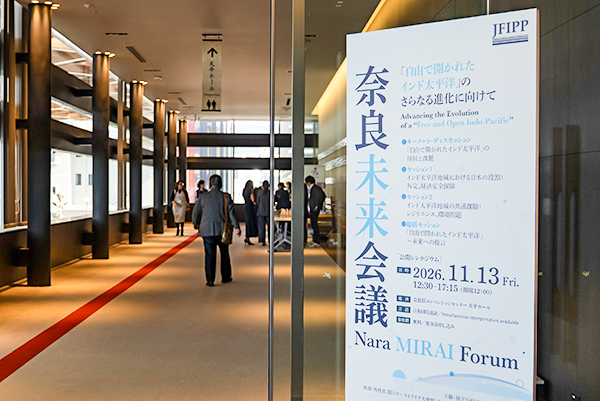
On Friday, November 13, 2026, The Japan Foundation hosted the public symposium “Nara MIRAI Forum: Advancing the Evolution of a ‘Free and Open Indo-Pacific’” at Tempyo Hall, Nara Prefectural Convention Center.
Approximately 160 participants from Japan and abroad attended the symposium, including fellows and advisors of the Japan Foundation Indo-Pacific Partnership Program (JFIPP), which The Japan Foundation has implemented since FY2023 to foster partnerships and intellectual networks across the Indo-Pacific region, as well as researchers and members of the general public.
The symposium drew on the research outcomes and human networks developed through JFIPP’s individual Research Fellowship, its group-based Network Fellowship, and the Japan-Australia Dialogue and Exchange for Next Generation (JADE) program, a dialogue and people-to-people exchange initiative outside the research-network framework. Participants discussed the future prospects of the Free and Open Indo-Pacific (FOIP) and explored new directions for its development in response to a rapidly changing regional and global environment.
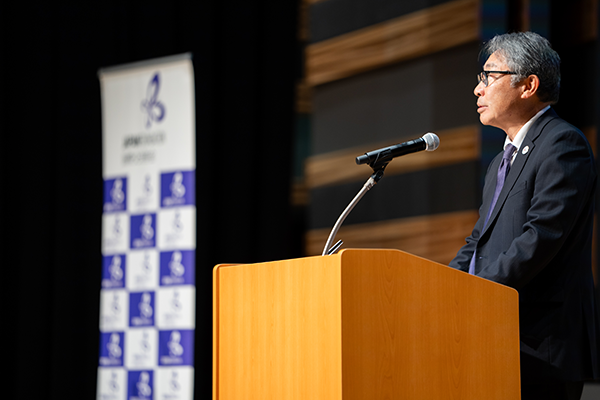
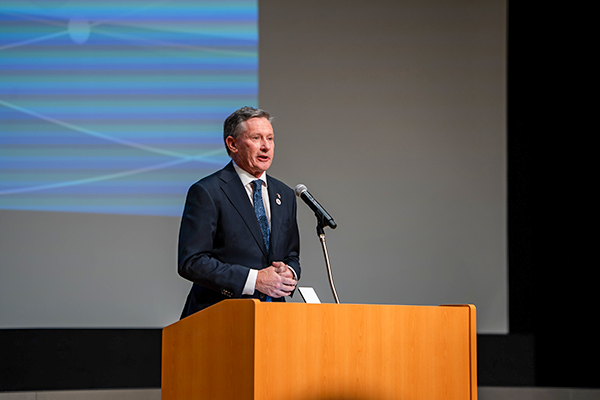
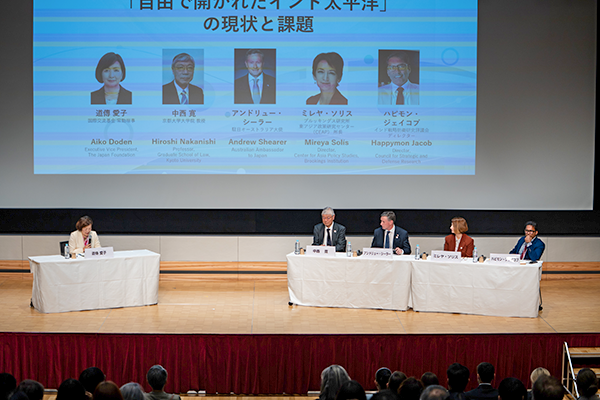
At the opening session, KUROSAWA “Billy” Shinya, President of The Japan Foundation, delivered welcoming remarks, followed by an address from H.E. Andrew Shearer, Australian Ambassador to Japan. Ambassador Shearer emphasized that respect for each nation’s sovereignty and freedom of choice lies at the heart of FOIP, and highlighted the importance of strengthening regional resilience, including in cybersecurity and economic security, while deepening cooperation among partner countries. This was followed by the keynote discussion, “Current Status and Challenges of Free and Open Indo-Pacific,” featuring DODEN Aiko, Executive Vice President of The Japan Foundation, NAKANISHI Hiroshi, Professor of Graduate School of Law at Kyoto University, and Mireya Solís, Director of the Center for East Asia Policy Studies at the Brookings Institution, and other distinguished experts. The panel engaged in an active exchange of views on the future trajectory of FOIP and the role Japan is expected to play in advancing it.
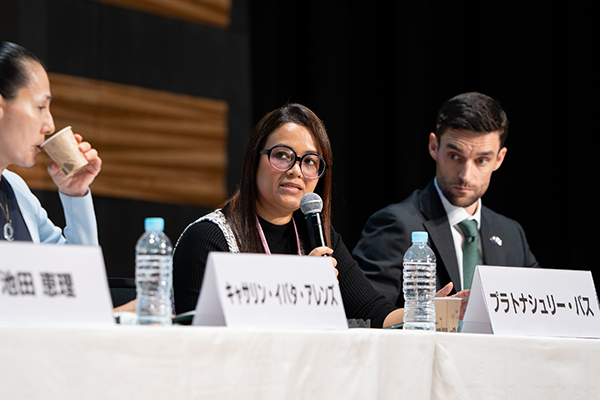
The first session, “Japan’s Role in the Indo-Pacific: Diplomacy and Economic Security,” was moderated by KATADA N. Saori, Professor at University of California, Santa Barbara. JFIPP fellows presented research findings developed through the program and engaged in multifaceted discussions on Japan’s role in diplomacy and economic security within the Indo-Pacific region.
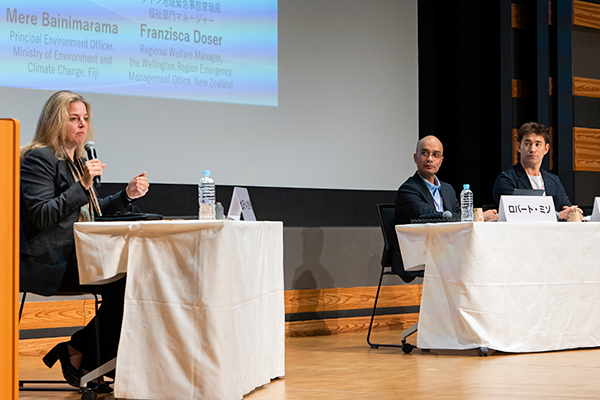
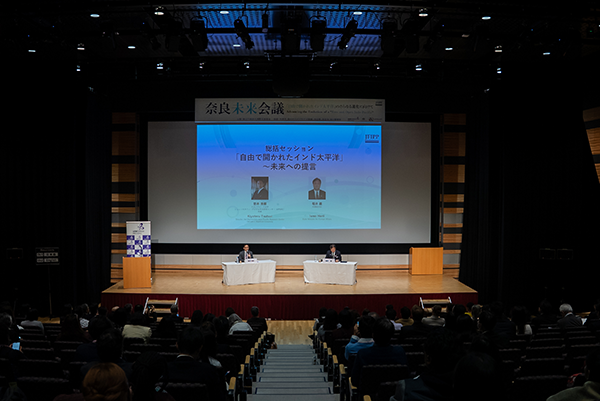
In the second half of the symposium, Session 2, “Common Challenges in the Indo-Pacific: Resilience and Environmental Issues,” opened with remarks by Celeste A. Connors, President of the East-West Center. Discussions focused on topics such as climate change, disaster preparedness, and the future of local communities. Speakers shared the view that the stability and prosperity of the Indo-Pacific depend on effective responses to climate change and the strengthening of community resilience across the region.
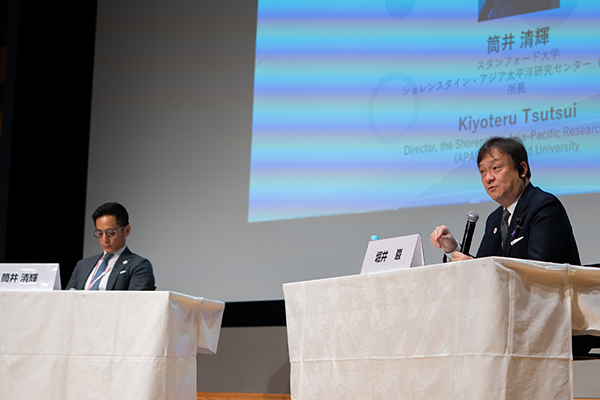
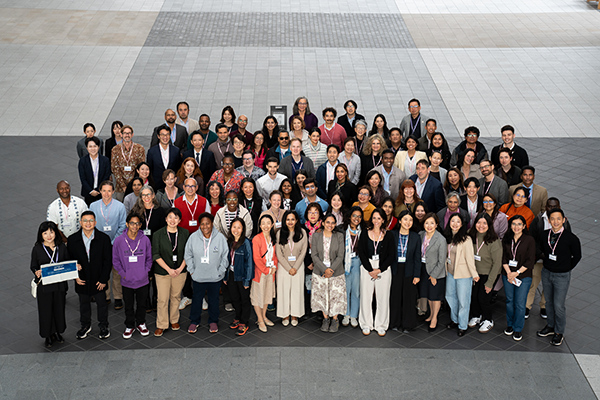
The reflection session, “’Free and Open Indo-Pacific’ – Opportunities for the Future,” featured HORII Iwao, State Minister for Foreign Affairs of Japan, and TSUTSUI Kiyoteru, Director of the Shorenstein Asia-Pacific Research Center at Stanford University. The two speakers explored future directions for realizing the vision of FOIP and reaffirmed the importance of sustained cooperation among a wide range of stakeholders. They also noted that the intellectual networks fostered through JFIPP constitute an essential foundation supporting FOIP and expressed their hope that the program would further encourage cross-sectoral exchange and collaboration among researchers and practitioners who will serve as the next generation of leaders.
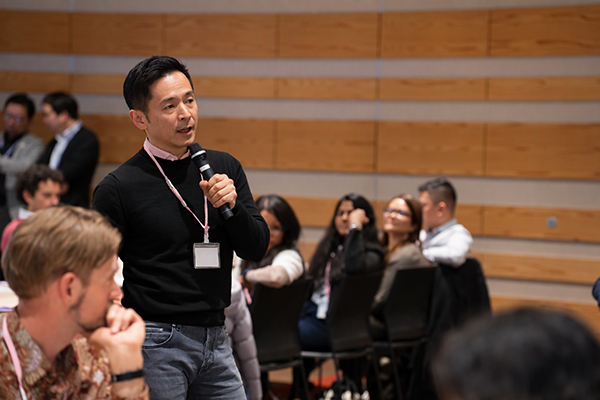
On Thursday, November 12, the day before the symposium, a closed session was held for fellows and advisors across the JFIPP programs. Participants deepened their connections beyond individual program frameworks and exchanged views through group discussions. These discussions reaffirmed that FOIP must address a broad range of issues extending beyond traditional security concerns, including climate change, energy, economic security, and AI. Participants also highlighted the significant impact that the human networks cultivated through the program have had on their professional development and research activities.
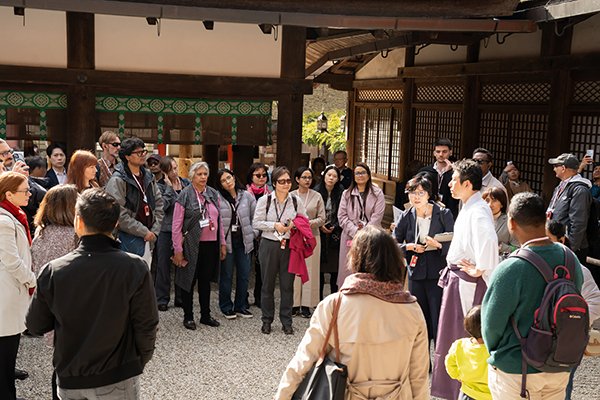
Earlier that day, an excursion in Nara City was organized with the support of the Nara City Tourism Association. At Kasuga Taisha Shrine, one of Nara’s UNESCO World Heritage Sites, participants took part in a special visit and attended a lecture by Shinto priest. The excursion provided a valuable opportunity to deepen participants’ understanding of Japanese history and culture while experiencing the unique appeal of the local community.
- What We Do Top
- Arts and Cultural Exchange [Culture]
- Japanese-Language Education Overseas [Language]
- Japanese-Language Education Overseas [Language] Top
- Learn Japanese-language
- Teach Japanese-language
- Take Japanese-Language Test
- Know about Japanese-language education abroad
- The Japanese-Language Institute, Urawa
- The Japanese-Language Institute, Kansai
- Japanese-Language Programs for Foreign Specified Skilled Worker Candidates
- Japanese Language Education for Japanese Children Resident Overseas and for the Descendants of Migrants
- Archives
- Japanese Studies and Global Partnerships [Dialogue]
- JF digital collection
- Other Programs / Programs to Commemorate Exchange Year
- Awards and Prizes
- Publications