
YOMU: Literary Exchange and Dialogue—An Interview with Jirat Chalermsanyakorn by Fukutomi Sho
In autumn 2025, Thai author Jirat Chalermsanyakorn (pen name Samut Theetas) joined the Kyoto Writers Residency as one of the fellow writers from around the world. After a month immersed in the city’s cultural scene, he spoke with us about writing abroad, his creative journey, the social and political themes in his work, and his hopes for Thai literature’s future. The conversation was led by Fukutomi Sho, a Thai–Japanese translator and interpreter.
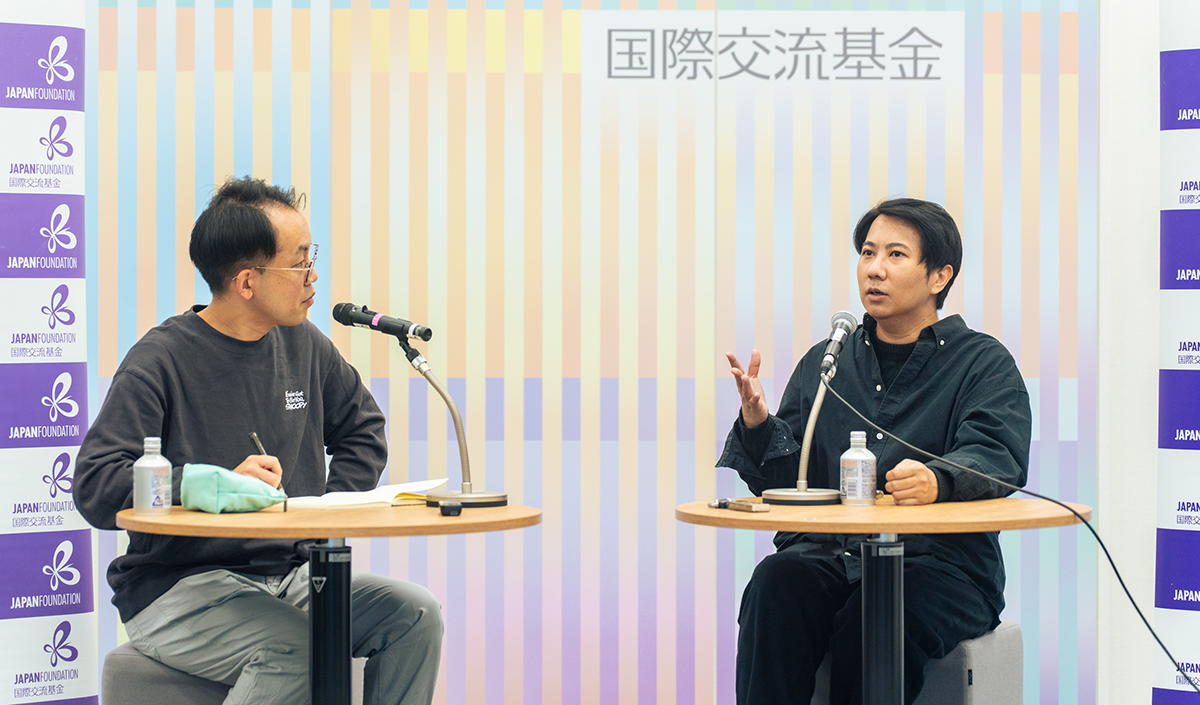
Immersed in Life as a Writer in Kyoto
Fukutomi: Thank you for joining us today. To begin, could you tell us what motivated you to apply for the Kyoto Writers Residency?
Jirat: Of course. In my day-to-day life, I teach at a university in Thailand, so I rarely have the opportunity to fully devote myself to writing. That’s precisely why I applied for the residency in Kyoto—I was craving uninterrupted time to focus on my work. One month might seem short, but it became a rare and valuable time for me—when I could look at myself honestly and become immersed in shaping my ideas for writing. It was a dream come true.
One of the things that struck me most during the residency was how writers in Japan are respected and seen as honorable professionals. That’s not always the case in Thailand—the role of the writer doesn’t necessarily have the same weight or recognition as other professions. That contrast has really stayed in my mind.
Fukutomi: What was your daily life like during your time in Kyoto?
Jirat: I started by simply trying to get to know the city. I wandered through Kyoto’s streets, visited well-known spots like Arashiyama, and strolled through alleyways observing everyday life. I made a habit of recording at the end of each day what I had seen and experienced—a daily rhythm of reflection and notation.
One particular moment left a strong impression on me. I was waiting at a bus stop when an older woman approached, asking directions from one person after another. Even though she was told she just needed to cross the street, she didn’t do that—she continued asking others the same question. That scene has stayed with me—and it sparked an idea for a short story, which I’m thinking of calling “Crossing the Street.”
Fukutomi: I see. I’ve noticed that many of your works aren’t anchored in real-world locations. They often unfold in imagined countries or abstract spaces that don’t even feel distinctly Thai. Do you think spending time in Kyoto might influence your creative approach?
Jirat: Setting is something I consider fundamental when I write. I usually begin by constructing the scene, then place the characters within it. Even after staying in Kyoto, I doubt I’ll use the city’s name explicitly in my stories—but certain details in my descriptions might evoke a Kyoto-like atmosphere for some readers. Then again, others might read the same scene and feel it resembles Chiang Mai. I expect I’ll continue using fictional towns as I always have—but whereas I used to rely mostly on my imagination, I now feel better equipped to portray those places in more concrete, but nuanced, detail.
Starting Point as a Writer
Fukutomi: Where does your interest in writing—and the energy to keep doing it—come from? What first prompted you to write? I’d love to hear about the moment your journey as a writer began.
Jirat: I think my writing has been deeply shaped by my family life—but not because I grew up surrounded by avid readers. In fact, it was quite the opposite. It was the sense of imperfection within my family—like the loss of my father—that pushed me inward. I spent much of my childhood immersed in a world of my own, but I had no idea how to express the emotions and images building up inside me. I think the act of writing was an attempt to transform that inner world into words and forms that could exist outside myself.
Film director Pen-ek Ratanaruang once said in an interview, “To be able to portray humanity—and reveal your own humanity to the world—you have to read literature.” He mentioned writers like Chart Korbjitti from Thailand and other authors like Milan Kundera and Dostoevsky. Reading that made me stop and ask myself: What is literature? What is a novel? What does it mean to be a writer? That was a turning point. I started reading the authors he mentioned and others, like Rong Wongsawan from Thailand, and as I read, I gradually came to realize that maybe through the methods these writers have used, I too could express my experiences and emotions—the wounds, the grief, the pain I’ve carried. That realization became the foundation of my lifework as a writer.
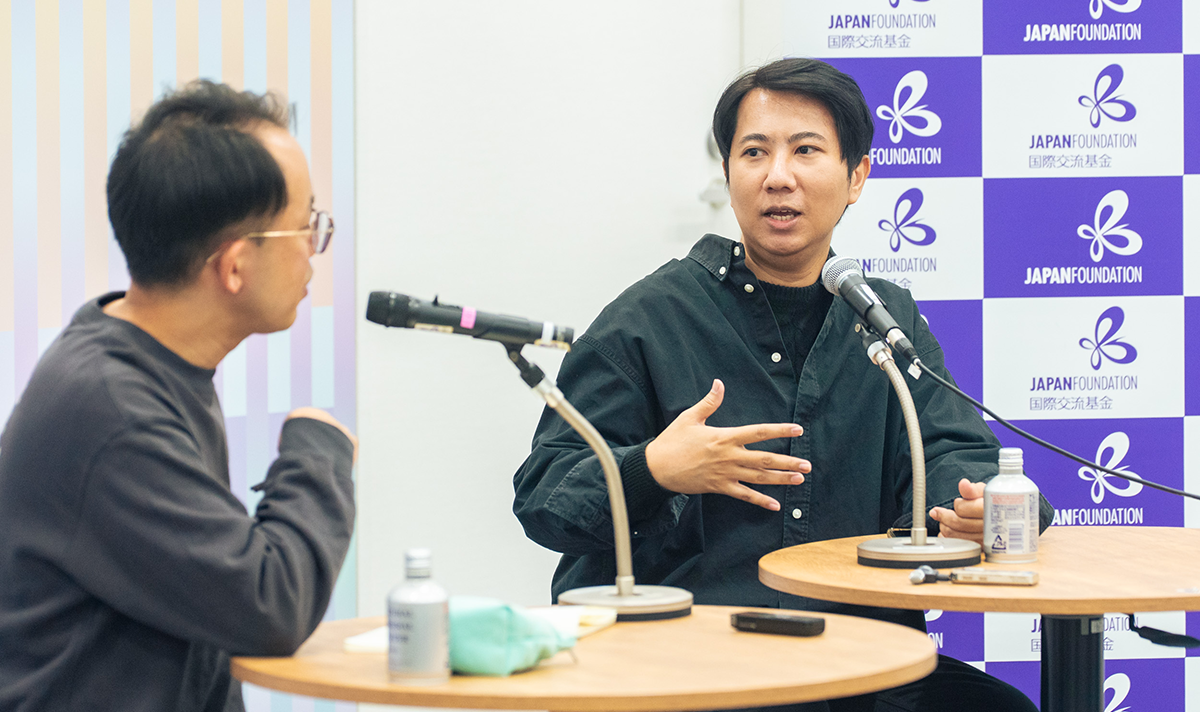
That was the catalyst for my decision to start writing myself. But it wasn’t as if I had studied creative writing somewhere. I just began to write on my own and to share my work with close friends. Their reactions boosted my confidence—making me realize that maybe I could actually do this. So I took the leap of sending my manuscripts to publishers. Of course at first, none of them accepted my work. My submissions were rejected, over and over again, for years. But I kept writing, and eventually my first book was published.
I think I was about 16 or 17 years old when I began to write. Around that time, Japanese literature was having a big moment in Thailand—waves of translations in all sorts of genres were being published, and I was reading everything I could get my hands on. That’s when I discovered the work of Ryunosuke Akutagawa, which left a particularly deep impression on me. The dark, brooding atmosphere, the liminal state between life and death, and the blurred boundary between good and evil—all of that resonated deeply with me. Looking back, I can see just how much Akutagawa’s stories shaped my own style and sensibility.
Fukutomi: So that was during your high school years. Yet, before becoming a full-time writer, you worked as a flight attendant traveling all over the world—which, at first glance, seems like quite a contrast to creative writing. How do you see the connection between those two pursuits?
Jirat: I studied advertising in communication arts at university, and after graduating, I knew I wanted to work with words. I applied for jobs at magazines, newspapers—anywhere related to writing—but it was tough to get hired. At one point, I sent a writing sample, a short story I had written in college, to a newspaper I’d applied to, and the editor-in-chief replied with a comment that has stayed with me: “As a creative piece, I can really relate to your story, but that requires a different skill from what we look for in a journalist. If you’re serious about becoming a writer, you should travel more and gather real-life experiences to draw from.” That advice opened my eyes. It was then that I decided to explore the world and immerse myself in different cultures, hoping to weave those experiences into my work. So yes, my time as a flight attendant has had a profound effect on me, both directly and indirectly. The unfamiliar environments and rhythms of different cultures—all of that found its way into my stories. Much of the atmosphere and detail in my writing now is inspired by those journeys.
Fukutomi: You’ve published three short-story collections so far. Was your first book [see photo of books] released right after you had graduated from university?
Jirat: It was around the time I graduated and was still looking for a job. There was a small publishing company called Nueng, which means “one” in Thai, run by writer and editor Kittiphol Saragganonda, and they happened to be accepting manuscript submissions. I sent mine in, and it became my first published book. The second collection [see photo of books] was written after I had started working as a flight attendant. I had always dreamed of publishing a book exactly as I wanted, not just the content but also the design, the layout—everything. So I worked hard, saved up, and eventually launched my own small publishing company, Gloomphim House.
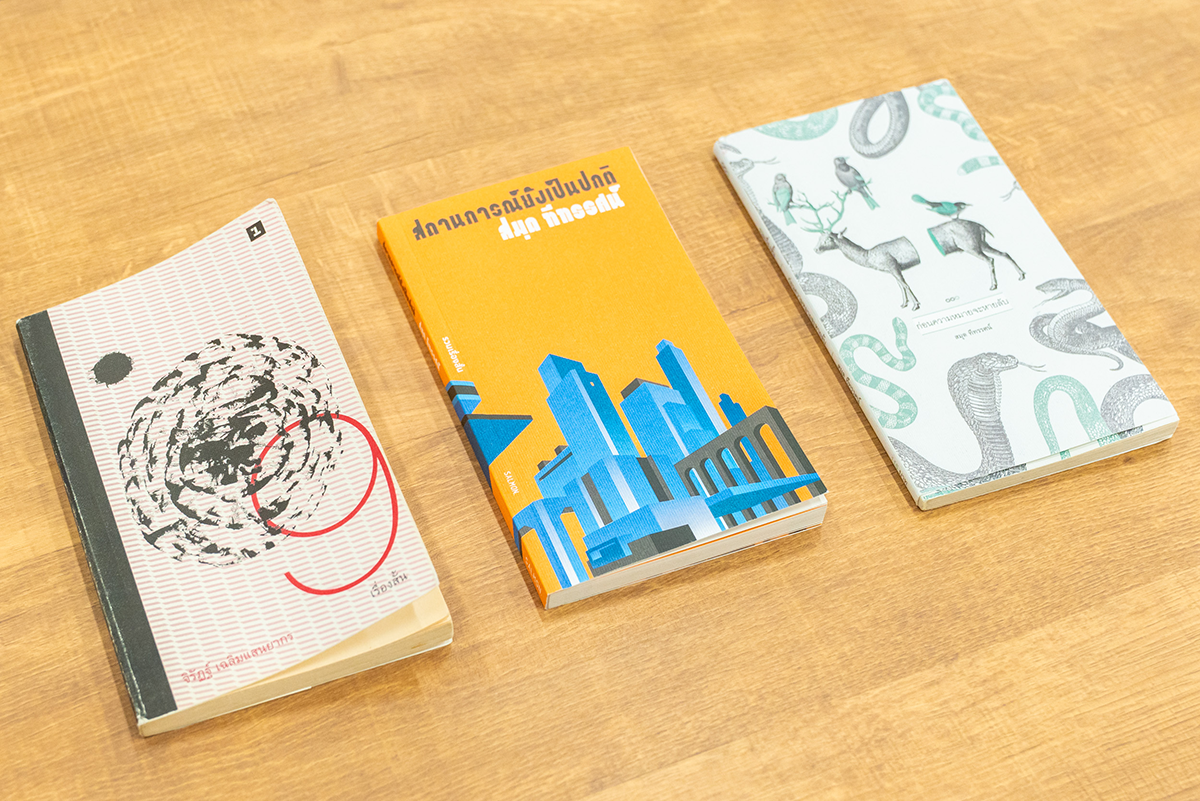
Above photo. Left, 9 Short Stories, first book—published under Jirat Chalermsanyakorn (Nueng, 2009); right, Before Meaning Disappears, second book (Gloomphim House, 2013); center, The Situation Remains Normal, third book (Salmon, 2019)
The Quiet Absurdities of Everyday Life
Fukutomi: I would say that your first two collections seem quite similar in tone, don’t you agree?
Jirat: Yes, both books are deeply rooted in memories from my childhood. Many of the settings evoke rural or farming communities in the Thai countryside. In writing them, I didn’t begin with a detailed plot. Instead, I started with a setting or an atmosphere, then followed where the story seemed to lead. It often felt like the narrative was being woven between the world of the living and the dead. I wasn’t focused on a central theme, question, or plot structure. Even the language, rhythm, and tone of the stories were shaped by that same intuitive feeling. As a result, the stories don’t unfold along a clear narrative arc—they tend to be wrapped in a kind of hazy mood and end on a lingering, unresolved note.
Digressing a little, I obviously can’t read the Japanese translations of my work. But recently, at the closing event of the Kyoto Writers Residency, I had the opportunity to hear one of my stories read aloud in Japanese. The way Yuki Nagakata read my work—in a rhythm like gentle breathing—felt perfectly in tune with the spirit of the Thai original. It made me realize that the rhythm I’d consciously maintained in the original story had remarkably come through in the translation.
Fukutomi: In your third collection [see photo of books], I sensed a clear shift toward political themes and social commentary. Was that an intentional change?
Jirat: Yes, The Situation Remains Normal was written between 2014 and 2019 and published by Salmon Books. That period marked a turning point in my writing—particularly in the way I chose my words and what I wanted to express. The political turbulence in Thailand, especially the unrest around 2010 and the military coup in 2014, had a huge impact on me. Those events shaped the context in which I was writing. While I still wrote about small, everyday moments and personal or family experiences, I consciously wove into that the social injustices and political violence that loomed in the background. For example, the feeling of being stuck, the social paralysis, and the sense that nothing can be said or changed—these I layered with my personal experiences in my stories.
The title The Situation Remains Normal carries a deliberate sense of irony and satire. In reality, both politically and personally, the situation was far from normal. But by stating the “normal” in a calm, matter-of-fact tone, I wanted to highlight the tension between the everyday and the extraordinary—the sense of strangeness that pervades our lives even when things appear outwardly ordinary. This approach, blending satire and irony, marked an important shift in my writing style.
Fukutomi: In your third short-story collection, there’s an imaginary country called Ordinary Land (Mueng Thamada). What inspired you to create that setting?
Jirat: From the outset, I wanted the stories in that collection, though written at different times and set in different places, to be loosely connected through the element of a fictional country. At first, I gave it a more expressive name: Strange Land (Mueng Phi-Kon).
Normally, a short-story collection bears the title of one of the included stories, but in this case, the publisher suggested we rethink the collection title. Discussing this, my editor and I came to realize that my stories are already filled with strange and unsettling events. So instead of calling the country Strange Land, we flipped it to Ordinary Land, aiming for irony and paradox. From that, the collection’s title took shape: The Situation Remains Normal.
By setting the stories in a fictional country, I felt that they might be relevant beyond Thailand—resonating with people in similar political and social situations elsewhere in the world.
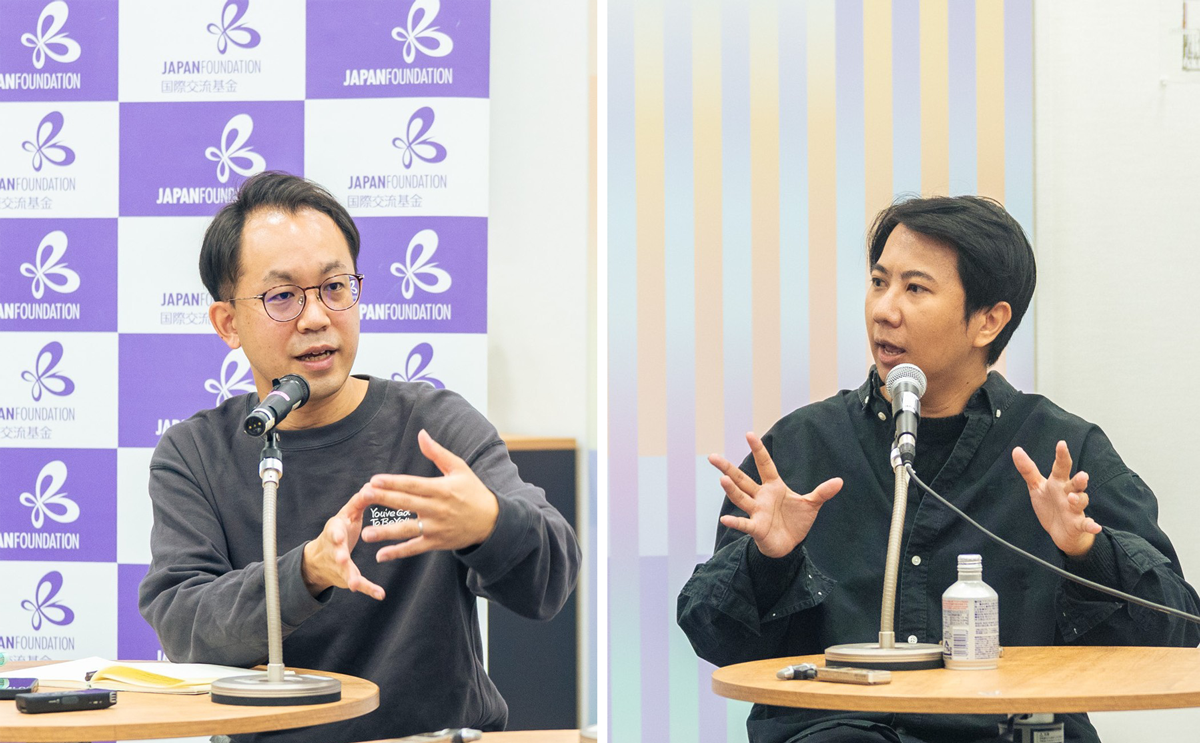
Fukutomi: Which story in the The Situation Remains Normal collection did you write first?
Jirat: That would be the opening story, “The Sea Woman.” I began writing it around 2013, and it was originally published in an anthology alongside works by several other prominent contemporary authors—including Uthis Haemamool, writer-editor Suchart Sawadsri, and Sidaoruang, a pioneering female writer active since the 1970s. The concept of the anthology was that each contributor would write a sequel to a short story by Sidaoruang. On top of that, we were each assigned a keyword for the story—and that was the starting point for “The Sea Woman.” It was also the first story I had ever set in Japan, and it was read aloud during the closing event of the Kyoto Writers Residency.
My inspiration came from a moment in Osaka’s Rinku Town. I was struck by the scenery just after rain—the evening sky glowing red, the streetlights flickering on, pools of water reflecting the fading light, and the sea a dull gray. It was one of those moments too complex to capture in a photo, so I jotted down my feelings instead—and that became the seed of the story.
The narrative follows a woman who has been exiled from her homeland due to political unrest. She spends her final days working in a foreign land, all the while holding on to a dream of becoming a mermaid. Her death is portrayed symbolically—with her transforming into a mermaid, adrift and unanchored, never able to return home. She becomes a figure suspended between worlds—without a place to belong, eventually sinking into the sea.
Future Writing and a New Generation of Literature
Fukutomi: I remember wondering why the Japanese word ningyo (mermaid) appears in that story, but now I understand. It seems like that piece marked the starting point of the collection, and perhaps even a turning point in your writing overall. Do you see yourself continuing with this approach—exploring political and social themes by weaving them into the small, everyday moments of people’s lives?
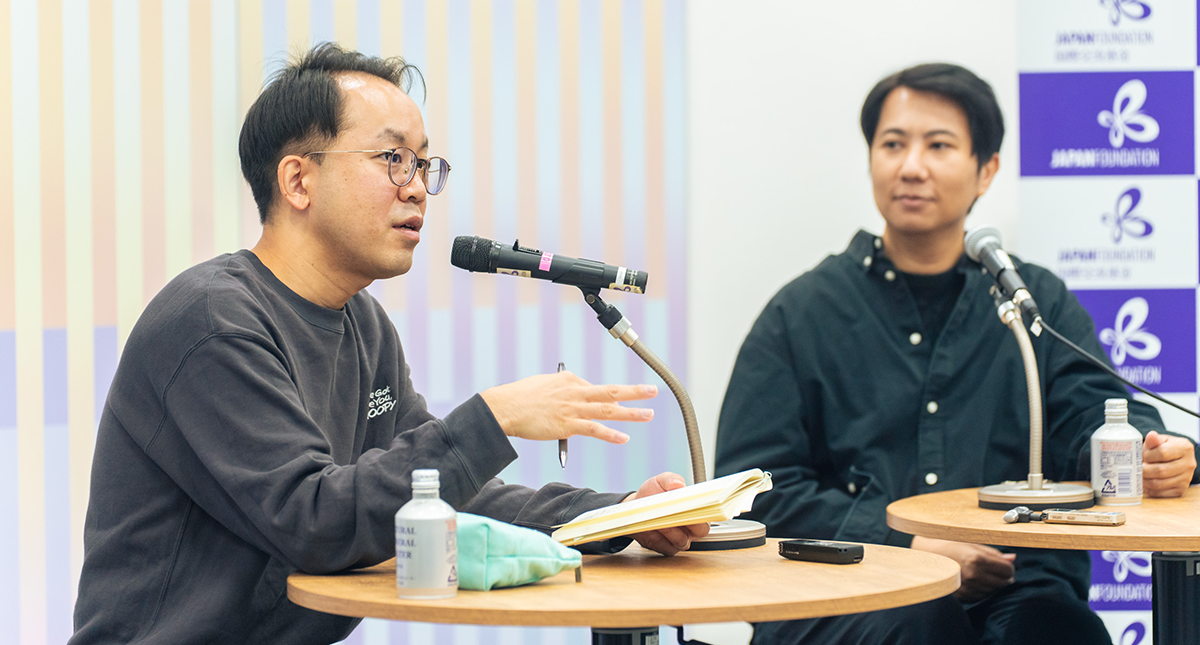
Jirat: As for my writing style going forward, I have a feeling that it’s going to change quite significantly after my time in Kyoto. Right now, I feel a strong urge to tell stories I’ve never told before. I find myself wanting to step away from the style I’ve used until now. While I was in Kyoto, I reread some of my earlier collections and caught myself thinking, “So this is how I used to write!”
In future, I might not focus as much on turbulent political events as I did in my third collection. Instead, I think I’ll turn my attention more to the subtle, quiet happenings of daily life. The settings might shift too. I may explore places I’ve never written about before. For readers, that could feel fresh or unexpected. That said, I don’t yet know exactly how my writing will change, but what I do know is that I want to step outside the bounds of my past work. I believe the writer’s journey is one in which you are constantly running from your own shadow.
Fukutomi: You’re now also teaching at a university, guiding the next generation of writers. How has that shaped your own work?
Jirat: Becoming a teacher has completely changed the way I approach writing. In the past, I worked mostly alone, and I didn’t think too much about how readers might respond or how my work might be interpreted. But now, watching students go through the creative process and offering them feedback has made me much more aware of how dialogue with others can shape a writer’s voice.
Today’s students have their own distinct ways of thinking and creating—very different from the way my generation approached things. As a teacher, I’ve come to realize that it’s not a one-way relationship. We’re constantly influencing one another, discovering new methods and possibilities in the process.
As a critic, I’m used to breaking down a work, analyzing its parts and using that analysis to form my critique. But I was never able to do that with my own writing. But now, after having analyzed my students’ work, I find myself approaching my own creations from a more critical perspective. It’s opened up new ways of looking at my work. Still, because I’m exploring new directions in my writing, the process has definitely become slower.
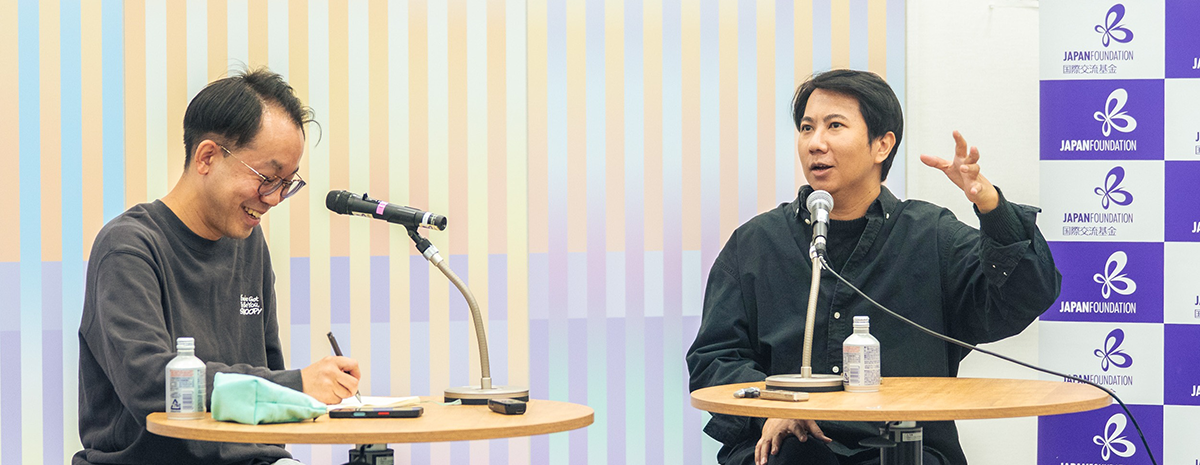
Fukutomi: What are your thoughts on contemporary Thai literature, especially that of the emerging generation of writers?
Jirat: Over the past two or three years, Thai literature has been attracting more attention, both at home and abroad. I think a large part of that is in response to the appeal of younger writers. Personally, I see myself as part of a transitional generation—between the old and the new. In the past, to be recognized as a writer, you had to follow a clear path: publish short stories in magazines or journals, build up your name, and eventually release a book through a traditional publisher. But that’s changed. Today’s writers have a much broader range of platforms, and self-publishing is more accessible than ever. The barrier to becoming a writer has been lowered significantly.
At the same time, Thai society is becoming more open, particularly in terms of culture, gender, and identity. Of course, political repression still exists, but we’re seeing the formation of new communities of writers and readers. Literature is expanding in new directions. In the past, only books published by certain editors or established publishing houses were considered serious literature, but now, new kinds of connections are forming—writers and readers can engage directly, and literary value is no longer dictated solely by traditional authorities.
We’re also seeing a rise in new genres, such as works that explore gender and LGBTQ themes, as well as mysteries and thrillers. On the other hand, works that directly tackle serious political and social issues have become slightly less common, although they still exist. Still, many of today’s readers see their personal lives and political realities as deeply interconnected. Because of that, even stories centered on LGBTQ themes, for example, often incorporate political or social dimensions. In a way, certain traditional genre categories—like political fiction or literature about gender—are beginning to lose their meaning. Thai literature has undergone a dramatic transformation over the past few years, and we’re now entering a new era filled with hope and creative possibility. Personally, I have high hopes for the younger generation.
Fukutomi: To wrap up, I’d like to ask about the broader environment for literary creation. How do you view recent developments, such as government support for literature or the rise of online platforms?
Jirat: I think writers today have far more opportunities than those in my generation had. At the very least, it’s encouraging to see that some government agencies and cultural institutions are showing genuine interest in literature as an art form. In the past, public funding and attention tended to go to areas like film or visual arts—those traditionally seen as “the arts.” But now, there’s growing recognition that literature also deserves support within the larger arts ecosystem, and I see that as a very positive shift.
One example is the recent establishment of the THACCA (Thailand Creative Culture Agency). It’s a public body that doesn’t limit itself to a single genre but instead supports a wide range of creative fields. For writers, this truly represents a ray of hope. Especially in literature, systems that support the entire creative process—from the early stages of writing to final publication (including translation)—are taking shape. Because of this, I’ve started to think more seriously about possibilities for international outreach—something I hadn’t really considered before.
That said, many of these organizations are still government dependent, which means their activity can be heavily affected by changes in political leadership. To avoid that vulnerability, I think it’s vital to establish truly independent institutions—neutral third-party bodies like those in South Korea, for example. That way, even when governments change, the infrastructure for cultural support can remain intact and consistent.
Now that I’m teaching creative writing—reviewing student work and giving feedback—I’m noticing new online platforms and evolving forms of expression. One example is literature written in a chat format. These online platforms are giving the younger generation of writers new creative options, which I believe are starting to influence the style and shape of their work.
Personally, I’m not especially drawn to these new formats—but I’m not dismissive of them either. The emergence of new ways to write and share stories is important in itself. At the same time, I wonder what paths these writers will take when they reach a point in their careers when they want to shift their perspective or evolve creatively. Ultimately, the process of bringing a work together as a physical book still holds great importance for me—and I believe that putting it in book form is essential for moving forward to the next stage.
![Commemorative photo taken at the Japan Foundation, 1F Lobby [Keyaki]. Mr. Fukutomi is on the left and Mr. Chirat on the right, both facing this way.](/j/project/intel/exchange/yomu/2025/img/250101_img07.png)
November 19, 2025 at the Japan Foundation
Photo: Sato Motoi
Profile
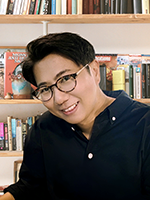
Jirat Chalermsanyakorn, Ph.D., is a lecturer in World Literature and Creative Writing at the Department of Comparative Literature, Faculty of Arts, Chulalongkorn University. He also works under the pen name Samut Theetas. His short story collections include Kao Ruang Sun (9 Short Stories, 2009), Kon Kwam Mai Ja Hai Lab (Before Meaning Disappears, 2013), and Sa Ta Na Karn Yang Pen Pakati (The Situation Remains Normal, 2019). His works have been translated into English and Japanese. He received the Bunleua Dhebhayasuwan Award for Literary Criticism in 2009, 2013, and 2017. He serves on various literary award committees, including the S.E.A. Write Award selection committee, Silapathorn Award committee, and the board of PEN International Thailand Center. He is also a columnist for both print and online publications.
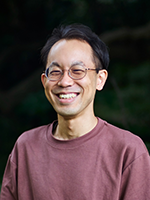
Photo: MINA SOMA
Fukutomi Sho (born in Tokyo in 1986) is a Thai–Japanese translator and interpreter specializing in contemporary Thai literature. He serves as a part-time lecturer at Aoyama Gakuin University and other institutions. He has translated works by leading Thai authors such as Prabda Yoon and Uthis Haemamool, and has been actively introducing contemporary Thai literature to Japanese readers since 2016 through his independent zine project. In recent years, he has also worked as an interpreter and MC for Thai actors’ events in Japan.
- What We Do Top
- Arts and Cultural Exchange [Culture]
- Japanese-Language Education Overseas [Language]
- Japanese-Language Education Overseas [Language] Top
- Learn Japanese-language
- Teach Japanese-language
- Take Japanese-Language Test
- Know about Japanese-language education abroad
- The Japanese-Language Institute, Urawa
- The Japanese-Language Institute, Kansai
- Japanese-Language Programs for Foreign Specified Skilled Worker Candidates
- Japanese Language Education for Japanese Children Resident Overseas and for the Descendants of Migrants
- Archives
- Japanese Studies and Global Partnerships [Dialogue]
- JF digital collection
- Other Programs / Programs to Commemorate Exchange Year
- Awards and Prizes
- Publications