
2026 Japanese Studies Fellow Conference in Tokyo
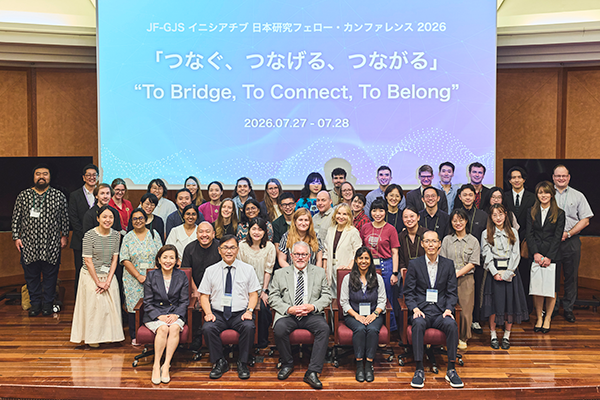
From Monday, July 27 to Tuesday, July 28, 2026, the JF-GJS Initiative: Japanese Studies Fellow Conference 2026 was held at the Ito International Research Center, The University of Tokyo. The conference was jointly organized with the Institute for Advanced Studies on Asia (IASA), The University of Tokyo.
This year's Fellow Conference was held in a hybrid format, combining in-person and online participation. Nearly 170 participants from Japan and abroad attended, including JF Fellows conducting research across Japan, faculty members of IASA, and other scholars and professionals interested in Japanese studies.
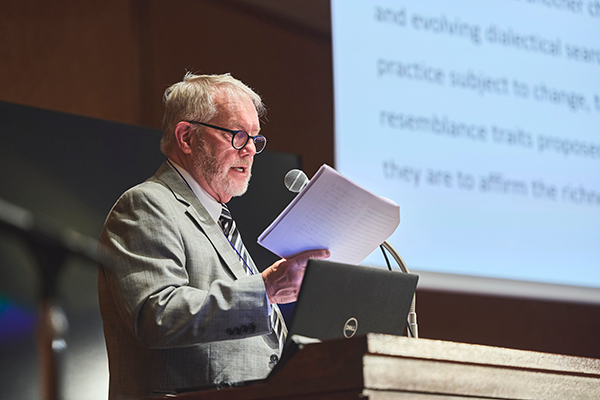
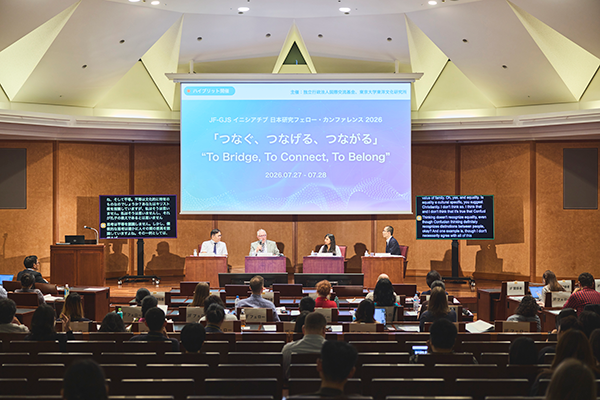
Under the theme “To Bridge, To Connect, and To Belong,” the conference opened with Session 1, “Japanese Philosophy as a Global Bridge.” Professor John Tucker of East Carolina University in the United States, a former JF Fellow, delivered the keynote address. The keynote was followed by a panel discussion moderated by Professor Takahiro Nakajima of IASA. The panelists were Dr. Arpita Paul, Assistant Professor at Visva-Bharati University in India and a current JF Fellow, and Dr. Kunihiko Nagano, Assistant Professor at Ochanomizu University. The discussion explored a range of topics, including what constitutes Japanese philosophy and how it can contribute to dialogue and exchange on global challenges facing the world today. The session generated lively and engaging discussion among the participants.
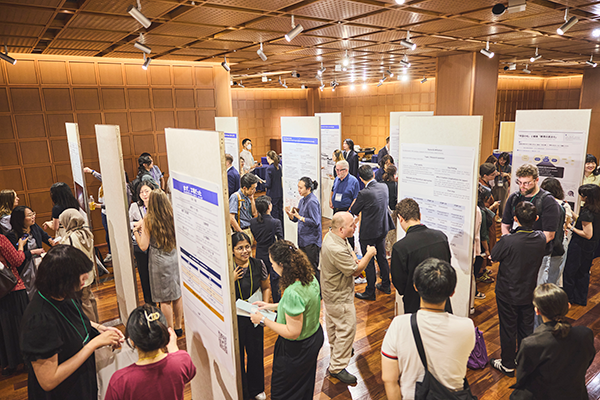
Session 2 on the following day, under the title “Perspectives from Abroad: Global Japanese Studies Today,” featured a relay of short presentations by 17 Doctoral Fellows currently conducting research in Japan. Through these presentations, the Fellows introduced their research topics and highlighted their significance and distinctive appeal. The session was followed by Poster Networking, where participants engaged in lively exchanges and discussions based on posters summarizing the presentations. Using these posters as a starting point, participants were able to network and share ideas freely across disciplinary boundaries, fostering new connections and opportunities for future collaboration.
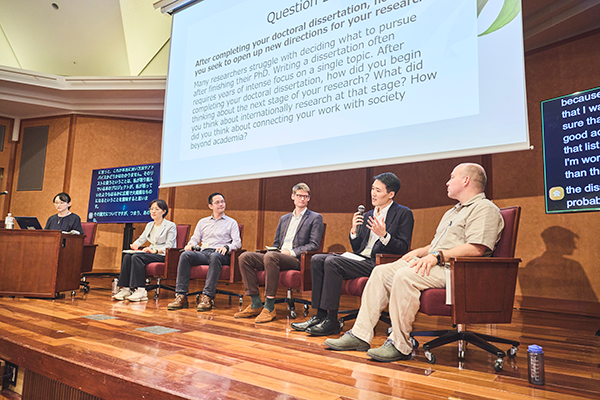
In the afternoon, Session 3, “The JF-GJS Initiative: Networking Scholars for the Future,” featured presentations by Dr. Yeon I Kwon and Dr. Anthony Robert Scott, both of whom are JF-GJS Fellows jointly invited by JF and IASA through the JF-GJS Fellowship Program. They shared the outcomes of their research conducted during their stay in Japan, followed by comments from each host faculty member at IASA on the future development of their research. The conference concluded with a dialogue session titled “Postdoctoral Researchers: The Next Generation Bridging Academia and Society.” All five JF-GJS Fellows currently conducting research in Japan participated in the discussion, exchanging candid views on topics such as career development as Japanese studies researchers, the social impact and outreach of their research, and the networks they had built through their participation in the JF-GJS Fellowship Program.
Participants offered positive feedback on the conference, including comments such as: “I was inspired by the wide range of topics and historical periods covered in the presentations,” “I had the opportunity to meet scholars with whom future academic exchange and collaborative research may be possible,” and “Opportunities such as this conference provide invaluable support, both for advancing my research and for reflecting on my future career path.”
- What We Do Top
- Arts and Cultural Exchange [Culture]
- Japanese-Language Education Overseas [Language]
- Japanese-Language Education Overseas [Language] Top
- Learn Japanese-language
- Teach Japanese-language
- Take Japanese-Language Test
- Know about Japanese-language education abroad
- The Japanese-Language Institute, Urawa
- The Japanese-Language Institute, Kansai
- Japanese-Language Programs for Foreign Specified Skilled Worker Candidates
- Japanese Language Education for Japanese Children Resident Overseas and for the Descendants of Migrants
- Archives
- Japanese Studies and Global Partnerships [Dialogue]
- JF digital collection
- Other Programs / Programs to Commemorate Exchange Year
- Awards and Prizes
- Publications