
2025 JFIPP Research Fellow - Jojin V. John
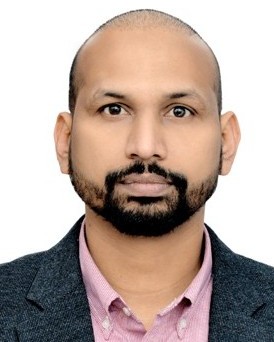
Jojin V. John
[Affiliation]
Assistant Professor, School of International Relations and Politics, Mahatma Gandhi University
[Project Title]
Pivotal Middle Powers and International Order Transition in the Indo-Pacific: Pathways for Peaceful Change
Project Summary
This research project examines the evolving Indo-Pacific international order through the distinctive lens of pivotal middle powers during a critical period of global transformation. The study emerges amid significant order transition driven by China's rise, US strategic recalibration, intensifying US-China confrontation, and accelerated by events including the COVID-19 pandemic, Russia-Ukraine War, and the return of the Trump administration with an amplified revisionist approach to the liberal international order. While existing scholarship on Indo-Pacific order transition primarily focuses on great power perspectives, particularly US-China dynamics, this research addresses the limited attention given to pivotal middle powers' agency and their proactive roles in regional order building. The project builds on the thesis that Indo-Pacific order transition represents the emergence of a "multiplex order"—a complex, multi-layered, and decentred regional architecture transcending simple bipolar/hegemonic frameworks. The study identifies Australia, India, Indonesia, and Japan as pivotal middle powers uniquely positioned to assume consequential structural roles in regional governance through their preference for rules-based multilateralism, inclusive institutional design, and non-confrontational diplomatic approaches. These states can effectively moderate confrontational aspects of great power rivalry while advancing peaceful order transition. The research advances through four analytical steps: assessing order transition processes using multiplex international order theory; analysing each pivotal middle power's approach through detailed case studies; conducting comparative analysis of their roles using Paul's "mini-max" definition of peaceful change; and developing a vision statement with concrete policy recommendations for collective action. The project aims to produce actionable strategies for peaceful change while contributing to middle power theorization in international relations, advancing understanding of post-Western, Asia-centric order dynamics, and strengthening the Global Network on Peaceful Change (GRENPEC) through enhanced Indo-Pacific regional scholarly collaboration.
- What We Do Top
- Arts and Cultural Exchange [Culture]
- Japanese-Language Education Overseas [Language]
- Japanese-Language Education Overseas [Language] Top
- Learn Japanese-language
- Teach Japanese-language
- Take Japanese-Language Test
- Know about Japanese-language education abroad
- The Japanese-Language Institute, Urawa
- The Japanese-Language Institute, Kansai
- Japanese-Language Programs for Foreign Specified Skilled Worker Candidates
- Japanese Language Education for Japanese Children Resident Overseas and for the Descendants of Migrants
- Archives
- Japanese Studies and Global Partnerships [Dialogue]
- JF digital collection
- Other Programs / Programs to Commemorate Exchange Year
- Awards and Prizes
- Publications