
2025 JFIPP Research Fellow - MICHISHITA Narushige
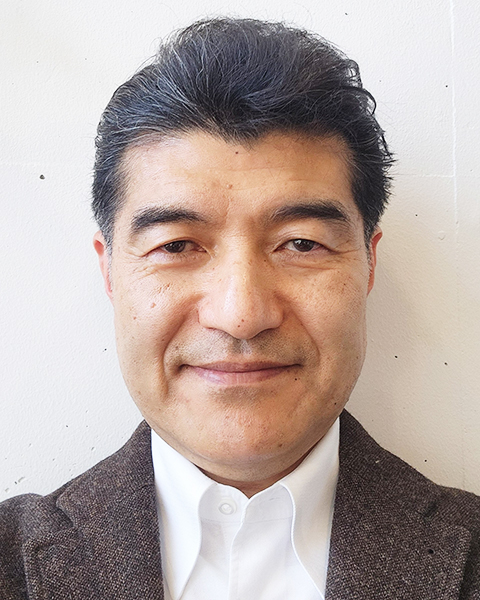
MICHISHITA Narushige
[Affiliation]
Executive Vice President and Professor, Graduate School of Policy Studies, National Graduate Institute for Policy Studies (GRIPS)
[Project Title]
Protection of Civilians from Missile Attacks in Armed Conflicts: Identifying Best Practices and Sharing Them among Like-Minded Democratic Countries in the Indo-Pacific Region
Project Summary
Generally speaking, there are three important elements of plans for protection of civilians from missile attacks: (1) destruction of missiles with, for example, ballistic missile defense systems; (2) evacuation of civilians from targeted areas; and (3) securing of civilians in protective constructions such as shelters or in-place facilities such as subway stations and solid buildings. The choice of tools and the best combination of them depend largely on geography; the type of threat; the defense capabilities of the targeted countries; and of course, the political and socioeconomic environment. Multi-factor examination of measures that various countries have been taking to protect their citizens in peacetime and wartime will enable us to identify best practices for broad sharing.
To address the above questions, I will examine civilian protection policies in place in the United States, Australia, Japan, the Philippines, South Korea, and Taiwan—those countries being chosen for three main reasons. First, they all face much the same combination of threats. Second, they employ similar tools for protection of their citizens, particularly air and missile defense systems and civil defense measures. Finally, all of these countries are democracies, and their efforts to protect their civilian population have similar strengths and vulnerabilities.
I will also examine past armed conflicts in which missiles were used extensively and the protection of civilians became a central policy agenda item. The Gulf War (1990-1991), the Second Chechen War (1999-2002), the Iraq War (2003), Israel-Gaza conflicts (2008-present), the Syrian Civil War (2011-present), the Yemen conflict (2015–present), the Nagorno-Karabakh War (2020), and the Russia-Ukraine War (2022–present) are primary examples. I will investigate (1) missile attacks and their objectives; (2) means by which target countries sought to protect their citizens from those attacks; and (3) the degree of success of those defensive actions.
- What We Do Top
- Arts and Cultural Exchange [Culture]
- Japanese-Language Education Overseas [Language]
- Japanese-Language Education Overseas [Language] Top
- Learn Japanese-language
- Teach Japanese-language
- Take Japanese-Language Test
- Know about Japanese-language education abroad
- The Japanese-Language Institute, Urawa
- The Japanese-Language Institute, Kansai
- Japanese-Language Programs for Foreign Specified Skilled Worker Candidates
- Japanese Language Education for Japanese Children Resident Overseas and for the Descendants of Migrants
- Archives
- Japanese Studies and Global Partnerships [Dialogue]
- JF digital collection
- Other Programs / Programs to Commemorate Exchange Year
- Awards and Prizes
- Publications