
ASEAN次世代専門家グループ招へい(第2期:宗教間対話)Alisa Hasamoh
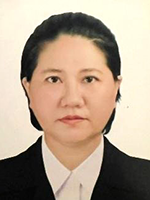
Alisa Hasamoh(タイ)
プリンス・オブ・ソンクラー大学 人文社会科学部 パッタニーキャンパス 助教授
訪日レポート
Final Report
I would like to express my sincere gratitude for the opportunity to participate in this program. The experience has been intellectually enriching, professionally meaningful, and personally transformative. The dialogues, shared reflections, and immersive learning environment have significantly broadened my understanding of religion’s role in contemporary society.
Key Takeaways from the Program
One of my most important takeaways from the program is the understanding that conversations about religion and belief can serve as constructive, unifying forces rather than sources of division. The program provided valuable frameworks and practical approaches for engaging in dialogue that is respectful, inclusive, and grounded in empathy.
Rather than treating religion solely as doctrine or identity, the discussions encouraged us to view religion as a lived social practice — one that shapes meaning-making, ethical behavior, resilience, and social relationships. I gained deeper insights into how dialogue itself can function as a bridge, allowing individuals from diverse backgrounds to find shared values, mutual understanding, and common ground.
Another key lesson was the importance of narrative, listening, and reflexivity. Meaningful dialogue is not about persuading others, but about creating safe spaces for understanding complexity, difference, and coexistence. This perspective is particularly valuable in contexts marked by social diversity, vulnerability, or crisis.
The program also highlighted how religion intersects with broader issues such as human security, disasters, social cohesion, and wellbeing. I came to appreciate more clearly that religion is not peripheral to these issues but deeply embedded within them.
Reflections on Religion in Japan
One reflection that deeply resonated with me concerns the religious landscape in Japan. Although many people in Japan identify themselves as “non-religious,” everyday practices reveal strong ethical and spiritual foundations.
Acts of kindness, social responsibility, mutual respect, and compassion are visibly present in social interactions, community behavior, and institutional practices. This suggests that religion may operate in ways that transcend formal affiliation. In other words, belief is not always expressed through identity labels but through values, norms, and lived actions.
This observation challenged my own assumptions about religiosity. It demonstrated that religion can be understood not only as membership or ritual, but also as embodied ethics, cultural values, and shared social conduct. The Japanese context illustrates that moral and spiritual orientations can remain deeply influential even when individuals do not explicitly identify with a particular faith.
This reflection also reinforced a broader insight: religion should be approached as a dynamic social phenomenon rather than a fixed category. Such an understanding is crucial when studying diverse societies.
Application to Research and Career
The knowledge gained from this program will directly inform my research and professional work. I am currently preparing a research proposal for submission to the National Research Council of Thailand (NRCT), focusing on community capacity development in disaster contexts.
The program has strengthened my conviction that religious dimensions must be integrated into disaster-related research. Conversations about disasters are never purely technical; they are deeply connected to belief systems, meaning-making processes, ethical responsibility, and social trust.
In many communities, religion shapes how individuals interpret risk, respond to uncertainty, mobilize collective action, and recover from trauma. Therefore, incorporating religious dialogue into disaster research is not supplementary but essential.
Specifically, I plan to explore:
- How religious narratives influence disaster perception and resilience
- The role of religious leaders in community preparedness and recovery
- Religion as a source of psychosocial support and social cohesion
In addition to research, I intend to translate this knowledge into teaching. I plan to develop a specialized course titled “Religion and Disasters,” which will provide students with interdisciplinary perspectives linking sociology, human security, belief systems, and disaster studies.
Furthermore, the concept of Cafe de Monk has profound relevance to my ongoing social initiatives. Within my own context in Pattani, Thailand, I operate Busaba Bakery and Cafe by Makanmanis, which already functions as a social and community-oriented space.
Inspired by the program, I plan to expand this model by:
- Creating more intentional dialogue spaces within communities
- Organizing roadshows that integrate conversation, reflection, and social connection
- Strengthening the café’s role as a platform for inclusive engagement
The café is not merely a commercial venue but a social innovation space — one that can foster relationships, empathy, and community resilience.
Concluding Reflection
Overall, this program has reinforced a critical understanding: religion is not simply about belief, but about relationships, ethics, meaning, and coexistence. Dialogue, when thoughtfully facilitated, becomes a powerful tool for connection, healing, and social understanding.
I leave this experience with deep appreciation, renewed inspiration, and a strengthened commitment to integrating these insights into my research, teaching, and community engagement.
Thank you once again for this invaluable opportunity.
- 事業内容を知るトップ
- 文化芸術交流[文化]
- 日本語教育[言語]
- 日本研究・国際対話[対話]
- JF digital collection
- 特別事業/周年事業等
- 顕彰事業
- 刊行物のご案内